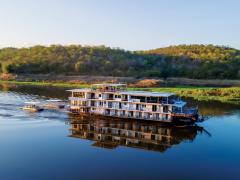
THE announcement that the Department of Trade and Industry (DTI) is including tourism in its incentive programme for its Small & Medium Enterprise Development Programme (SMEDP) holds potential benefits for all new and expanding businesses - subject to certain conditions. The basic underlying principle is, however, a sliding scale of benefits, which gives smaller businesses a greater advantage. This was explained to TNN by Deloitte & Touche's (D&T) trade and investments solutions business incentive (TIS) manager, Charl Human. The company will acts as consultants to the DTI clients, facilitating and processing applications and claims. He says applications take approximately two weeks to process, and must be submitted prior to the commissioning of assets in the case of expanding businesses. "Since the incentives scheme was officially launched in September - with the new announcement which sees the inclusion of tourism only having been made on May 23 - those businesses which meet the requirements, have a grace period of three months (closing on August 23) to submit their applications for this year." Human says the incentive scheme is applicable in two ways, firstly to new tourism businesses and businesses expanding by at least 25%. Businesses which qualify for the scheme include short-term accommodation establishments, tour operators, funicular railways, private railways, aerial cableways, water transport vehicles used exclusively for tourists on lakes, dams, rivers, in harbours and to islands along the South African coastline. "It also only applies to capital assets such as vehicles, buildings and furniture. Therefore a tour operator would potentially only be able to claim for his fleet of vehicles (or boats) or the premises from which he operates, provided he expands his fleet by 25% and the premises are not merely used as offices, but will be used for tourists." The same applies for hotels and game lodges. For example, if a hotel expands its dining room, it can claim for the construction and the furniture but not for the general crockery, cutlery and utensils. It would not be able to claim for its kitchen as it does not directly affect tourists. A game lodge can claim for its game vehicles and transfer vehicles - used for the transportation of tourists. The cost of the land and the game would be excluded from benefits. - but not for the tractor that may be used in its conservation efforts. Rented assets are also excluded and in order to receive benefits, projects also have to meet an equity requirement. The SMEDP caters for assistance on a tourism investment of up to R100m. Business investments of up to R5m qualify for the return of 10%. As the investment amount increases, the percentage return decreases. Human told TNN that based merely on the company's experience, it was not worthwhile to submit a claim for an investment of under R500 000. "Just taking into account the expenses and effort involved in the process, that is our recommendation." (Adéle Mackenzie)
Small businesses to benefit from DTI incentive scheme
Comments | 0
© Now Media. This content is protected by copyright and may not be adapted or republished. If you would like to discuss cooperation opportunities, please contact: editor@travelnews.co.za.