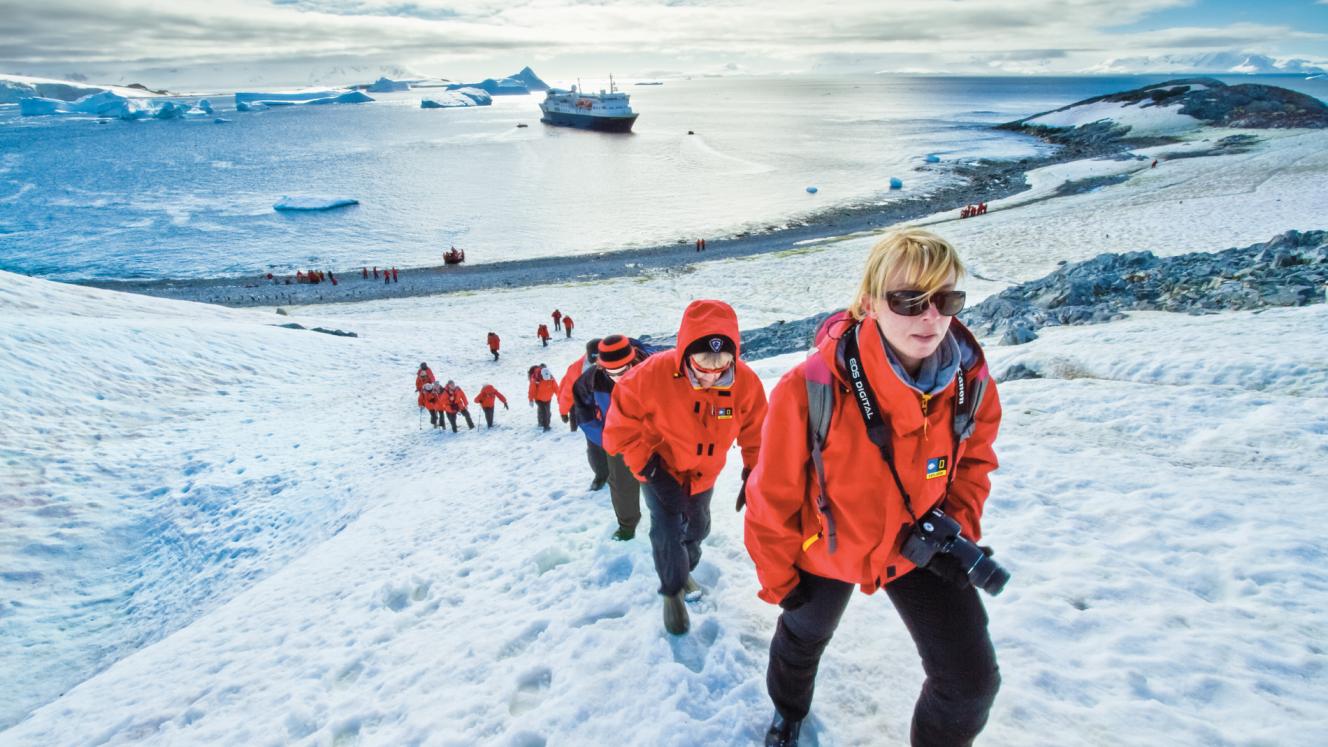
Antarctica and the Southern Ocean islands are on the bucket lists of many travellers now that they have been made accessible to over 100 000 travellers a year on expedition cruising.
However, the recent hantavirus outbreak, resulting in multiple deaths and a complex international evacuation from St Helena to South Africa, has highlighted concerns for passengers, and also for the isolated populations and fragile ecosystems that the ships visit.
While experts agree that cruise ships pose a risk, it could be that the high price of Antarctic cruising is the best protection against contamination.
Impact is inevitable
While cruise lines have strict health, safety and sustainability protocols that should protect passengers and destinations, some experts believe that the negative impacts of cruising on natural environments are inevitable.
“I've always been suspicious about the sustainability of the cruises in general but particularly in isolated, natural and even fragile ecosystems, because, as amazing as they are for us as humans to experience, I do feel we are just invading another space where we don't belong and creating imbalances,” explained Travel Counsellor, Lize Roodt.
“Cruise lines often scream about their sustainability attributes, but it is inevitable that people are going to have an impact on environments simply by being there. This cannot be denied,” Roodt said, referring to impacts on untouched environments, such as Antarctica, including noise and air pollution.
She explained that the impact was ten-fold with shore excursions, noting that Antarctic shore excursions such as glacier hikes and multi-day overnight camping trips, were becoming more immersive and impressive but also more invasive.
“I find myself constantly torn: I want to provide these authentic, once-in-a-lifetime experiences, yet I cannot help but wonder at what cost they come to the environment.”
Protocols strengthen
The International Association of Antarctic Tour Operators (IAATO) explained that while there were stringent biosecurity and environmental management frameworks in place, every outbreak, epidemic and pandemic forced the industry to reassess and strengthen its protocols.
IAATO enforces biosecurity measures, wildlife-watching procedures and other protocols in line with Antarctic Treaty System and the Environmental Protocol, to guide safe, environmentally responsible travel.
“In Antarctica, cruise operations follow some of the strictest biosecurity and environmental management frameworks in the tourism industry in order to protect both the Antarctic environment and visitors,” IAATO Executive Director, Lisa Kelley, told Travel News.
Kelley outlined some of the primary measures currently in place:
- Wildlife-viewing minimum distance rules to ensure guests and wildlife do not come into direct contact.
- Biosecurity measures include mandatory disinfection procedures before and after every landing and the use of biodegradable, broad-spectrum disinfectants.
- Guests’ footwear, clothing and equipment must be thoroughly cleaned when leaving and returning to vessels, first to remove any organic material and then to disinfect.
- Mandatory ‘Don’t Pack a Pest’ manuals offer all visitors guidance on how to prevent the introduction of non-native species.
- Manuals and flyers are used to reinforce the rules for guests through pre-departure information, pre-landing briefings and vessel notices.
Kelley explained that these rules were updated and improved based on past outbreaks, including the COVID-19 pandemic in 2020 and the pathogenic Avian Influenza of 2024.
“The COVID-19 pandemic resulted in enhanced pre-departure screening, onboard health management strategies and stricter controls aligned with or exceeding international authority requirements. This period reinforced a culture of adaptive management, with operators continuously reassessing procedures in response to new information,” said Kelley.
Roodt said it was essential for the cruising industry to learn from past outbreaks, as well as from destinations’ experiences with overcrowding and overtourism, as cruise ships continue to explore more remote and vulnerable environments.
“No human activity is risk-free,” admitted Kelley, “but Antarctic tourism operates within a robust, science-informed framework designed to minimise impacts. Continuous monitoring, close collaboration with researchers, and adaptive management ensure that biosecurity measures evolve in response to emerging threats.”
Exclusivity
Roodt noted that one of the unlikely positives of expedition cruises that venture into regions such as the Antarctic was their high price point.
“Expedition cruises are often on much smaller ships, where the passengers are actually accompanying scientific research teams working in the regions.”
While this limits access to these once-in-a-lifetime experiences, Roodt said this also limited the number of passengers, preventing the environment from being overwhelmed.
“I am definitely in favour of expedition cruises to places like Antarctica staying exclusive and limiting access. The fact is, places like this should not be made available to everyone if we want to keep them safe.”