How to ensure you keep the business
CORPORATES are not
only constantly on the
lookout for the best
possible deals but also want
access to these deals without
compromising standards. For
this to happen, agents and
suppliers must work together
to provide the added value
the client is looking for.
“While suppliers and agents
can always negotiate a good
deal to offer the client, we
need to identify other ways
to add value and ensure the
business stays with us – both
as agent and supplier,” says
Premier Hotels and Resorts
group sales and marketing
manager, Grant Sandham.
Value-adds are the best way
to go when negotiating, he
maintains.
“A good deal is great but
corporates want to know that
they are making a massive
impact with every single
rand they spend – and that
is where that agent-supplier
relationship comes in.”
The travel agent and the
hotel are on exactly the same
side, Grant says.
“We are there to impress
the client, get the business
and between us we have
to make it work. If we look
good as the hotel, the agency
looks good as well, and vice
versa.”
But for the agent-supplier
relationship to work, the
agent needs to make the
client feel that they are truly
acting on the client’s behalf
and that the corporate is
more than just another
customer. “This means that,
where possible, they are in
attendance at the event, they
give the hotel the correct
information in order to
effectively execute the event
and they give the suppliers
the information timeously.”
In order to achieve this,
Somieya (Sue) van Heerden,
senior co-ordinator and
project manager at Carlson
Wagonlit Travel’s Meetings
and Events division, says she
sends a questionnaire to her
clients, designed to cover the
entire booking.
“I ask questions such as
‘what time would you like
your morning/afternoon tea
breaks to take place?’ or ‘do
you want bottled water or
jugs or both?’.”
That way the hotel has all
of the information it needs,
thereby minimising back and
forth communication between
the supplier, the agent and
the client. “In doing so, I
know I can rest assured the
hotel has everything they
need and the conference will
go off without a hitch.”
Site inspections
For suppliers and agents
to provide better customer
service to corporates, Carla
Campbell, sales executive
at Peermont Hotels, Casinos
and Resorts, suggests agents
and clients conduct joint site
inspections of venues. “That
way, we can create a threeway
relationship between the
supplier, the corporate and
the travel agent.”
Conferencing is a lot more
involved than simply booking
a room and agents need to
become familiar with the
entire process to understand
the different factors that
need to be considered when
suggesting a particular venue
to a client, agrees Birchwood
Hotel and OR Tambo
Conference Centre director,
Kevin Clarence.
On the other hand, says
Kevin, agents are pressured
for time and often cannot
afford to be out of the office.
“But it is still so important
for agents to bring the client
along to the property when
doing their final inspections so
that the client, the agent and
the hotel representative can
talk and discuss exactly what
it is that should be provided
for a particular conference to
go off effectively.”
Sue agrees: “If we cannot
make it out of the office,
we have to make sure
we have every little bit of
information that is needed
for the conference to be a
success, and scrutinise every
suggestion they make.”
For instance, clients may
say they would like a venue
that is ‘central’ but Sue says
the agent must clarify what
exactly the client means by
‘central’. “Do they want it
central to their offices, or in
the centre of Johannesburg?
We must find out exactly what
it is they want and provide
suitable options for them to
choose from.”
“Ultimately, however, agents
should have the client’s best
interests at heart,” says
Grant. “Because as soon as
they do that and they follow
the hotel’s guidelines, it works
like a charm.”
Consult the supplier
To get the most out of the
agent-supplier relationship,
agents need to see suppliers
as more than just service
providers. “Suppliers should
be intimately involved in the
process and offer solutions
to agents rather than just
quotes,” says The Capital
Hotel Group’s head of
marketing, Gillian Kapotwe.
She says this is because
the supplier knows the
full capability of the venue
and can therefore offer
options beyond those
the agent or client has
requested. “Suppliers need
to understand the client’s
requirements and match
them perfectly by suggesting
various options that could
give the client more than
they thought they could
receive out of a particular
venue.”
Another reason why
suppliers need to be able to
respond quickly is because
lead times have become
shorter for agents, says
Gillian, making it important
for them to be adaptable to
constantly changing needs.
client.
On the other hand, Kevin
believes that it is also
important for agents to
become familiar with the
supplier and their value-adds.
“Agents should know exactly
what each property has to
offer so that they shortlist
the correct properties as
options so that the client
ultimately hosts their
conference at the best
possible venue.”
For example, the Cradle
of Humankind has reached
an agreement with a nearby
township to create township
experiences for those who
have attended conferences
at one of the various
venues within the Cradle
of Humankind Heritage
Site, says director of brand
management, Adrian Amod.
“We have also incorporated
our surroundings to provide
more add-on options for
conference attendees.”
He says the Cradle of
Humankind has begun
working together across
its venues to ensure the
business stays within the
Cradle itself. “So for instance
if one venue can only
accommodate 300 people
but a particular conference
has 400 delegates, we will
offer the other 150 delegates
to another venue within
the Cradle and amend the
schedule accordingly.”
It’s also important that
agents compare apples
with apples, says Sue, and
analyse venues according
to their true counterparts.
“You cannot suggest venues
of varying standards and
present them on the same
level.”
For instance, if a client had
requested a five-star property,
the agent should specify if
some of the suggestions
they are making are for fourstar
properties. “So they
could say, ‘we found a great
four-star property which fits
your budget but there are
a few things you requested
which the hotel does not
have,” says Sue.
...and negotiate!
Suppliers know that flexibility
is now more crucial than
ever, she says, and agents
should feel open to discuss
new ways of impressing the
CORPORATES have become
more demanding, and
suppliers have had to ensure
that they adapt to the needs
of the corporate or risk losing
the business, meaning they
are often more open to
negotiations with agents.
“On top of that, the number
of conferences taking place
has decreased considerably in
the past three to four years,
so we as suppliers are even
more keen to do business with
agents and keep the business
at our properties,” says
Birchwood’s Kevin Clarence.
This also means suppliers
are much more open to
negotiations than agents may
think.
“We look at doing the best
possible deal whenever we
have an enquiry but obviously
every hotel has a walkaway
point where it just isn’t
financially viable any more,”
says Premier Hotels and
Resorts’ Grant Sandham.
“But we are more than
happy to sit down, look at the
different options and discuss
how we can make money while
ultimately ensuring that the
event is a success.”
While Peermont’s Carla
Campbell agrees that her
property is always open to
negotiations, she says valueadds
are what clients look for
most – and this can be an
opportunity for agents.
“Agents can earn off
commissionable corporate
rates as well as benefit
from commission incentives
that are in place for both
accommodation and groups
and conventions business.”
The Birchwood also
offers commission on its
conferencing bookings. “We
offer agents 10% commission
and there are always other
avenues for them to capitalise
on, such as group bookings,”
says Kevin.
Agents will still receive their
full commission when booking
at the Birchwood, even if the
rate is reduced, Kevin adds.
According to Gillian Kapotwe,
The Capital Hotel Group
offers preferential agreements
based on volume. “We also
have override agreements
with agents that meet those
criteria.”
In line with this, agents
should try as far as possible
to convince corporates to
keep their spend at one
hotel, recommends Carlson
Wagonlit’s Sue van Heerden.
“We find there are many
corporates that will have
meetings fortnightly or monthly
– and instead of having them
go to different hotels, it is a
good idea to have them return
to the same hotel so that the
hotel continues to give you a
good rate because it is repeat
business for them,” she says.
Inside The Capital Moloko
I RECENTLY received a
brief from a client wanting
to host a conference in an
area that was central to
their offices. The brief also
indicated the budget they
had agreed on with top
management and the extras
they would appreciate for
the conference.
As part of my search I
visited The Capital Moloko
in Sandton. I selected
this venue because the
location was suitable as per
the brief I’d received and,
as soon as I entered the
foyer, I was attracted to the
calming aura of the venue.
It gives off a country feel –
ideal for conferencing as it
allows delegates to feel as
if they are away from the
hustle and bustle of day-today
life, yet they are in the
heart of the city.
On visiting the rooms, I
was further impressed by
the size of the rooms and
the calming colour tones
used. The Capital Moloko
also has apartment options
– which are becoming
popular with business
travellers. The apartments
were absolutely stunning
and offered that homeaway-from-home
feeling that
is great for travellers who
will be staying at the hotel
for an extended amount of
time.
The hotel was also very
open to negotiations and
that was a good thing to
see because I had never
booked with The Capital
Hotel Group before. They
agreed that if we gave
them business, they would
give us a good rate, which
is a standard negotiating
practice among conference
venues.
Their packages also came
with some nice extras, such
as complimentary parking
and laundry, which is a
major plus for the client,
and I think this facet will
see The Capital Hotel Group
become a very popular
option among conference
venues.
Corporates fancy cruise conferencing
CRUISING is fast becoming
a trend in the conferencing
space. Especially as
corporates continue to
look for new ways to cut
costs and seek all-inclusive
solutions, says Cruises
International’s incentive
conference manager, Dalene
Oroni.
“Corporates are seeing the
value for money in cruising
and they realise that
cruising keeps the delegates
together,” she says.
The conference group can
do things together while
on the cruise, such as
cocktail parties and dinners,
thus creating great teambuilding
opportunities. “But
individuals can also enjoy
time on their own outside of
group activities.”
When conferencing on a
cruise ship, corporates will
benefit from complimentary
conference facilities and
state-of-the-art equipment,
which can be a saving for
the corporate client at the
end of the day, says Dalene.
Agents can also benefit
from booking conferences
on cruise ships, says
Dalene. “We do at times
offer agents a commission
tier whereby they can earn
more commission if they
book several groups with us.
We also offer commission
on the shore excursion tours
for the groups.”
When to blow the budget and go bespoke
INTIMATE, stylish and
anything but ordinary,
boutique venues are
designed to create unique
experiences. TNW spoke to
some experts to find out
when one should splash
out for a bespoke venue
rather than the standard,
run-of-the-mill hotel.
Boutique and budget are
two words that definitely
do not belong in the same
sentence, regardless
of what one is talking
about – fashion or hotels.
Patrick de Bree, owner
of Hospitality Affairs, an
exclusive events company
that specialises in creating
memorable signature
events for a niche market
of corporate clients, says
boutique hotels offer that
“wow factor”.
“That is the allure
of bespoke,” he says,
“and bespoke is what a
boutique hotel offers its
visitors. They are, more
often than not, smaller
in size and independent,
allowing the delivery of
unique experiences.”
Using a boutique hotel
for an event, be it a
conference or a meeting,
is not a decision that
should be taken lightly,
he says. “Bespoke is not
cheap. In the boutique and
bespoke market there is
no such thing as copying
and pasting. Every event
is a once-off where the
client’s needs are met
100%,” says Patrick.
“Fulfilling a guest’s needs
by giving attention to every
last detail and walking the
extra mile to meet their
expectations all the time is
always going to be a more
expensive option than
using larger hotel brands.”
The very size of boutique
hotels in South Africa also
has a cost implication, he
explains. “Boutique hotels
are for the most part not
very large as their facilities
are geared towards smaller
more intimate events.
These venues cannot
compete with the bigger
chain brands and so the
cost immediately will be
higher. In the current
economic climate these
are factors that will play a
big role when choosing a
venue.
The benefits of boutique
Boutique venues serve
very specific purposes
and are ideally suited to
small, intimate gatherings
where attention to detail
is required. “If matched
to the right client they
are the ideal setting
and make for very
successful events,” says
professional conference
organiser, Zelda Coetzee
of Imfunzelelo Conference
and Event Management.
“Small sophisticated
gatherings – be it for
a cocktail function or
a dinner – are ideal
for the boutique hotel
market,” says Zelda.
“In the meeting space,
boutique hotels also have
a powerful role to play.
The value-add that comes
from holding a board
meeting at a boutique
hotel rather than in the
corporate boardroom is
sometimes reason enough
to blow the budget and go
bespoke.”
Not only does it allow
for a change of scenery
but, with the added
attention that comes with
these types of venues,
stakeholders can get on
with their business and be
served, allowing for more
powerful deliberations.
“They can go to the spa,
they can have a personal
chef make the specific
things they want to eat,
they can sleep over and
so can meet late into the
evening. There are several
benefits to using these
spaces,” says Zelda.
Boutique hotels the
world over cater for the
principle that guests want
what they want and they
cater for those wants, no
matter what they are. “It
is this very concept that
makes it beneficial for top
business people to meet
in boutique hotels rather
than at the office. Not
only do they get what they
want but they are also
afforded privacy unlike
anywhere else. They get
exclusivity and sometimes
this is exactly what is
required.”
Zelda cites examples
such as meetings
where top executives
do not necessarily want
staff to be aware that
deliberations are under
way, or when headhunting
high-quality people is
being done.
“Any event where
you want exclusivity,
privacy and intimacy is
what drives one not to
consider budget and
use a boutique hotel.
It is not the venue for
a conference of 100
people. They are not set
up to handle that from
any perspective, but also
these establishments do
not want to compete in
that market.”
Patrick agrees, saying
meetings with top
clients who contribute
significantly to one’s
business are a reason
to head to a boutique
hotel. “It is ideal for
those clients that you
want to impress, as
these venues are usually
beautiful and secluded.
They are authentic by
nature, delivering an
experience that is not
found elsewhere.”
Security is another
reason, says Zelda. “If
someone is high profile
or there are real security
threats involved, then
these types of venues are
ideal as they are able to
assist by providing the
facility exclusively for your
use.”
10 beguiling boutique venues
SOUTH Africa boasts some of the
world’s most extraordinary boutique
hotels. TNW rounds up some great
options on offer.
La Residence (Franschhoek)
Considered in a class all of its
own, surrounded by vineyards and
plum orchards with a spectacular
mountain backdrop, this venue
offers complete tranquillity. The
uniquely designed property has 16
suites and a spa and offers gourmet
food to its guests in a baronial
dining room decorated with crystal
chandeliers and exquisite art works.
Le Quartier Français
(Franschhoek)
This luxurius 21-room establishment
is known for its impeccable service
and attention to detail. Tucked away
in a secluded garden in the heart
of Franschhoek, it is the perfect
base from which to experience
this picturesque village. It is also
the home of world-renowned and
award-winning restaurant, The
Tasting Room, from where acclaimed
executive chef, Margot Janse, takes
guests on a gastronomic journey.
Abbey Manor (Cape Town)
Nestled on the slopes of Table
Mountain, Abbey Manor’s views of
the Mother City are sensational. It
was built more than a hundred years
ago and its old-world charm and
grand décor are as impressive as
the dramatic views. Offering several
elegant suites and rooms, the focus
of this establishment is on luxury.
Catering for the business traveller,
wireless Internet access is available
throughout the property.
The Turbine Boutique Hotel
and Spa (Knysna)
Situated on the picturesque Thesen
Island within the Knysna estuary,
this hotel is the product of the
transformation of an old power
station. Guests have a choice of 17
standard rooms, six luxury rooms
as well as a suite. It boasts two
conferencing rooms that are state of
the art and can each seat up to 20
delegates.
No. 5 Boutique Art Hotel
(Port Elizabeth)
No stone was left unturned in the
development of this unique hotel in
Summerstrand. Offering 10 suites,
a spa and an executive boardroom
fitted with the latest technology, it is
a glamorous stay for any guest. The
hotel features a privately owned art
collection.
Saxon Boutique Hotel Villas and
Spa (Sandhurst, Johannesburg)
This unique space is frequently
visited by international celebrities,
thanks to its privacy and high
security features. With two
conference rooms, a boardroom as
well as the space to host banquets,
it offers five-star facilities to the
business sector. The hotel has five
suites and one villa and a wellestablished
spa on the premises.
The Peech Eco Chic Boutique
Hotel (Johannesburg)
South Africa’s first ‘eco-chic’
boutique venue offers 16 suites, a
bistro restaurant and a boardroom
in Melrose, close to the hustle and
bustle of the city’s business centre.
The hotel also features two fully
equipped meeting rooms. Much of
the hotel has been designed around
the original buildings but its focus
on the environment is significant,
creating spaces that need no added
lighting or heating.
Botsebotse Luxury Retreat
(Waterberg)
African design and art are the themes
of this luxury venue, where stone,
thatch and natural elements are used
throughout. Rare African artifacts and
tasteful décor combine harmoniously
to provide a calming and comfortable
sanctuary from which to explore the
Zebula Nature Reserve. Four luxurious
and spacious suites make up this
intimate boutique hotel.
Quarters Hotel (Durban)
A former Victorian home in
Morningside that has been restored
to its glory days, it offers guests a
charming stay in a venue filled with
character. It has 24 rooms and is
ideally situated close to the Durban
International Convention Centre.
Its design, a subtle combination
of modern sophistication and oldfashioned
warmth, guarantees guests
personalised experiences.
Photocap: Babylonstoren, Paarl
At the foot of the Hottentots-Holland mountains lies this unique
working fruit and vegetable farm where guests will find anything
from beehives to roaming tortoises. The venue is a multi-award
winner and dates back to 1692 with one of the best preserved farm
yards in the Cape. The small hotel and spa offers its visitors an
authentic farm-stay experience.
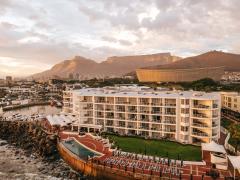
Photocap:Cape winter conferencing
Dream Hotels and Resorts is offering
travellers the chance to stay at the
Peninsula All-Suite Hotel in Cape
Town on a budget as part of their
‘Winter Warmer Deals’ promotion.
The hotel has sea views and state-ofthe-art
accommodation. It is a block
away from the Sea Point Promenade
and the beach, and is also near
various restaurants and shopping
centres. Pay for two nights and stay
for three at R1 860 per room for a
one-bedroom suite, R2 930 per room
for a two-bedroom, and R4 120 for
three bedrooms, all on self-catering
basis. This promotion is valid from
May 2 to July 28.
Bookk it!
Legend Lodges is offering a special conferencing rate at three of its
properties. From only R750pps, delegates can enjoy a conference at
the Legend Golf and Safari Resort, Zebra Country Lodge or Entabeni
Safari Conservancy.
Hotel development in Africa up 30%
THE number of planned
hotel rooms in Africa has
increased to 64 000 in 365
hotels, up almost 30% on the
previous year, according to
new figures from the annual W
Hospitality Group Hotel Chain
Development Pipeline Survey.
The increase is largely due to
strong growth in sub-Saharan
Africa, which is up 42,1%
on 2015 and is significantly
outstripping North Africa, which
achieved only a modest 7,5%
pipeline increase this year.
A major shake-up in the
rankings by country saw
Angola, never before listed
among the top 10, push Egypt
out of second place, due to
a major deal there signed by
AccorHotels.
Trevor Ward, W Hospitality
Group md, said: “The
evidence from our survey
is clear – investors remain
confident about the future
of the hospitality industry
on the African continent.
Even when pummelled daily
by low commodity prices,
exchange rate problems,
political challenges and poor
infrastructure, Africa remains
resilient.”
The IMF forecast for
economic growth in subSaharan
Africa is for an
increase of 4% this year and
4,7% in 2017, up from 3,5% in
2015. Overall, this is down on
the 5-6% increase enjoyed over
the past decade but is still
double or more the forecast
for the world’s advanced
economies, such as Europe,
the US and Japan.
Matthew Weihs, md of
Bench Events, said: “Africa is
still on the up. For business,
trade and capital investment,
the continent remains an
attractive proposition, leading
to continuing demand for
accommodation and other
hospitality services.”
Sue van Heerden shares her tips for picking the right venue
1 Always identify and
understand exactly what the
client is looking for. Know
your brief and find out how
much room there is to add
on some extras.
2 Always compare apples with
apples i.e. do not go back
to the client with venues
of varying rates but also
varying standards.
3 Always be upfront and do
not cover up any hidden
costs.
4 Identify the areas that the
client is open to before
obtaining quotes from
venues.