Easy visas, more travellers
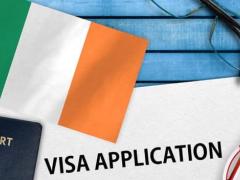
ALTHOUGH some
travellers may still
choose to apply for
their visas prior to travel,
tour operators believe the
introduction of visas on
arrival in India is a positive
move.
Last year, the Indian
government announced
that it would relax the visa
regime, allowing travellers
from 180 countries,
including South Africans, to
obtain a visa on arrival from
October this year.
While Alet Steyn, business
development manager at
Wendy Wu Tours, says
there haven’t been any
difculties in obtaining
visas on behalf of clients,
she does think that visas
on arrival will see more
travellers visiting India.
“This can make lastminute
travel possible and
requires less administration
for clients than obtaining
the visa here,” she says,
further pointing out that
travellers won’t have to take
time off from their busy
schedules to apply for visas.
Many members of the
travel trade share these
sentiments but some have
a few concerns about how
the new system will be
implemented. Travel agents
feel that the long queues on
arrival at Indian immigration
will be aggravated by the
new visa regulations.
Another concern is that
the visa on arrival will only
be a single-entry visa, valid
for 30 days from the date of
the tourist’s arrival.
Vikas Rustagi, regional
director: West Asia and
Africa for India Tourism
Dubai, previously told TNW
that this was indeed a
concern that needed to
be addressed and said
the Indian government
would surely deal with this
problem in the near future.
The Indian Tourism
Ministry is reportedly also
looking at an online system
application similar to the
one used by Sri Lanka,
which offers electronic visas
on arrival.
According to the BBC, the
electronic visa on arrival
will be available at 26
major airports in India. The
government is expected to
launch a website that will
enable tourists to apply
for the visa and pay the
fee before departing for
their trip to India. The visa
will then be available for
collection on arrival at any
airport.
Boosting business travel
EMIRATES regional
manager Southern Africa,
Fouad Caunhye, says in
the long-term, passenger
trafc from South Africa to
India is expected to grow.
“Besides the emerging
middle class and VFR
trafc, growing business
relationships between
South Africa and India will
mean a spike in business
travel as well as cargo.
Onward from Dubai, we
see great interest from
SA businesses in these
emerging economies.”
Fouad adds that the
BRICS (Brazil, Russia,
India, China and South
Africa) formation is
growing in inuence
as well as value for
the countries involved.
“Seismic shifts in
business markets have
meant that the sphere of
inuence has moved from
the west to the east.”
SAA spokesperson,
Tlali Tlali, agrees: “With
SA and India being part
of BRICS, there is a fair
amount of corporate
travel that is taking
place and this includes
government travel [for
example the Department
of Trade and Industry] as
well as business travel
[such as] companies
participating in exhibitions
and travel for other
business interests.”
Good rand value for SA visitors
THE number of South
Africans travelling to India
in the coming months is
expected to increase due to
factors that include better
access, affordability and
the strengthening business
relations between the two
countries.
Vikas Rustagi says South
Africa is the largest African
tourism market for India, with
more than 50 000 nationals
visiting in 2012.
Fouad Caunhye says there
has been a steady increase in
South African tourists to India.
“On our network we have
seen a healthy growth year-onyear
in passenger numbers
on our SA-India route. South
Africa provides a good mix of
inbound tourists to India, from
business travel to leisure
and VFR.”
Fouad adds that South
Africa has the largest Indian
population outside the subcontinent,
leading to signicant
VFR trafc.
“According to our data,
the top leisure destinations
for South Africans travelling
onward from Dubai are India
and Thailand, followed by
Europe. Asian destinations
are popular amongst South
Africans for factors ranging
from visa relaxation, good
rand value and ease of
connectivity.”
Xenia Adamou, gm of Etihad
Airways South Africa, says
the airline is experiencing
growth in the number of South
Africans travelling to India for
both leisure and business,
and reciprocal growth in the
number of Indian travellers to
South Africa.
“This can be attributed to
several factors, including the
strength of the South African
rand against the Indian rupee,
which goes a long way to make
India an attractive destination
for both business and leisure
travellers,” she says.
Tlali Tlali agrees that India
is an affordable destination,
one of the reasons being that
the rand is stronger than the
Indian rupee.
However, he says there has
been a drop in the number
of people visiting India in this
scal climate. “Ination is the
main reason for the decline.”
Alet Steyn says people who
are interested in travelling to
India are those who are well
travelled and looking for a
different experience, as well as
those who are open minded
or combining business with
leisure.
She says past travellers
who have visited China and
Indochina with Wendy Wu
Tours often choose India as
their next holiday.
To further increase travel
to India, Alet believes there
needs to be more awareness
of the country and what it has
to offer.
“India offers colourful
religious festivals, deserts
lined with historic forts,
tented camps nestled in sand
dunes, avoursome food, royal
palaces, abundant wildlife
such as the Asian elephant;
the Royal Bengal tiger; and
the One-horned rhino, which
can be found in numerous
national parks and wildlife
sanctuaries,” she says.
She adds that India can
be a culture shock for rsttime
travellers. “You need a
reputable operator that has
the necessary infrastructure
in place to take care of your
clients – a factor that makes
an escorted tour the best
option to explore India.”
Fouad says India’s
attractiveness lies in its
affordability but that South
Africans also value the
outdoors and adventure it has
to offer.
“Skiing holidays in Kashmir,
white-water rafting over the
Ganges to quaint backwaters,
to Kerala, India satiates all
kinds of holiday appetites,” he
points out.
Tlali believes traveller
numbers from South Africa
to India should grow in the
coming months. “The two key
channels that support travel
from South Africa to India are
retail and corporate.
“Retail agents and tour
operators continue to package
India as an affordable
destination with packages for
budget travellers and luxurious
hotel packages for travellers
who are looking for comfort
and luxury.”
Xenia is condent that India
will continue to be a popular
destination for South Africans.
“The tourism sector is
enjoying signicant growth and,
according to a recent report by
the World Travel and Tourism
Council, the country’s travel
and tourism industry
is expected to welcome
7,36 million tourists this year,
equating to growth of 7,3%,”
she says.
Deluxe group tours from Wendu Wu
WENDY Wu has
introduced deluxe India
holidays that include
economy-class airfares
and a maximum of 20
participants per group.
The tours use deluxe
hotels from internationally
recognised chains as well
as boutique resorts and
resort heritage hotels.
Travellers can expect
a high level of service
and attention to detail
from the national
escorts. The groups will
experience highlights of
each city with entrance
fees included. There are
currently three deluxe
holidays on offer – Golden
Triangle Deluxe, Highlights
of India Deluxe and
Rajasthan Panorama
Deluxe.
Alet Steyn says the
Golden Triangle is a
brand-new group tour
ideal for rst-time visitors
to experience the ‘mustsee’
destinations in
India – Delhi, Agra and
Jaipur. The tour is 10
days in duration, with set
departure dates and is
priced from R28 010 per
person.
“The Golden Triangle
is our most accessible
group tour to India yet
and will appeal to those
with time and budget
constraints that preclude
longer stays,” says Alet.
Middle East carriers a popular option
EVEN though direct ights
are possible from South
Africa to India, many
business and leisure
travellers are opting to travel
via Middle Eastern hubs on
carriers such as Emirates
and Etihad.
Xenia Adamou says:
“Etihad Airways continues
to experience growth in the
number of South Africans
travelling to India via its Abu
Dhabi hub. Together with our
partner, Jet Airways, we offer
seamless connections to 17
Indian destinations.”
She points out that the
added benet of travelling
with Etihad Airways is the
option to stop over in Abu
Dhabi at no additional cost
before proceeding to a nal
destination in India.
Emirates operates six daily
ights between South Africa
and Dubai and onwards
to India, where it offers
up to 185 weekly ights
across 10 major cities, says
Fouad Caunhye. “Through
the Dubai hub, Asian
destinations are within a
three- to eight-hour radius,
making them an attractive
proposition for leisure
travellers.”
He says Emirates
welcomed the recent
decision by Indian aviation
authorities to lift restrictions
on A380s. “Any decision to
deploy an A380 on the route
is dependent on passenger
demand as well as the
ability of airports to handle
the aircraft. We look forward
to serving Indian travellers
with our agship aircraft
in the near future,” adds
Fouad.
EY continues to invest
in Indian market
Etihad Airways considers
the Indian market to be key
to the airline’s business
model, which is why there
have been a number of
recent initiatives to expand
its presence in that market.
Last year, Etihad
purchased a 24% stake
in Jet Airways. It also
tripled the number of seats
available on its Abu DhabiMumbai
and Abu Dhabi-New
Delhi routes and now offers
double-daily services on
both.
The airline also now offers
Diamond First Class on its
Abu Dhabi-Mumbai route
and has increased capacity
on its Abu Dhabi-Chennai
route to 174 seats, from
136.
This year, Etihad launched
a new route between Abu
Dhabi and Jaipur on April
1 and will be increasing
frequencies to some of its
other Indian destinations.
The airline plans to
increase four routes
from daily to double-daily
services, namely Abu
Dhabi-Kochi from June; Abu
Dhabi-Bangalore and Abu
Dhabi-Chennai from July;
and Abu Dhabi-Hyderabad
from October.
Tourist police to curb harassment
IN A recent media
statement, the Indian
Ministry of Tourism
highlighted the steps it
has taken to ensure the
safety and security of
tourists in the country.
It has proposed the
setting up of tourist police
at prominent tourist
spots. It says the state
governments of Andhra
Pradesh, Goa, Karnataka,
Kerala, Maharashtra,
Himachal Pradesh,
Rajasthan, Jammu and
Kashmir, Uttar Pradesh,
Delhi, Punjab, Madhya
Pradesh and Odisha, have
already deployed tourist
police.
The ministry also
adopted the Code of
Conduct for Safe and
Honourable Tourism, which
is a set of guidelines
to encourage tourism
activities with respect
for dignity, safety and
freedom from exploitation
of tourists and local
residents, particularly
women and children.