ASATA plans to engage
lawmakers in its fight to
lobby for new legislation
that will regulate airlines’ fuel
surcharge policies.
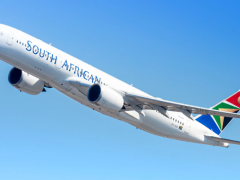
SAA and Cathay Pacific have
scrapped their fuel surcharges
on flights into and out of Hong
Kong, following a ruling by
the Hong Kong Civil Aviation
Department that airlines
operating into and out of the
city would no longer be allowed
to charge a levy because of
the decrease in fuel prices.
SA law does not provide the
necessary channels to legally
challenge the fuel surcharge,
says Otto de Vries. “Despite
successes in other parts of
the world, other countries are
all supported by appropriate
legislation and strong
consumer lobby groups.”
He argues that fuel is a
fundamental cost of doing
business and should be
presented in the base fare so
that South Africans can see
in a transparent manner what
they are paying towards the
airfare.
“It would be much more
transparent if the base fare
was increased and the fuel
levy done away with. It’s easier
to explain to clients. Since
the airlines are the ones
who bleat about the fact that
agents must be transparent
in their charges, why not they
themselves too!” Inge Beadle,
manager of Corporate Travel
Services, commented on
TNW’s online sister publication,
eTNW.
Surcharges are also a
challenge for frequent flyer
card holders. “In most cases,
travellers can only use their
frequent flyer points to pay
for the actual fare, not for any
levies or government taxes.
So, when airlines categorise
a large chunk of the fare as
a surcharge, your free loyalty
ticket has suddenly become
a lot more expensive,” says
Otto.
Last year, Asata completed
a study into fuel surcharges,
which was accepted by
the World Travel Agents
Associations Alliance (WTAAA)
as an international document
and will now be lobbied on an
international scale. The report
was sent to Aasa and Barsa
and requested to engage their
members, says Otto. “We then
requested an opportunity to
meet and discuss with the
carriers, but they declined.”
In the past, agents have
lamented the fuel surcharge,
saying it is an ingenious way
for airlines to avoid paying
commission on what is
actually revenue or override
agreements. However, airlines
have said the issue is more
complex, with the need to
consider various factors,
such as airlines’ fuel hedging
strategies.
Hong Kong scraps fuel levy, SA must follow – Asata
Comments | 0
© Now Media. This content is protected by copyright and may not be adapted or republished. If you would like to discuss cooperation opportunities, please contact: editor@travelnews.co.za.