
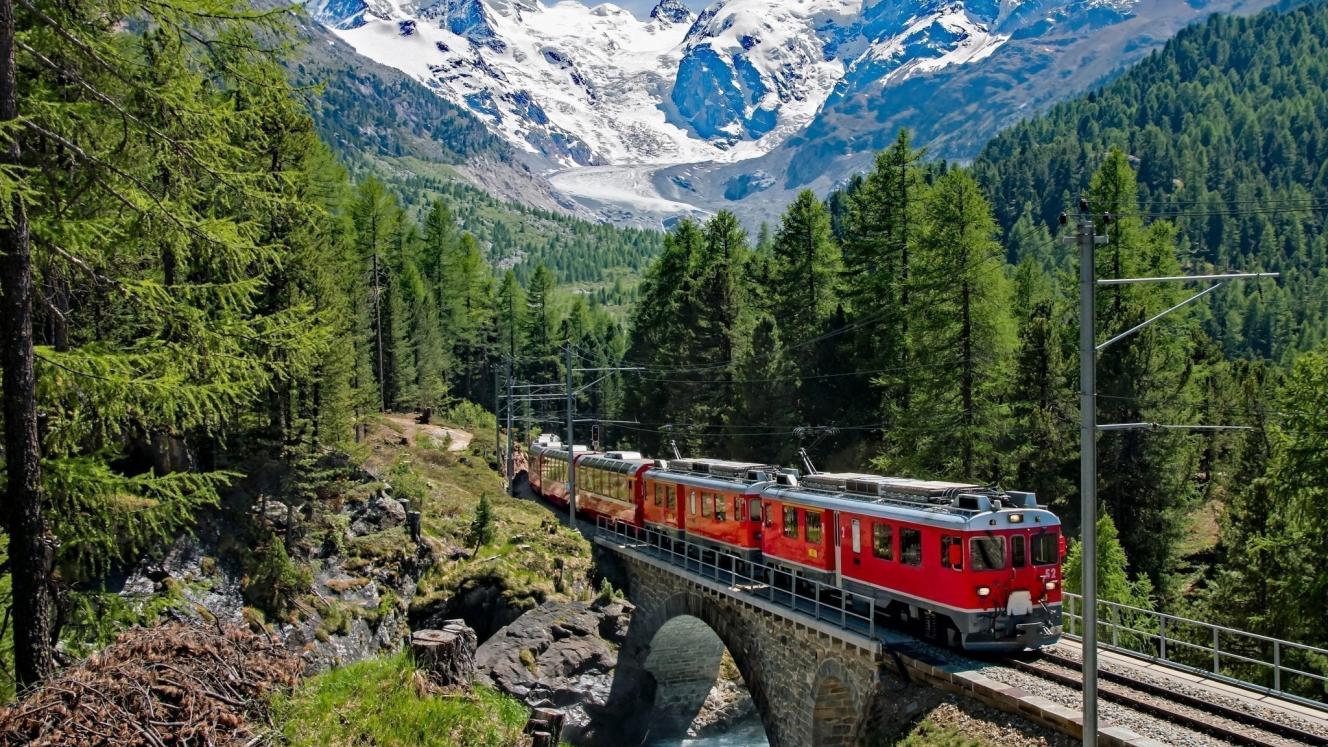
Rising airfares and fuel costs are prompting travellers to swap short-haul European flights for rail travel, with nearly 45% of agents in a recent Travel News poll reporting increased demand for intra-Europe train journeys.
“We're seeing a real shift toward rail for intra-Europe travel. The main reason is pretty simple: fuel prices have pushed flight costs up so much that trains are just way more affordable now, especially for clients watching their budgets,” said Salomé du Toit from Exotic Vacations.
Angie Cachao, Europe Product Manager at Thompsons Holidays, said rail travel was becoming increasingly popular due to Europe’s sophisticated rail network. “The network is extensive, efficient and allows travellers to move effortlessly between cities without the additional airport procedures.”
Convenient connections
Convenience is becoming a major factor driving travellers towards rail instead of short-haul flights within Europe.
“Most of our clients prefer rail over flying when the train connection is decent. Once you add up getting to the airport, security, waiting around, and then getting from the destination airport into the city, a train that takes four or five hours often ends up being quicker door-to-door,” said Du Toit.
The process for rail travel is simpler than airport processes as travellers avoid long airport queues, baggage restrictions and security delays. “You don't have wait hours to go through customs. The luggage that you are allowed on flights is allowed on trains,” said Corné Kotze, Senior Rail Specialist and Product Manager at Travel by Train.
Popular routes
Travellers are opting for rail on some of Europe’s busiest routes, particularly where high-speed connections offer a faster alternative to flying.
“The routes where we're seeing the biggest move from air to rail are ones like Paris-Amsterdam, London-Paris, Barcelona-Madrid, Milan-Rome, and Vienna-Budapest. Anywhere with a good high-speed or direct connection,” said Du Toit.
Cachao believes that high-speed rail infrastructure across countries like France, Italy, Spain, Switzerland, Austria and Germany is a major factor driving demand for rail travel.
“Rail is becoming a stronger component of European itineraries rather than a full replacement for air travel. Many travellers are now using flights for longer distances and rail for regional or city-to-city travel within Europe,” said Cachao.
As European airfares rise, Du Toit says client are comparing value differently now. “They're not just looking at the flight price or flight time. They’re looking at total cost, total time, and how much hassle is involved. Trains usually win on all three for trips under about five or six hours.”
Challenges
While rail is becoming an attractive alternative to flying, agents say certain routes, pricing structures and strict ticket conditions can still create challenges.
Some longer journeys might be easier by air. “In some cases, rail can be more expensive than low-cost flights depending on the routing and distance as well as classes, with longer travel times on certain routes. Some cross-border connections may still require multiple changes,” said Cachao.
Kotze said railway companies were stricter with fare rules. “If a ticket is non-refundable, it stays non-refundable or non-exchangeable, and new tickets must be purchased.”
There is also limited availability during peak periods. “Some cross-border routes can still be a bit clunky, and night trains aren't always available when you want them,” said Du Toit. However, she noted that rail still remained the preferred option for many travellers. “If the train connects within a reasonable time, most of our clients will pick it over a flight right now.”