

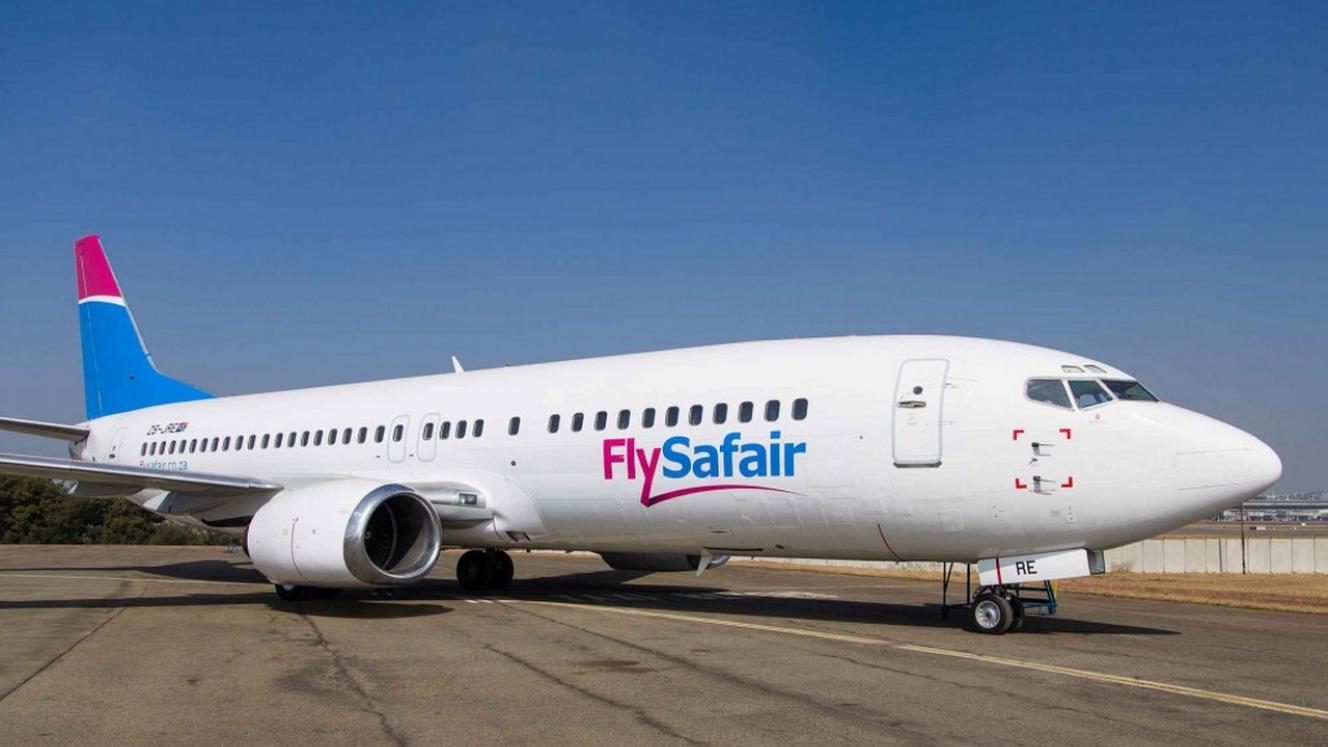
Editor’s note: The following legal analysis was prepared by Dentons South Africa. It reflects the authors’ interpretation of the legal issues arising from the National Consumer Commission’s (NCC) referral of FlySafair to the National Consumer Tribunal. The matter remains before the Tribunal and a ruling has not yet been made.
The NCC referral of FlySafair to the Tribunal has placed the legality of airline overbooking under renewed scrutiny.
While overbooking is a widely accepted international aviation practice used to manage no-show rates and maximise efficiency, this referral raises questions regarding the relationship between international industry standards and domestic regulation, particularly where globally accepted commercial practices appear to conflict with local legislation.
Globally accepted practice vs SA law
Around January 2025, the NCC commenced an investigation into FlySafair’s overbooking practices following consumer complaints and public scrutiny arising from passengers being denied boarding despite holding confirmed bookings.
The investigation examined bookings made during November and December 2024 and January 2025 which ultimately led to the NCC referring FlySafair to the Tribunal in May 2026 for alleged contraventions to several provisions of the Consumer Protection Act 68 of 2008 (CPA).
In response, FlySafair maintained that its overbooking practice constituted a legitimate and internationally accepted revenue-management practice, used by airlines globally to manage no-show rates, maximise aircraft occupancy, maximise operational efficiency and mitigate the commercial losses associated with unused seats.
The NCC’s referral raises the question of whether overbooking is compatible with South Africa’s consumer-protection framework.
Section 47 specifically addresses over-selling and over-booking. It may be interpreted as recognising that capacity shortages can occur and prescribing remedies when a supplier cannot honour a reservation. However, section 47(2) prohibits a supplier from accepting payment for services if it has no reasonable basis for intending to provide them. The Tribunal may therefore need to determine whether airlines can accept bookings beyond their available seating capacity.
Section 41 prohibits false, misleading or deceptive representations about the availability of goods or services. The Tribunal may need to consider whether a confirmed ticket represents that a seat has been secured on a particular flight and, if so, whether overbooking amounts to a misleading representation.
The ruling could have implications beyond FlySafair by determining whether internationally accepted airline revenue-management practices are compatible with South Africa’s consumer-protection regime.
The India case study
India recognises airline overbooking as a legitimate revenue-management practice but treats it as a calculated operational risk for which airlines remain accountable, while simultaneously imposing extensive obligations on airlines to protect affected passengers.
Under section 3, Series M, Part IV of India’s Civil Aviation Requirements, an airline expecting to deny boarding due to overbooking must first seek volunteers willing to surrender their reservations in exchange for agreed benefits. If there are insufficient volunteers and a passenger is subsequently denied boarding against their will, compensation may range from 200% of the one-way basic fare plus the airline fuel charge, subject to a prescribed cap, to 400%, subject to a higher cap, where no suitable alternative flight is offered.
Airlines must also provide meals and refreshments, hotel accommodation where necessary and transport between the airport and the accommodation.
Indian consumer-law remedies extend beyond this regulatory compensation. Consumer forums and the National Consumer Disputes Redressal Commission have treated arbitrary overbooking and the denial of boarding to passengers with confirmed reservations as a “deficiency in service”. Courts have also awarded additional compensation for mental anguish, inconvenience, reputational harm and lost business opportunities, indicating that compliance with aviation regulations alone may not shield an airline from consumer-law liability.
FlySafair similarly recognises overbooking as a legitimate way to manage capacity constraints and passenger no-shows. However, its remedy is limited to R1 000 in compensation, together with re-accommodation on the next available flight or a refund.
While both approaches accept overbooking as a commercial reality, India places greater emphasis on passenger rights through compensation linked to the inconvenience suffered, mandatory assistance and continued consumer-law oversight. It reflects a broader principle that the consequences of unsuccessful forecasting should be borne primarily by the airline rather than the passenger – a consideration the Tribunal may take into account when assessing FlySafair’s practices and remedies under the CPA.
Can industry guidance override the CPA?
The CPA affords consumers a range of fundamental rights, aligned with the Constitution of the Republic of South Africa and the United Nations Guidelines for Consumer Protection. In this context, while the Consumer Goods & Services Ombud (CGSO) Advisory Note 9 may provide guidance on the Ombud's interpretation of overbooking and may serve as evidence of prevailing industry practice, it cannot validate conduct that is ultimately found to be inconsistent with the CPA.
An advisory note has persuasive force rather than binding legal force and cannot override the provisions of the CPA.
The Tribunal is required to assess FlySafair’s conduct against the Act itself and the consumer rights it seeks to protect, rather than against an advisory note. Consequently, if the NCC establishes that FlySafair’s overbooking practices infringed consumers’ rights under the CPA, the legislation will prevail over any contrary guidance contained in Advisory Note 9.
At most, the CGSO advisory note may assist FlySafair in demonstrating that it acted in accordance with an industry understanding of the law at the time, but it is unlikely to constitute a complete defence to a finding of non-compliance.
If the Tribunal rules against FlySafair
If the Tribunal rules that FlySafair’s systematic overbooking practices contravene the CPA and imposes a significant administrative penalty, it could establish an important precedent for all domestic carriers by signalling that airlines may no longer rely solely on industry practice or contractual terms to justify accepting bookings beyond available capacity.
Such a decision would likely require airlines to reassess their revenue-management models, increase compliance measures and adopt more robust consumer-protection safeguards.
However, whether or not a prohibition or severe restriction on overbooking would necessarily result in a 5% to 10% increase in airfares is less certain. (Airlines argue that overbooking helps offset losses caused by passenger no-shows and this contributes to lower ticket prices, so without overbooking they anticipate an estimated increase of 5% to 10% in domestic ticket prices).
If the Tribunal rules in favour of FlySafair
If the Tribunal ultimately rules in favour of FlySafair, it should nevertheless establish clear parameters to ensure that overbooking remains a legitimate revenue-management tool rather than a mechanism that unduly shifts commercial risk onto consumers.
A useful reference point is the Indian framework, which permits overbooking but subjects it to strict consumer-protection safeguards.
Unlike FlySafair's terms and conditions, which limit a passenger's remedy to R1 000 compensation together with re-accommodation or a refund, the Indian model links compensation to the fare paid and the inconvenience suffered, while also requiring airlines to provide assistance such as meals, accommodation and transport where necessary.
The Indian-based framework requires of airlines a willingness to award compensation for inconvenience and other resulting harm, underscoring the principle that passengers should not bear the consequences of unsuccessful forecasting.
Looking beyond FlySafair
The FlySafair referral presents the Tribunal with an opportunity to clarify the extent to which internationally accepted airline revenue-management practices can coexist with South Africa's consumer-protection framework.
While overbooking is widely recognised across global aviation markets as a legitimate mechanism for addressing no-show rates and improving operational efficiency, the CPA requires that such practices be assessed against fundamental consumer rights and statutory obligations.
The comparative analysis of Indian conditions demonstrates that overbooking need not be prohibited outright, provided that robust safeguards, meaningful compensation and effective remedies are available to affected passengers.
Ultimately, whether the Tribunal rules for or against FlySafair, its decision is likely to shape the future of airline booking practices in South Africa by defining the balance between commercial efficiency and consumer protection, while providing much-needed guidance to the aviation industry on the permissible limits of overbooking under the CPA.
References:
- NCC refers FlySafair to the Tribunal for overbooking flights - The National Consumer Commission
- FlySafair Responds to NCC Referral to The National Consumer Tribunal - FlySafair Media Centre
- Consumer Protection Act 68 of 2008
- EU261 and Denied Boarding | Uncompromised Travel
- Terms & Conditions of Booking & Carriage - FlySafair
- The National Consumer Commission (NCC)