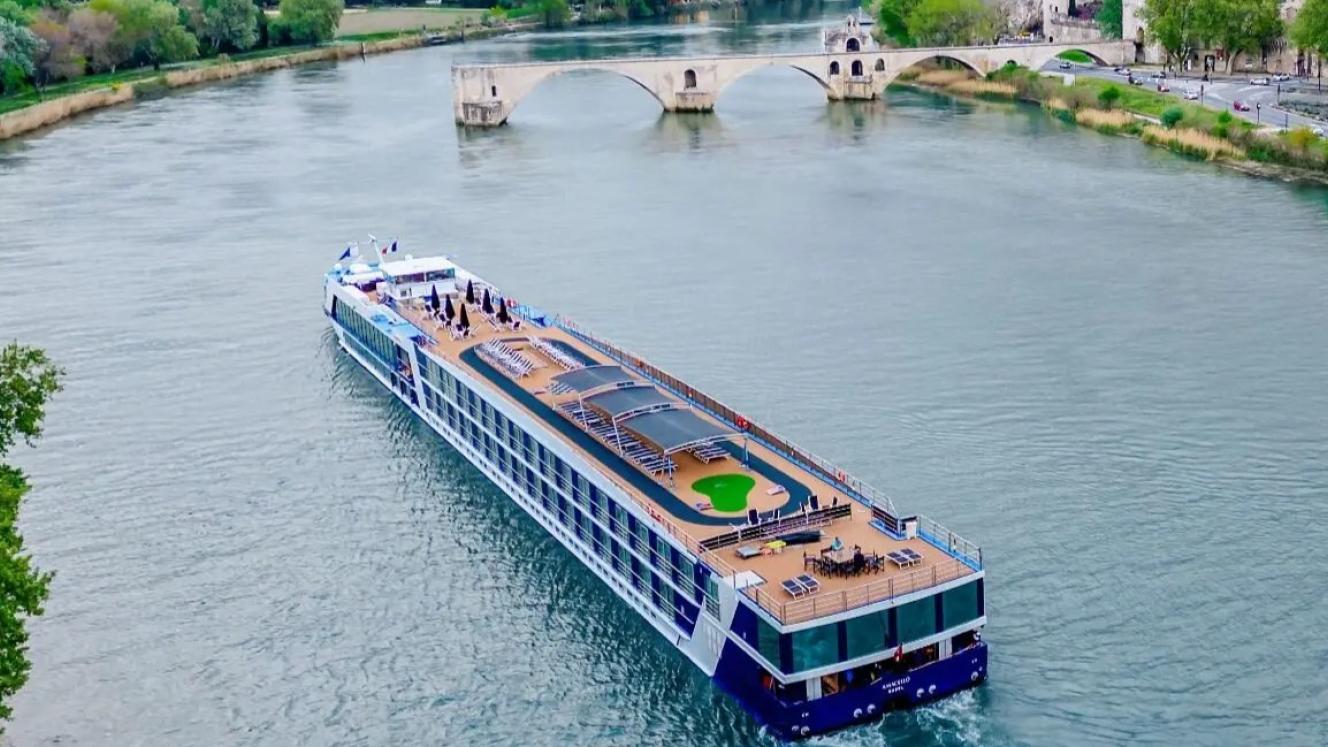
Low water levels are becoming an important consideration for European river cruising, with operators having to adapt to unpredictable weather patterns. While the industry says river cruising remains resilient, greater flexibility and contingency planning are expected to play a bigger role in the future.
“The Danube in Romania has dropped to its lowest point in about 30 years, and the Rhine, the Main and the upper Danube are all running below seasonal norms. When water levels reach certain thresholds, ships can no longer navigate portions of a river safely,” said AmaWaterways on its website.
In July, several cruise lines operating on the Rhine and Danube issued travel notices warning passengers of potential disruptions to itineraries, which could include changes to ports and embarkation or disembarkation locations, motorcoach transfers and rescheduling.
Toward the end of July, Viking Ullur ran aground on a sandbank while sailing the Danube. No one was injured, and passengers were transferred to shore to continue their itineraries. Avalon Waterways also cancelled a number of sailings throughout the month due to the low water levels.
“Reduced water levels are affecting sections of the Danube and Rhine rivers, however the majority of Europe’s waterways remain unaffected. Only a limited number of sailings have been cancelled, with most itineraries continuing through flexible operational planning,” said Charmaine Lawrenson from Dream Destination.
“These remain seasonal events rather than a year-round reality and river cruise operators have developed sophisticated operational plans to manage them. While weather will always play a role, we expect the industry will continue adapting,” said Henuti Purshotam, Product & Marketing Specialist for Whitestar Cruise & Travel.
Itinerary adjustments
Lawrenson said experienced operators had established contingency plans in place to minimise disruption during periods of low water levels.
Purshotam said the impact was often operational rather than experiential. “In some cases, ships may adjust embarkation ports, alter docking locations or use motor coach transfers to bridge sections of the river that are temporarily difficult to navigate.”
AmaWaterways also makes use of a sister-ship swap. “Two of our ships operate the same river from opposite ends, and guests transfer from one to the other during a scheduled onshore experience. The Danube runs through a series of dams that hold its levels steadier, while the Rhine has none, so we route and plan with that difference in mind,” said the cruise line.
Booking behaviour
Low water levels do not appear to be deterring travellers from river cruises, but they may be influencing when they choose to travel.
“The situation is encouraging a growing trend towards shoulder-season travel, with more travellers choosing to cruise during spring and late autumn when river conditions are generally more favourable,” said Lawrenson.
Managing expectations
Travel agents play an important role in managing client expectations and explaining how river levels can affect itineraries.
“Before booking, we always discuss river levels with clients. The Rhine and Danube are more prone to fluctuations, while rivers in France and Portugal tend to be more stable,” said Lawrenson.
It was important to set realistic expectations, according to Purshotam.
“Our role is to equip travel advisers with the knowledge and confidence to have these conversations with their clients before they travel. Travellers should understand that an itinerary may be adapted, but this does not mean the holiday is cancelled,” said Purshotam.
She said travel agents played an important role in setting these expectations from the outset. “When clients understand that flexibility is part of travelling on Europe’s rivers, they are far more likely to appreciate the efforts operators make to deliver the exceptional experience they booked.”