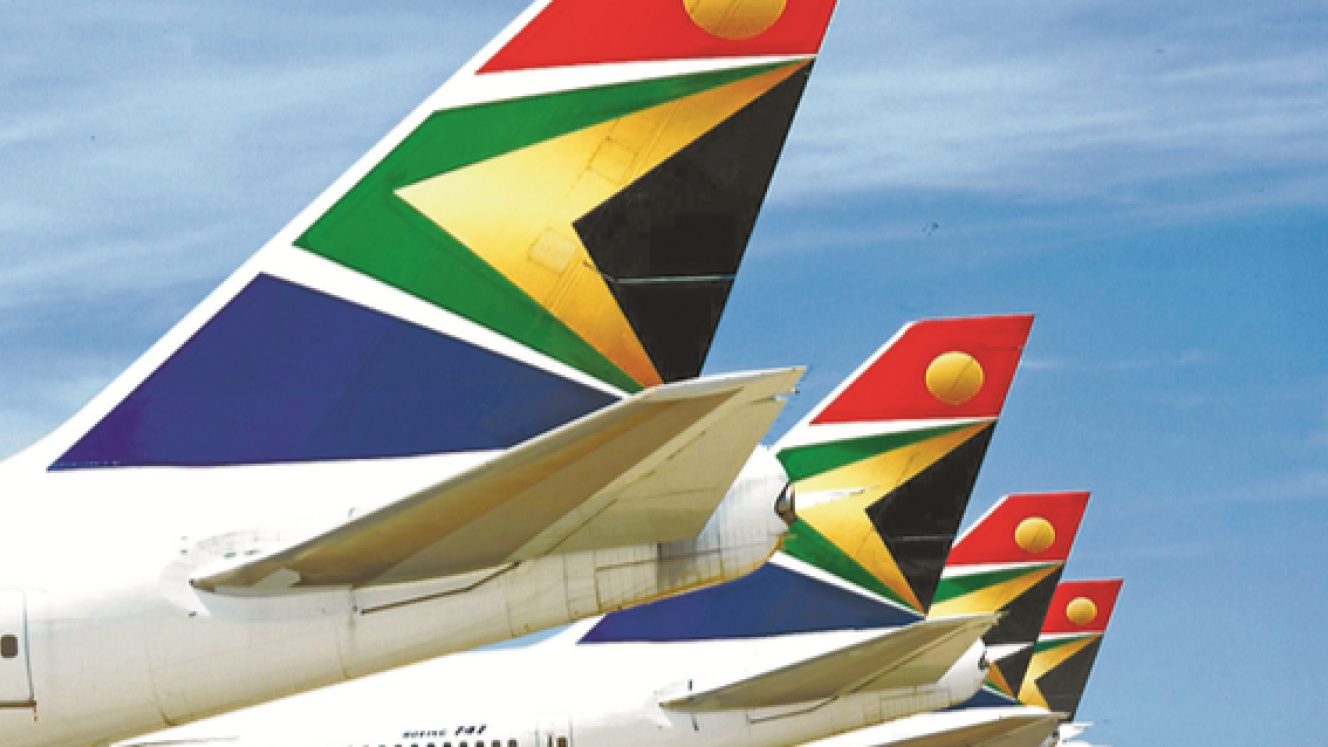
SAA is pursuing partnerships rather than government financial support, as the airline grapples with rising fuel costs and ongoing scrutiny over its financial position following a disclaimer audit opinion from the Auditor-General of South Africa (AGSA).
In late April, the Auditor General of South Africa issued a disclaimer audit opinion on SAA’s 2024/25 financial results, flagging unreliable financial statement, revenue leakage, material uncertainty and reliance on once-off gains in SAA’s 2024/25 financial results, raising questions about the reliability of the airline’s reported profits.
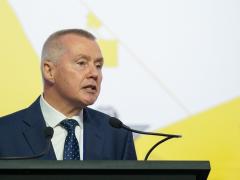
In multiple media interviews, the airline has provided no further clarity about its financial state, but SAA’s new Acting CEO, Matshela Seshibe, has maintained that the airline is striving for “sustainability” and, at the recent 14th Aviation Stakeholders Convention (ASC) this week, he noted in passing that “(an airline) can't be sustainable without being profitable”.
Fuel costs exacerbate struggles
At the Convention, Seshibe revealed that the airline was under severe financial pressure due to high jet fuel prices, driven by geopolitical tensions.
“With the turbulence that we see around the world, our very immediate term plan is to stabilise the airline against a very serious shock that has taken place in the aviation world,” Seshibe said, referring to rising jet fuel costs.
High refining costs in South Africa have further inflated jet fuel prices. Seshibe said that while crude oil prices had risen sharply, crack spreads – a measure of refining margins – had added further pressure to fuel costs.
As a result, the airline said it had had to pass on about 50% to 60% of the additional fuel costs to passengers, while also reducing frequencies on selected routes. In early May, it announced a reduction of frequencies on its Cape Town, Durban, Gqeberha and Gaborone routes.
Route expansions
Despite these challenges, Seshibe emphasised that the airline was committed to continuing its network expansion plan and that Africa was its focus.
“In the medium- and long-term, SAA is excited about the prospects for growth in Africa. We are in the process of finalising our route network expansion plans. We are currently operating more than 14 of our routes on the African continent and we are looking for more options,” he said, but did not reveal any destinations.
Additionally, the airline said that it would leverage its partnerships to maintain its domestic network.
“To further our connectivity into South Africa, we are looking to collaborate. When I am talking about this collaboration, this is not just between SAA and other state airlines, it is also private-sector airlines,” Seshibe said.
“To enable our domestic connectivity we recently finalised a partnership with CemAir, for example, to expand our reach to smaller airports that are not convenient to operate to because of the size of aircraft that we currently operate.”
SAA also plans to further leverage its Star Alliance membership and codeshare agreements to extend its network reach.
More partnerships
During a panel, Seshibe revealed that the airline was looking to utilise all types of partnerships to improve and expand its operations.
“We want to capture more markets and we are considering all options to do so, including partnerships, joint ventures, as well as buying new aircraft and leasing,” he said.
He maintained that SAA’s expansion plans would not rely on government funding.
“SAA’s growth strategy is not just linked to its (government) ownership. It's linked to strategy. It's linked to partnership. It's linked to collaboration on a wider scale,” he said. “My vision is to see an SAA that is more commercial and reliable, and that is financially sustainable.”