
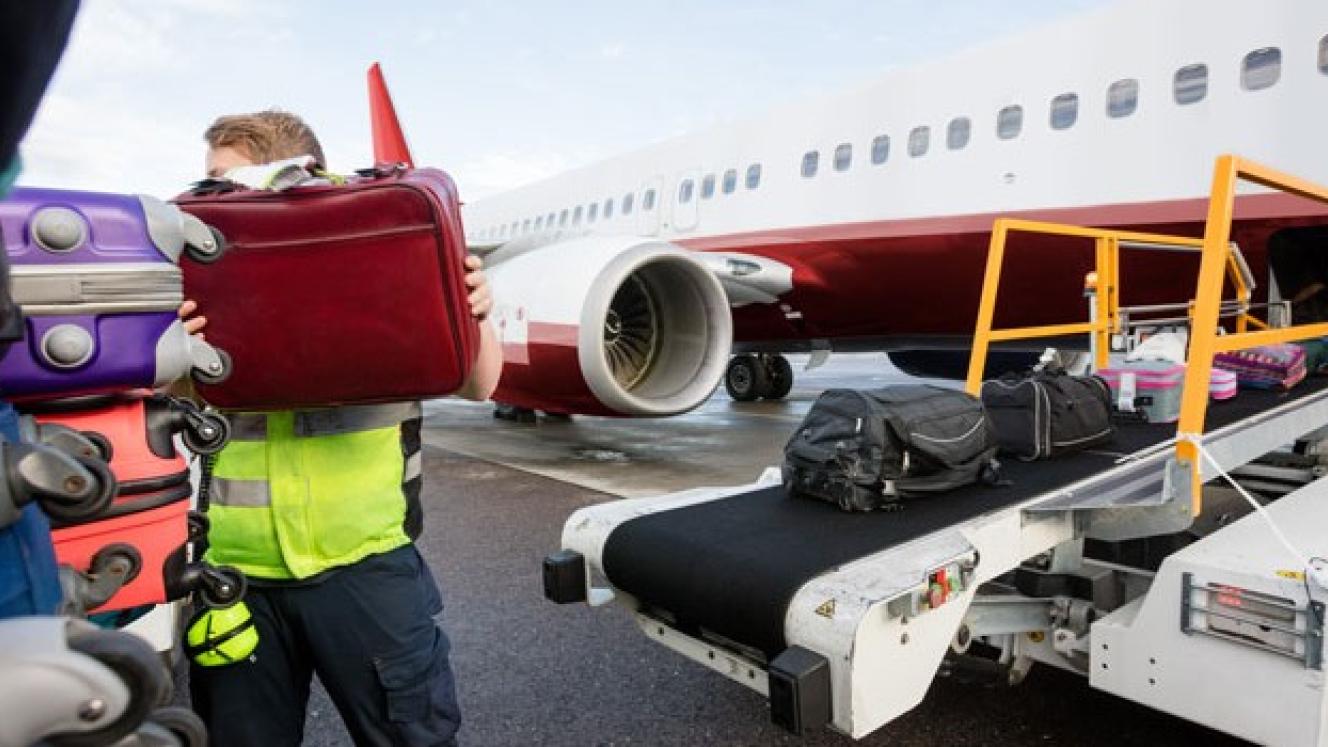
After SITA's latest baggage report showed that Africa has the world's highest baggage mishandling rate, Travel News spoke ACSA the causes of the problem, its financial impact and the measures needed to improve baggage performance.
According to the SITA 2026 Baggage IT Insights Report, Africa recorded 12,1 mishandled bags per 1 000 passengers in 2025 – the highest rate of any region globally despite a 23% drop in global mishandling rates and wider progress in baggage technology and tracking.
Globally, the industry still mishandled 24 million bags last year with baggage disruption costing airlines and airports an estimated US$6,3 billion (R102,3 billion) annually. SITA’s latest benchmark also places the average cost of a mishandled bag at US$260 (R4 222), which is up sharply from the long-cited estimate of US$150 (R2 435).
For Africa, SITA links the higher mishandling rate to the complexity of international journeys involving multiple airlines, airports and baggage handlers as well as capacity constraints and ageing infrastructure in some markets.
ACSA told Travel News that South Africa is seeing similar structural pressures although its own baggage handling performance improved slightly last year.
“While Africa continues to record one of the highest baggage mishandling rates globally, ACSA has seen encouraging improvements across its airports. Through close collaboration with airlines, ground handling agents, law enforcement and other aviation stakeholders, ACSA has implemented targeted initiatives to reduce baggage mishandling,” said ACSA Group Spokesperson Ofentse Dijoe.
He said a key intervention has been the establishment of the Baggage Reaction Unit multi-stakeholder task team focused on identifying operational risks, responding rapidly to baggage incidents and implementing corrective actions.
Of the 15,7 million bags processed by ACSA in 2024, 36 979 were mishandled. In 2025, this increased to 18,4 million bags and 42 996 mishandled.
Despite the increase in the number of mishandled bags, ACSA said the mishandling rate improved slightly from 0,00236 in 2024 to 0,00234 in 2025.
“While challenges remain, particularly as passenger volumes continue to grow, the positive trend demonstrates that coordinated operational oversight, improved processes and stakeholder collaboration are having a meaningful impact on baggage handling performance at South Africa’s airports,” Dijoe said.
Pressure points
ACSA says the most significant local pressure points arise when baggage leaves the airport system and is handed over to airline-appointed ground handlers.
Once baggage leaves the airport for loading onto the aircraft, responsibility for its safe handling and security rests with the respective airlines and their contracted ground handling agents, Dijoe pointed out.
“While all parties remain committed to reducing baggage mishandling, further investment in surveillance technology, operational oversight and coordinated security measures will strengthen visibility and accountability throughout the baggage journey.”
Technology gap
SITA’s report identifies Africa as the region with the greatest opportunity to improve baggage performance through end-to-end tracking, better data sharing, biometrics and AI-powered prediction.
ACSA agrees that visibility across the baggage chain is one of the most important missing pieces.
“The single most important step the industry can take is the widespread implementation of end-to-end digital baggage tracking, supported by internationally recognised technologies such as radio frequency identification and real-time data sharing across the entire baggage value chain. Providing all stakeholders with real time visibility of baggage from check-in to reclaim enables proactive intervention when issues arise, reduces the likelihood of mishandling and enhances the overall passenger experience.”
Dijoe said ACSA has implemented a real-time baggage tracking application that allows passengers to monitor the status of their baggage while travelling through ACSA airports. However, he acknowledged, lack of similar systems across the wider African aviation network limits end-to-end visibility.
“This presents a significant opportunity to further improve baggage handling performance. The broader implementation of IATA baggage tracking standards and resolutions across African airports would significantly enhance end-to-end baggage visibility, strengthen collaboration among industry stakeholders and contribute to a reduction in baggage mishandling across the region.”
ACSA’s efforts are further supported by its Business Re-Engineering Initiative, which seeks to document, standardise and optimise processes across the entire airport value chain.
“Through this initiative, ACSA is identifying opportunities to leverage emerging technologies, including predictive analytics, automation, enhanced baggage tracking and other digital solutions, to improve operational performance and service delivery,” Dijoe said.
Still needed
Although ACSA says its airports are currently able to meet existing baggage handling demand, Dijoe acknowledged that reducing mishandling in South Africa will require more than just technology.
He said technology would only be effective if it was supported by strong collaboration among airports, airlines, ground handlers, regulators and security stakeholders as well as standardised procedures, training and performance-based management.
“By combining digital innovation with effective governance and industry-wide collaboration, the African aviation sector can significantly reduce baggage mishandling, improve operational efficiency and progressively align its performance with international best practices.”
ACSA said its long-term capital investment programme includes plans to modernise and expand baggage handling infrastructure and supporting technologies over the next five to 10 years.
“These planned investments align with projected passenger growth, evolving operational requirements and international best practices,” said Dijoe.