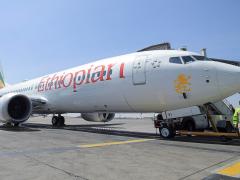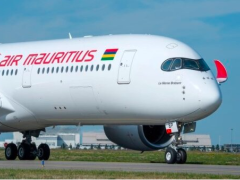

Proposed regulations for international carriers operating in South Africa could weaken air connectivity and pose risks to the South African travel and tourism sectors, industry experts have warned.
The concerns were raised in response to the Department of Transport’s (DoT) Draft Comprehensive Civil Aviation Policy, which proposes restricting stopover rights for foreign carriers and prioritising South African-registered airlines in the international air transport market.
Aviation economist and charted accountant, Joachim Vermooten, described the proposal as protectionist, warning that it could isolate South Africa from global aviation partners, and damage tourism and trade which rely on air connectivity.
Controversial policy shift
In the draft policy, the DoT says the proposed amendments are aimed at protecting the domestic aviation market and South African-registered carriers.
One of the stated objectives is to give preference to local airlines in the international air transport sector. This would be achieved by preventing international airlines from obtaining stopover rights and by withdrawing stopover rights already granted through bilateral air service agreements.
Vermooten argues that prioritising South African airlines in this way is inconsistent with the country’s commitments under the International Civil Aviation Organization’s (ICAO) Chicago Convention.
“Such an approach could lead to international disputes with other states and ultimately expulsion from the ICAO system,” he warned, adding that the convention required national governments to treat carriers fairly, with equality in terms of opportunity and market access.
International connectivity essential to travel
ICAO’s objectives also place emphasis on providing travellers with more affordable and varied air travel options by reducing the cost of air travel and improving market competitiveness and air connectivity.
He claims the draft includes policies aimed at protecting the national carrier, and added that, in the past, excessive focus on the state-owned airline’s activities has resulted in limited growth of capacity by foreign carriers and increased prices on existing operations, reducing consumers' benefits and choices, air connectivity, competitiveness and business opportunities in the marketplace.
“These all act as barriers to tourism growth and reduce economic development,” said Vermooten.
A reversal of deregulation?
Vermooten also raised concerns that the draft policy represented a shift from South Africa’s long-standing deregulated domestic air transport framework and its more liberal international aviation policies.
“The domestic air transport policy was deregulated in 1990. Nowhere previously have deregulated domestic markets been reversed to regulated markets,” he said.
While government has full authority over domestic aviation policy, Vermooten added that international aviation policy required consultation and negotiation with other states through bilateral agreements.
He warned that placing the protection of the state-owned national carrier at the centre of policy-making would reduce competition and restrict airline activity.
“This would be reminiscent of systems that existed from 1936 to 1990 and 1949 to 1993, effectively reversing economic deregulation of the domestic air transport policy and liberalisation of international air transport.”
Implementation
The DoT published an extension for industry stakeholders to submit comment, from June to July 2025. When approached for comment, the DoT did not provide any updates as to when a new draft would be published and when potential implementation would materialise.
Airlines Association of Southern Africa (AASA) CEO, Aaron Munetsi, said the policy required further refinement.
“The Draft Civil Aviation Policy needs to be refined and or fine-tuned in such a way that the policy balances national interests with global competitiveness, thereby enhancing connectivity not only within the country but across the continent and beyond. AASA’s mandate is to ensure sustainability of the aviation industry by supporting and advocating policies that will contribute to this objective for the benefit of its members.”
The Board of Airline Representatives of Southern Africa CEO, George Mothema, told Travel News that the association had noted that parts of the policy might create uncertainty and weaken the balance required to ensure a fair and competitive operating environment for all airlines in South African airspace.
“International airlines play a vital role in driving tourism, enabling trade and supporting jobs across South Africa’s aviation and hospitality value chains,” said Mothema.