FLYSAFAIR’S entrance into
the South African market
is expected to bring relief
to domestic passengers
currently paying high airfares.
The airline opened ticket
sales last week, with fares
starting at R499 for flights
between Cape Town and
Johannesburg, and R399
between Cape Town and Port
Elizabeth, inclusive of taxes.
The airline will launch services
between Cape Town and
Johannesburg on October 16 –
a year after it initially planned
to take off.
A quick search for flights
from Johannesburg
(OR Tambo) to Cape Town
for travel from December 13
to 20 revealed that FlySafair
fares were half those of kulula
and Mango. Kulula came in at
R2 414 and Mango at
R2 170, while FlySafair fares
were R998.
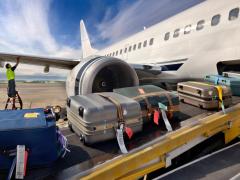
The base rate gives
travellers only a seat on the
flight. They will have to pay
for additional ‘luxury’ items,
such as checked luggage and
pre-seating. But even with the
R300 charge for a checked
bag, the fare was still around
43% less than its competitors.
Chris Zweigenthal, ceo of
Aasa, says it is likely that
other airlines will respond
by introducing competitive
fares but warns that only time
will tell how long this will be
sustainable. He adds that the
competition will undoubtedly
put significant pressure on
yields and airline profitability.
“The launch of FlySafair in
October will introduce new
competition for the domestic
airline industry, both low-cost
and legacy carriers,” he says.
Hein Kaiser, Mango’s
spokesperson, agrees, saying
he foresees a competitive
adjustment from the entire
sector. “The South African
air travel market continues
to be highly sensitive vis-à-
vis the relationship between
capacity and demand. In the
current economic climate,
demand continues to be under
pressure and at this time,
available capacity slightly
exceeds it.”
He adds that there will also
be a small measure of market
stimulation from FlySafair’s
launch fare offer. Hein says
the new carrier’s launch fare
is of benefit to consumers
but adds that the market will
determine sustainable pricing
over the medium and long
term. “Given the already highly
competitive environment,
competitive parity would likely
be reached as the market
becomes over saturated with
capacity.”
However, Dave Andrew,
ceo of FlySafair, says the
announced fares are not just
opening specials or marketing
showstoppers to announce
the start-up of FlySafair. “Our
fares will always be affordable,
honest and transparent,
offering our passengers real
value on each and every one
of our flights, making air travel
more accessible to a greater
proportion of the South African
population.”
Dave says the model is
sustainable, as only travellers
who book early will be
rewarded by the lowest fares,
while those booking lastminute
will pay higher fares.
“The average fare across all
seats in aggregate exceeds
the costs of operating
the flight. This is a highly
sustainable model, as has
been proved in the Americas,
Europe, and Asia with the likes
of airlines such as Southwest,
JetBlue, Ryanair, easyJet
and Air Asia, all of which are
among the most profitable
airlines in the world.”
But the South African
domestic market is tough,
says Chris. He says launching
a new carrier will not be easy,
especially as the economy is
not growing at a fast rate. He
adds, however, that the staff
and management at FlySafair
are extremely competent and
they have been in the aviation
business for years. “Safair
is a member of Aasa and
we wish them well with their
launch.”
FlySafair first opened ticket
sales for flights between
Johannesburg and Cape Town
in September last year with
the maiden flight scheduled for
October 17, 2013. The airline
was blocked from launching
and forced to re-accommodate
and refund passengers after
the court granted an interdict
sought by competitors, Comair
and Skywise.
However, this time Comair
will not take action against
FlySafair. Comair ceo, Erik
Venter, told TNW: “The
Licensing Council of the
Department of Transport
has approved the new
shareholding structure of
Safair as being legal. We
welcome any new privatesector
airlines as long as
they operate under the same
legislation that Comair has to
comply with.”
Comair did not respond to
requests for comment on how
FlySafair’s entry would impact
on fares in the domestic air
travel sector.