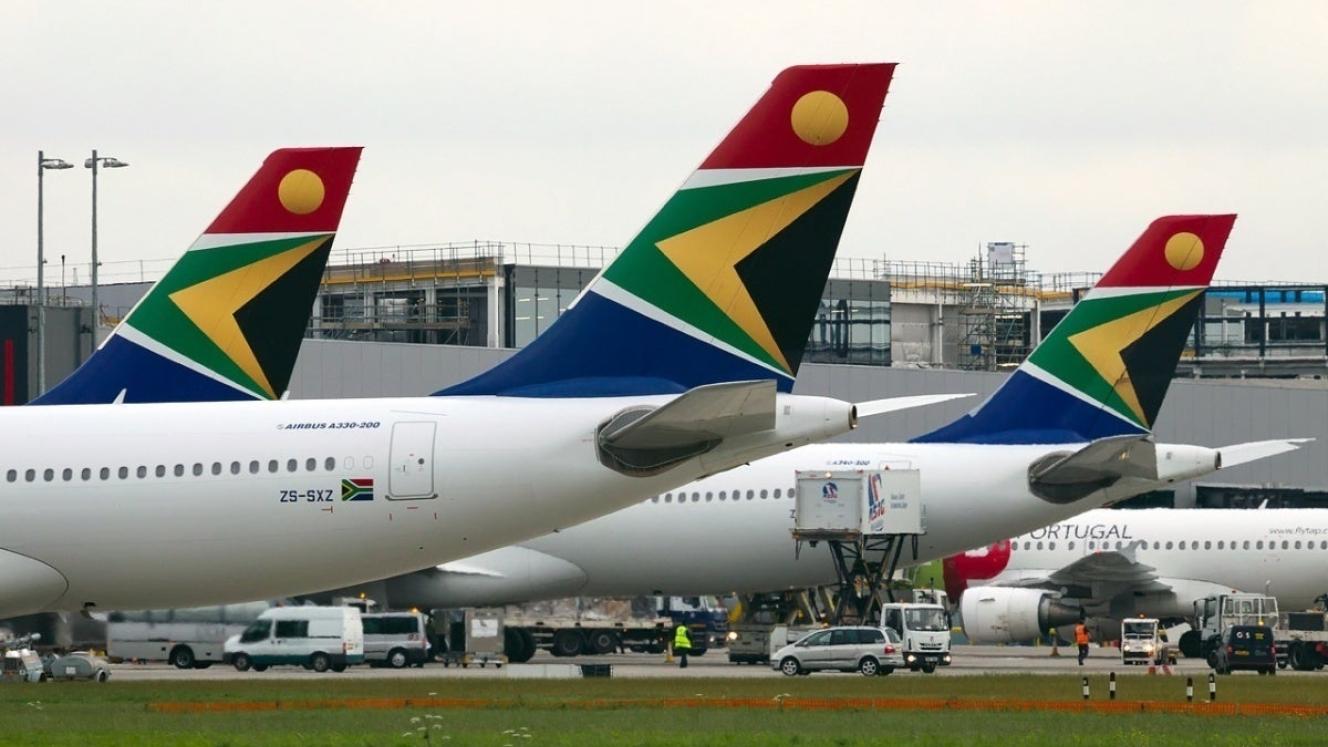
SAA’s bid to have pilots, cabin crew and certain operational staff designated as essential services could have far-reaching implications for labour relations across the aviation sector, potentially limiting strike action at airlines nationwide.
The matter follows an application by SAA to the Essential Services Committee (ESC) to investigate whether pilots, cabin crew and certain operational staff should be designated as essential service workers under the Labour Relations Act.
However, legal experts say the application faces significant hurdles as South Africa's courts have consistently taken a narrow view of what qualifies as an essential service.
Neetesh Ramjee, the Head of the Aviation & Aerospace Practice at Dentons in South Africa, said: “The constitutional threshold for essential services requires the interruption of a service to endanger life, personal safety or health,” explained Ramjee, but he notes that the test is strict and applied narrowly to specific services not entire professions or industries.
“Therefore, the inquiry is function-specific, noting that only certain aviation activities such as onboard safety, emergency medical care or transport of medical supplies may meet the threshold if interruption would pose a real risk. At the same time, it stresses that pilots and cabin crew perform mixed roles, combining safety-critical and commercial functions, which complicates blanket classification.”
What if the ESC rules in SAA’s favour?
If the ESC rules in favour of SAA, the designation will apply to the whole aviation industry in South Africa.
“Should functions such as aircraft operation or onboard safety be classified as essential, all airlines performing those same functions will be bound by the ruling. The effect is inherently sector-wide because the Labour Relations Act regulates categories of service, not individual companies, allowing a single determination to extend across the entire aviation industry,” he said.
Ramjee explained that all employees performing the designated functions would lose their constitutional right to strike and any labour disputes would instead be channelled into compulsory conciliation and arbitration through the CCMA.
“Such a ruling will cause a shift within the industry taking into consideration that this is occurring at a time when global pilot shortages persist,” noted Ramjee. “Therefore, the risk of talent mobility remains high and any regulatory shift affecting working conditions is likely to influence exodus of talent and experience to find less restrictive systems.”
Blanket designation unlikely
Ramjee said that a full, blanket designation of all pilots and cabin crew was unlikely, as the Constitutional Court had previously prioritised the right to strike.
“Any essential services designation must operate within the constitutional framework governing the right to strike. In this regard and as noted in the South African Police Service v Police and Prisons Civil Rights Union and Another case the Constitutional Court has shown a clear preference for a restrictive interpretation and emphasised that only specific services, rather than entire sectors, may be classified as essential. In this judgment, the Court explicitly held that ‘essential service’ must be interpreted restrictively to protect the right to strike,” said Ramjee.