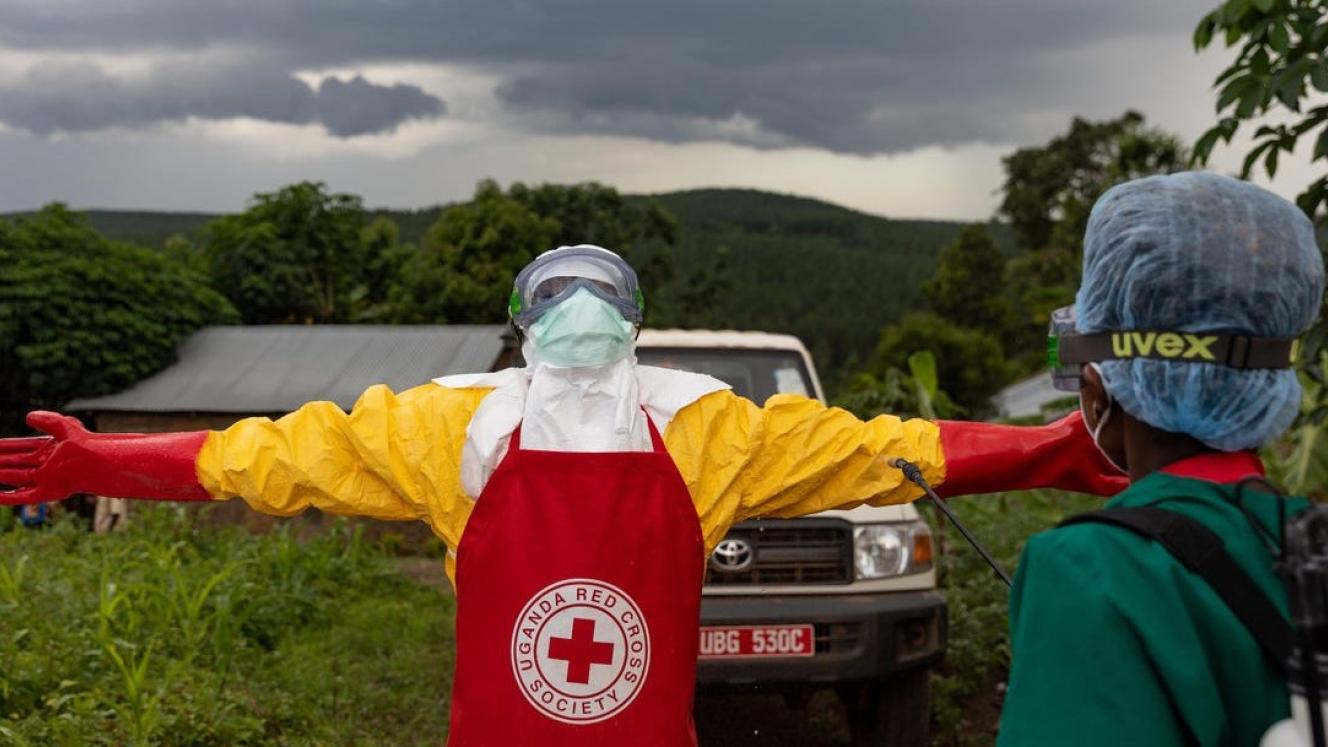
Despite the World Health Organisation’s (WHO) recommendation against travel restrictions, several countries have tightened entry requirements for travellers arriving from the DRC and Uganda following the outbreak of the Bundibugyo strain of Ebola.
On May 31, WHO Director-General Tedros Ghebreyesus urged countries that had imposed travel restrictions or closed borders in response to the outbreak to reconsider the measures.
Nevertheless, countries in North America and Africa have introduced a range of restrictions, from entry bans and quarantine requirements to enhanced screening measures for travellers who have recently visited the DRC or Uganda.
US
On May 22, the US Centers for Disease Control (CDC) and the Department of Homeland Security introduced enhanced screening and entry restrictions, barring foreign nationals from entering the country if they had visited the DRC or Uganda in the past 21 days.
Canada
On May 26, the Canadian government banned residents from the DRC, Uganda and South Sudan from entering Canada for 90 days, effective May 27.
Canadian citizens, permanent residents and other eligible travellers who have recently visited affected areas and are asymptomatic must quarantine for 21 days.
Rwanda
On May 22, the Rwandan Ministry of Health announced that all foreign nationals who previously travelled or transited through the DRC within 30 days prior to their arrival in Rwanda would be denied entry.
Rwandan nationals and foreign residents will be allowed to enter; however, they may be subject to mandatory quarantine procedures.
Kenya
On May 25, the Kenyan Ministry of Health said it had enhanced screening of travellers at high-risk points of entry. Isolation and holding facilities have been activated in designated border locations to support potential containment efforts, the ministry added.
Enhanced Screening
Several other countries have opted for enhanced screening and targeted traveller monitoring.
Tanzania
Effective May 19, all travellers arriving in or transiting through Tanzania from the DRC or Uganda must complete an online digital screening questionnaire via the official government portal prior to arrival, or submit an equivalent paper tracker on board.
Health personnel deployed at all key international airport terminals, lake ports, and land crossings are actively conducting mandatory non-contact body temperature checks and visual triage on all incoming passengers.
Zambia
Zambia has increased its screening and surveillance for Ebola at its ports of entry, after authorities cleared two suspected cases.
"Zambia has developed screening tools and protocols, which are already being used to screen for Ebola at entry points into Zambia and on people within the country who have Ebola-like symptoms," the Zambian Health Ministry said in a statement.
Thailand
Thailand has implemented Ebola disease-related screening and quarantine measures for travellers who stayed in or transited through the DRC and Uganda, the Thai Health Ministry announced.
Effective May 27, travellers from the DRC, Uganda or other neighbouring countries with cross-border transmission will be screened by communicable disease control officers at Bangkok Suvarnabhumi Airport and could be subject to mandatory quarantine or self-isolation for at least 21 days.
India
India’s Airport Health Organisations at international entry points have set up surveillance tracking.
Travellers arriving from or transiting through the affected nations must self-report symptoms before passing immigration and face active post-arrival health monitoring for 21 days.
Singapore
Singapore has implemented health screening, temperature checks, and electronic arrival health declarations for targeted passengers arriving from or via the affected countries.
South Korea
South Korea has increased its quarantine screening under its digital Q-CODE system. Arriving travellers with recent travel history to Uganda or the DRC must submit health declarations and undergo physical arrival screenings and temperature monitoring.
Mexico
Mexico’s Health Secretary David Kershenovich addressed the media on Monday, outlining tighter Ebola screening measures at airports, urging the public to avoid travel to the DRC and asking arrivals from the country to observe a 21-day quarantine, reported Reuters.
European Union
The European Union’s Health Security Committee said on Friday entry screenings were not necessary for passengers arriving from the DRC and Uganda, citing low risk to the population.
Airline cancels flights
While most airlines operating in, to and from the region are strictly enforcing local health directives rather than cancelling flights, KLM announced that it would cancel some of its direct flights to Entebbe, Uganda, due to the Ebola outbreak.
“KLM is keeping a close eye on the Ebola outbreak in Central Africa. Some countries have put travel measures in place for those who recently travelled through Entebbe, even though the area isn't currently seen as an active risk zone,” the airline said in a statement.
“Because these travel and entry measures now also apply to our crew, we can no longer operate these flights as planned. That’s why we're cancelling select flights to and from Entebbe.”
KLM cancelled flights to and from Entebbe on May 30 and June 1. It said it will continue to monitor the situation.
Vaccine in progress
On June 2, BBC reported that three new vaccines are being developed to tackle the rare Bundibugyo strain of Ebola.
The vaccines are being developed by the International Aid Vaccine Initiative, the University of Oxford and the pharmaceutical company, Moderna.
Trials for the different vaccines are set to start in the coming months.
"A Bundibugyo vaccine could help to control this epidemic and strengthen preparedness for future outbreaks,” said Ghebreyesus.