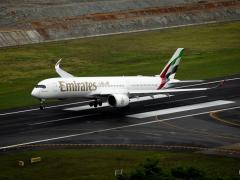
In a landmark agreement, the European Parliament has approved new passenger rights that will prevent airlines from automatically cancelling return flights when passengers fail to use the outbound leg of their journey.
While the legislation applies only to flights covered by EU consumer protection rules, it will give South Africans travelling on European airlines greater protection.
Otto De Vries, CEO of the Association of Southern African Travel Agents and Advisors (ASATA), said: “It's important to be clear from the outset that this is EU legislation, applying to flights covered by EU consumer protection rules, not a global standard. This ruling certainly puts real pressure on airlines (within and to/from the EU) to re-examine fare structures that have become increasingly complex for passengers to navigate.”
“What we may see, at least on EU-regulated routes, is a gradual shift toward more transparent, fixed one-way pricing, which would be a positive development for passengers and for the travel trade alike. Clarity in pricing builds trust and trust drives travel.”
De Vries said directional pricing and nested fares had evolved as commercial tools within a particular regulatory environment, but if no-show clauses can no longer be reliably enforced, commercial logic among airlines would need to adapt.
The learning curve
In an interview with Travel News, Ann Cederhall, Travel Technology Specialist at LeapShift, elaborated on the logistics for airlines to implement this new rule, noting that it would not impact departure control or check-in systems, but it would require changes to passenger service systems, revenue integrity and some revenue management systems.
“In the passenger service systems (PSS), this change is more or less a switch. These systems are currently programmed to automatically cancel a return flight if a passenger does not board the outbound flight. This will have to be deactivated,” said Cederhall.
“But where this may prove challenging is deactivating the ‘switch’ only for journeys that geographically fall within the jurisdiction of the new EU ruling. This will be tricky. If I were an airline, I’d deactivate the policy everywhere and just deal with it, because it would be much easier.”
De Vries explained that despite the potential benefits for passengers, this type of reform doesn't exist in a vacuum, noting that fares have already been under upward pressure from fuel availability concerns and geopolitical instability in the Middle East, and airlines have shown a clear willingness to leverage such conditions commercially.
“The real question is not just whether EU fare structures become simpler, but whether that simplification translates into genuine affordability. Right now, I do not see increased fares as an option, but we may see airlines continue to artificially inflate prices, even as actual fuel costs diminish,” predicted De Vries.
Will EU airlines hike prices?
According to De Vries, airlines may inflate their airfares or recalibrate their revenue management in response to the rule to absorb what they may deem as “financial risk”.
“This is a legitimate concern worth monitoring, though it's also worth noting upfront that any pricing response would play out specifically on routes and carriers falling under EU jurisdiction,” he said. “That said, the European market is competitive. Significant, across-the-board fare increases on European routes would need to be weighed against competitive pressure from other carriers, so the more likely outcome, at least in the short term, is a restructuring of fare products rather than a straightforward price increase.”
Cederhall explained that it is undeniable that the change will impact airlines’ revenue systems.
“There will be an impact on revenue integrity systems, because these systems will check the reservation database for fraud, fictitious bookings and what it deems inactive bookings. Revenue management systems will also have to change because it can’t put that inventory back up for sale anymore,” she said.
Cederhall emphasised that while EU airlines might resist the change, it poses no real risk to them because the product is already paid for and it offers passengers peace of mind that their booked seats won't be resold.