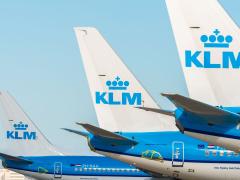
Is the end in sight?
AVIATION analyst, OAG,
recently released
a report on the
state of the air transport
market titled The Fight for
Global Markets – Is Three
the Magic Number? The
report maintains that,
“airline alliances have run
their course and will not
survive”.
John Grant, executive
vice president of OAG,
explains that joint
ventures, equity stakes and
less formal partnerships
will increasingly challenge
existing alliance structures
and operations. This
trend, he predicts, will
trigger a new round of
aviation consolidation.
“Alliances are not a longterm
solution – they are
a fixed solution that has
run its course for many
circumstances.”
John illustrates his point
with the example of Qatar
Airways buying a 10%
stake worth about £1,2bn
(R23bn)) in British
Airways’ parent company,
International Airlines
Group. Although both
carriers are members of
the oneworld alliance, he
says this is an example
of how traditional
relationships between
airlines are changing.
According to John,
airlines are also looking
outside their alliances.
Korean Air, a member
of SkyTeam, recently
announced a codeshare
deal with American
Airlines, a key member
of oneworld. “Airlines will
make decisions outside
their alliances that are
in their best interests
– their need to remain
flexible outweighs their
membership.”
Chris Zweigenthal, ceo
of the Airlines Association
of Southern Africa (AASA),
agrees that we can expect
to see dynamic changes
within the industry with
more and more airlines
looking for codeshare
agreements outside their
alliances. “We will continue
to see independent
commercial agreements
between airlines,
regardless of their alliance.
We won’t be able to put
the airlines into specific
boxes any more, as their
behaviour will be dynamic.”
According to Chris, the
best example for South
Africa of this new trend
is the recent codeshare
agreement between SAA
and Etihad. “SAA is part
of Star Alliance, while
Etihad is not part of any
alliance. That’s a dynamic
relationship.”
Sylvain Bosc, chief
commercial officer of SAA,
shares this opinion, saying
that airlines have started
realising the increased
importance of codeshare
agreements, regardless
of alliances. He explains
that Etihad, for example,
owns airberlin, which is
part of oneworld, as well
as Alitalia, which is part of
SkyTeam, and also has a
codeshare with SAA, which
is part of Star Alliance.
“Many airlines are
wondering whether
alliances still make sense
for them,” adds Sylvain.
He says mid-sized carriers
in particular, such as SAA,
are questioning the costs
and benefits of being
members of an alliance
versus creating their own
alliance through a network
of tight partnerships with
other airlines.
The benefits...
The benefit of teaming
up with a few airlines
instead of joining an
alliance, according to
Sylvain, is that the airline
has more freedom. “When
you join an alliance, you
get married to a group.
Of course, when you get
married, you make a vow
that you are not going
to cheat. As a member
of Star Alliance we can’t
sign an agreement with
a member of oneworld
for example.” He points
out, however, that alliance
management boards
are well aware of these
constraints and there
seems to be a trend
towards greater leniency.
Despite the fact that
airlines might question
the benefits of alliances,
exiting an alliance is not
easily done, says Sylvain.
John admits that “it
would be a brave step for
an airline to walk away
from an alliance and
it would take years to
unwind the operational
arrangements”.
While John, nevertheless,
foresees the end of airline
alliances and a new era
of airline consolidation,
Sylvain isn’t so sure this
will happen. “No, it’s
absolutely not the end
of the alliances. I think
alliances will stay but
they will be a much less
exclusive club.”
There are still quite a
few benefits of belonging
to an alliance. According
to Sylvain, the primary
value of SAA’s Star
Alliance membership is its
relationship with Lufthansa
as a dependable and
trustworthy partner.
In fact, Jimmy
Eichelgruen, director
of sales for Africa
Middle East & Indian
SubContinent Delta Air
Lines, says: “The joint
venture agreement
Delta signed with fellow
SkyTeam partners Air
France, KLM and Alitalia
six years ago, and which
has become the blueprint
for partnerships of this
kind, continues to be
the backbone of our
transatlantic network.”
Also, for the consumer,
the alliances still offer
numerous benefits,
according to Chris and
Sylvain. They say frequent
flyer agreements, shared
lounges and the airlines’
increased footprints are
major benefits the alliance
offers for both the airline
and the consumer.
Jimmy agrees: “One
benefit of alliances is that
they are able to implement
best practice from one
carrier across all of their
members. For example,
after Delta launched
SkyPriority, offering
enhanced services such
as priority check-in and
boarding to its premium
customers, SkyTeam rolled
the initiative out across all
its members.”
Other customer benefits,
he says, include the ability
to earn frequent flier miles
across member airlines
and reciprocal lounge
access in airports where
individual airlines do not
have their own facilities.
According to Sylvain, the
future will be tough for
small- to medium-sized
airlines as they will need
to compete against the
giants like Etihad and
Emirates. Most airlines
will also not be in a
position to consolidate
as they will be restrained
by competition
regulations. “Emirates,
for example, can’t buy
SAA because every
country has ownership
rules that prevent
foreign ownership from
controlling the airlines.”
Chris adds that
the competition
authorities are watching
the alliances and
codeshares closely. He
says a product needs
to remain competitive
at all times as well as
satisfy the demand of
the market.
For consolidation to
happen in Africa, the
continent would first
need to have a single
aviation market, explains
Sylvain. “In reality, I’m
not sure many countries
are ready to let another
country’s carrier take
over their national
carrier. There is still
a lot of national pride
attached to airlines,” he
says, adding that there
are about 250 airlines
in Africa when the reality
is that 30 airlines could
address the continent’s
needs. However,
governments will not
allow a real pan-African
airline to take over.
New alliances – new
opportunities
IN A market dominated by
long-standing global alliances
and legacy giants that have
built their networks over the
decades, newer players need
to find different ways of more
effectively competing and
offering more choice to their
passengers.
This is where some of
the more recent alliances
come in, according to an Air
Seychelles spokesperson,
who spoke to TNW about
the Etihad Airways Partners
alliance, which launched late
last year.
“Etihad Airways Partners
is – in terms of the global
air travel market – a small
collective of like-minded
airlines, working in unison
to improve competitive
choice for travellers,” the
spokesperson said. Air
Seychelles, Etihad Airways
and Jet Airways are all
member airlines of Etihad
Airways Partners, which also
counts Alitalia, airberlin, Air
Serbia and Etihad Regional
among its members.
“This alliance allows
travellers from South Africa
to book seats across the
partner airlines, enjoying
greater choice of travel from
Johannesburg, and the ability
to mix and match flights to
suit their travel needs,” the
spokesperson said. The
airlines together carry 71
million passengers to 251
destinations in 88 countries.
It is the first alliance to
launch with six partner
airlines, where SkyTeam, Star
Alliance and oneworld all
launched with no more than
five.
For example, guests can
travel from Johannesburg
to Mumbai via Seychelles
with Air Seychelles. Once
in Mumbai, the codeshare
agreement between Air
Seychelles and Jet Airways
allows guests to connect
on to flights operated by Jet
Airways to Ahmedabad, Jaipur,
Cochin and Trivandrum. After
spending a week in India,
travellers can return from
Delhi to Johannesburg via Abu
Dhabi with Etihad Airways.
Another core component
of the customer offering
includes the introduction
of reciprocal recognition
for frequent flyer members
within the partner network
and the ability to earn and
burn across all partners.
“These benefits are being
introduced progressively,” the
spokesperson said.