SA Tourism confident of upturn
THE recent news that
South Africa’s domestic
tourism numbers declined
once again in 2016 over 2015
has not discouraged South
African Tourism’s ceo, Sisa
Ntshona.
He prefers instead to focus
on 2017’s performance, and
the impact SAT’s current Fivein-Five
strategy may have on
turning the domestic situation
around. In fact, he says, he
cannot wait until the 2017
figures are released. He says
just nine months into the fiveyear
plan, domestic holidays
are already 30% ahead of
projections.
The Domestic Tourism
Survey 2016, released by
Stats South Africa, revealed
that the number of day trips
last year decreased from
44,3m in 2015 to 39,4m,
with a decrease in expenditure
of R25bn to R23bn. Overnight
trips declined from 45,4m to
43m, but expenditure was up
from R62bn to R63bn, said to
be driven by higher spending
in the LSM 8-10 groups. This,
believes Sisa, is a reflection of
the widening gap between the
country’s haves and have-nots.
The survey attributed the
decline to the country’s
economic stagnation and
re-prioritisation of consumer
spending over the last two
years.
The goal of Five-in-Five is
to expand tourism by five
million tourists in five years
from the plan’s inception this
past January, of which one
million will comprise domestic
travellers. Within the country’s
overall domestic pool, SAT
has its sights firmly set on the
10% portion that comprises
true holiday travel, rather than
the 70% VFR segment or the
20% business tourism share.
To this end and in time for
the festive season, SAT will
shortly roll out ‘refurbished’
packaging from its anchor
delivery point, Sho’t Left, with
products at different price
levels to feed a wide set of
budgets. Although the success
of the campaign is not easy
to judge in the absence of
statistics, Sisa says Sho’t
Left is understood by South
Africans to offer
something for
everyone.
Sho’t Left
stakeholders
do express
satisfaction with
the campaign.
John Ridler,
PR and media
manager for
Thompsons
Holidays, says
it has been an
excellent tool
in highlighting
and stimulating
domestic travel.
City Lodge Hotel
Group (CLHG)
ceo, Clifford
Ross, agrees
that it is a great tool to drive
domestic travel, but until the
economy comes right and
consumer confidence returns,
the take-up will remain low.
“Corruption, state capture
and all the other negative
factors witnessed daily
in South Africa will keep
consumer confidence at
historic lows until something
gets done to change the
public perception and sustain
a more optimistic attitude.
There is definitely a lot of
potential in Sho’t Left,” he
remarks.
Recently SAT undertook
a roadshow to evaluate
countrywide capacity to
facilitate the possibility of
increased tourist
numbers, finding
it to be at
various levels of
readiness. The
Western Cape,
says Sisa, was
well prepared,
but smaller
locations were
still “closed on
Sundays”.
Sisa believes
SAT’s ‘We
do tourism’
campaign will
also have a
positive effect.
Determined to
make the case
for tourism far
and wide, SAT
has reached out to seemingly
unrelated sectors – banks,
parastatals, government itself
– in its attempts to create
a fertile environment for
tourism. With the country’s
mining and manufacturing
industries under pressure,
a perfect storm has been
created for tourism to step
into the breach, he says.
He also takes
encouragement from the fact
that the country is out of
recession, spurred by a 33%
improvement in agriculture.
Increasing numbers of tourists
(international figures are
performing well) consuming
more product, he believes,
have contributed in turn to
agriculture’s fortunes.
Thompsons concurs that
there has been a “small
decrease in demand for
domestic travel” and
attributes this to the lure
of competing overseas
destinations. Thailand, Bali
and Zanzibar are coming in
with packages of under R10
000 a week, including flights
and taxes. “In this instance,
we assume that the traditional
travel market is not flagging,
but has simply changed its
focus because of price,”
says John.
But a change is in the air.
“With talk of the end of the
recession we are looking
forward to an increase in
demand for domestic travel,”
he says.
CLHG’s domestic traffic
decreased in 2016, with
weekend occupancies in
particular taking the brunt.
Clifford expects more of the
same for the time being.
Current market conditions,
he says, will drive more
discounted package deals
and special offers to hit the
market. But without a catalyst
to stimulate domestic demand
(mainly confidence) these will
just remain ‘specials’ without
a great take-up rate.
“But hopefully things will
start to improve at the end
of the year and usher in a
brighter outlook next year,”
he concludes.
Hospitality bookings mirror drop
LEADING GDS, Travelport,
reports that bookings by
South African travel agents
at South African hotels
reflect the general downturn
in the domestic travel sector
in 2016.
According to Robyn
Christie, country manager,
travellers’ needs have
changed along with the
overall domestic landscape.
Thus Travelport, as an
eCommerce platform, has
changed the manner in
which it distributes content
to agencies.
“One way in which we
are mitigating the general
decline in the hospitality
environment, is not only
by increasing content, but
also focusing on pertinent
content,” says Robyn. A
key initiative has been
the inclusion of the B&B/
guesthouse industry for
agents to onward sell in
their current workflow.
The initiative is an
advantage not only to
agencies but to the
hospitality establishments
too, many of which
have limited distribution
channels. Travelport offers
them increased exposure,
a global footprint and
increased revenue.
SANParks feels the pinch
THE decline in domestic tourism
has been felt by SANParks, which
has seen its first fall-off in South
African visitors in six years.
According to Rey Thakuli,
gm Communications, for the
2016/2017 financial year South
African residents were down 3,3%
from 2015/2016 in all national
parks, excluding Table Mountain
and the West Coast National Parks,
where demographics are currently
not measured. It must be borne
in mind however, that SANParks’
financial year runs April 1-March 31,
and in 2016/7 the Easter weekend,
which normally has a significant
influence on South African numbers,
fell outside this period.
South African residents accounted
for 71,3% of the total guest
number in the Kruger National
Park in 2016/7, and 67,8% of
guests in all national parks, once
again excluding Table Mountain
and the West Coast. Rey says, in
view of current difficult economic
conditions, only a minor increase in
South African residents is expected
by March 31, 2018.
Following an 11-month notice
period, SANParks is due to change
its commission structure to travel
agents for stays from December 1.
When first announced last year,
the change, basing commission
on volume of business as always,
but with the addition of an average
camp occupancy, stirred some
concern in the trade. The purpose
of the move is to stimulate
business to low occupancy
facilities and improve yield on high
occupancy ones.
Rey confirms that implementation
will indeed take place at the start
of December. “Advance bookings for
11 months ahead look optimistic
and the results are only measured
once business is realised, so we
will assess this in due course.” He
pointed out that in terms of STO
rates, SANParks would continue
in its endeavour to optimally yield
from its inventory, maintaining the
trajectory it started in December
2016 and bringing demand into
the mix.
Change focus to suit new market – Grant Thornton
ROBUST expansion of the
domestic market requires
building on traditional products
tailored to existing tourists, with
new product lines, says LeeAnne
Bac, director: Advisory
Services at Grant Thornton.
“Product providers assume
their existing products would
also be appealing to new
entrants to the discretionary
spending economy, when, in
fact, they have very different
needs. These travellers are not
defined by racial demographics,
but are rather differentiated
by their demand for new and
different tourism experiences
that are not covered by the
current product set,” says LeeAnne.
She points out that emerging
local tourists – often highearning
and high-spending
– have different concerns that
include family size, value for
money, food and beverage
options, activities that
appeal to their interests and
accessibility.
Lee-Anne says one of the
biggest disruptors for domestic
tourism over the past decade
has been the growth and
improved accessibility of
international travel.
“Local tourism operators
have to realise that they are
competing with international
tourism options, to a much
greater extent than in the past.
Younger tourists are often
inclined to travel overseas, as
they perceive other emerging
markets as offering better value
for money and experiences
than they can find on home
soil. These factors become
increasingly important as
economic conditions tighten for
consumers making decisions
about discretionary leisure
expenditure.”
VFR travel, she points out, is
a potential area to capitalise
on. Despite decreasing by 9%
from 2015 to 20,5 million trips
in 2016, the sector presents
opportunity for operators to
tap into.
Western Cape tops domestic holiday choice
TOURISM boards are to be found
in every province and countless
cities, towns and regions. Other than
offering information, what is their
contribution? Many operate limited
hours on tight budgets with little
travel trade interaction.
Sisa Ntshona of SA Tourism sees
a lack of communication between
provincial and local tourism bodies,
that parallels the dysfunction of
provincial and local government.
There’s a lack of reporting to each
other, he says, which is unfortunate
when they do have the potential to
drive extra demand.
The Western Cape’s official tourism,
trade and investment promotion
agency, Wesgro, is one of the more
proactive bodies. The Western Cape
recorded an excellent performance in
Stats SA’s recent Domestic Tourism
survey, notably:
Over 1,1 million overnight leisure
trips;
166 000 overnight business trips;
4,1 million paid bed nights;
241 000 tourists who stayed in
hotels;
161 000 who stayed in
guesthouses or guest farms;
157 000 tourists who stayed in
B&Bs;
336 000 tourists who stayed in selfcatering
establishments.
The Western Cape was also the
only province where the reason
most stated for travel on both day
and overnight trips was holiday, with
VFR taking second place. Further,
99,2% of day travellers and 69,9%
of overnight travellers in the Western
Cape originated from the province
itself.
“According to data provided for
2016 by South African Tourism, the
number of domestic trips taken to
the Western Cape increased by nearly
17% from 2015 to 2,14m. This
resulted in R2,5bn in direct domestic
spend in the province.
In total, the number of bed
nights equalled 10,4 million, while
the average length of stay was
five nights,” says Wesgro’s chief
communications officer, Russel
Brueton.
Wesgro is projecting a slight
increase in domestic travellers for
2017.
Broadly speaking, the purpose of
Wesgro’s leisure tourism team is to
increase the number of international
and domestic visitors to the five
regions of the Western Cape (Cape
Karoo, Cape West Coast, Cape
Winelands, Cape Overberg and
Garden Route and Klein Karoo),
and the City of Cape Town, during
the traditional low season, which
falls between April and September,
explains Russel.
The team focuses on creating
demand through various innovative
marketing campaigns and agreements
with the trade to drive conversion.
In addition, it showcases new and
exciting experiences each week on
its social media platforms; works
with local airlines and tour operators
to package value-for-money deals for
South Africans; and sponsors over 30
regional events across the province
for South Africans to enjoy.
Did you know?
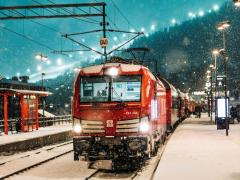
The Blue Train, known for luxury travel between Pretoria and Cape Town, travels
to Limpopo on selected months of the year, offering guests opportunities for rail
safari combination packages in the Greater Kruger National Park. The schedule
for next year sees journeys from Pretoria departing on March 16, June 15,
July 13, August 10, October 19 and December 14, with return journeys the day
after from Hoedspruit. The duration of the rail trip is 19 hours overnight, with
departures and arrivals in both direction at 15h00 and 10h00 respectively.