THE travel industry needs to unite
to address overtourism, says Gavin
Tollman, chairman of Cullinan
Holdings, highlighting that travel
agents need to be conscious of the
impact of travel.
Travel agents have a key role to
play, says Gavin. “You cannot simply
be an order taker, you have to make
sure you are engaged in speaking
to your client and there is no doubt
that sustainability should be part of
that conversation.”
The problem of overtourism has
come into sharp focus following a
slew of demonstrations last year
during the European summer. Local
residents in Barcelona, Dubrovnik
and Venice took to the streets
to protest against the influx of
tourists in these cities, causing
overcrowding and harming the
environment.
The anti-tourism sentiment was
not limited to Europe. Last month,
Philippine President Rodrigo
Duterte closed the island of
Boracay for up to six months for
a clean-up after environmental
damage caused by overcrowding
and development.
Reducing travel or taxing tourists
are not solutions to the problem,
says Gavin. He says the dialogue
should be about preservation of
the destinations we go to and
suggests a three-pronged approach:
dissemination, dispersal and direct
action.
Gavin says we need to ensure
that huge volumes of tourists are
not descending on a destination
at the same time, instead
spreading the load. Likewise,
tourists should be encouraged to
not just visit the major cities. He
says that while iconic attractions
draw people to destinations, they
should be encouraged to explore
further. “Connecting the smaller
communities outside of the key
destinations is one of the most
exciting and enjoyable parts of
travel itself.”
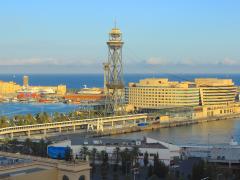
Gavin highlights the example of
Barcelona, which had 32 million
visitors last year, while only 25%
actually stayed in the city and
had a direct positive impact on
the community. The bulk of these
tourists, then, could be seen
as what Gavin calls “ice-cream
tourists”.
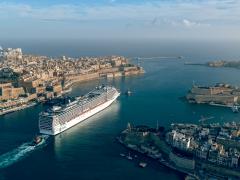
He relates the story of an hotelier
who now regrets his success
at attracting cruise ships to his
destination. The hotelier paints the
picture: ‘The cruise ships come,
they drop their guests off and the
tourists come ashore, they buy an
ice-cream, they drop the napkin, and
then they leave. That is their entire
contribution to the destination.’
In addition to dispersal and
dissemination, the travel industry
– tour operators, agents and
travellers – need to become more
conscious of their impact, he says.
He uses the water crisis in Cape
Town as a good example of direct
action. He says while this action
was taken out of necessity, some
120 communities globally are
affected by water shortages and
can benefit from the learnings from
Cape Town.
Overtourism: collaborative approach needed – Tollman
Comments | 0
© Now Media. This content is protected by copyright and may not be adapted or republished. If you would like to discuss cooperation opportunities, please contact: editor@travelnews.co.za.