

Riskline has launched its 2026 LGBTQ Risk Map, identifying 91 high-risk and 62 medium-risk destinations for LGBTQ travellers, and highlighting gaps in duty-of-care policies.
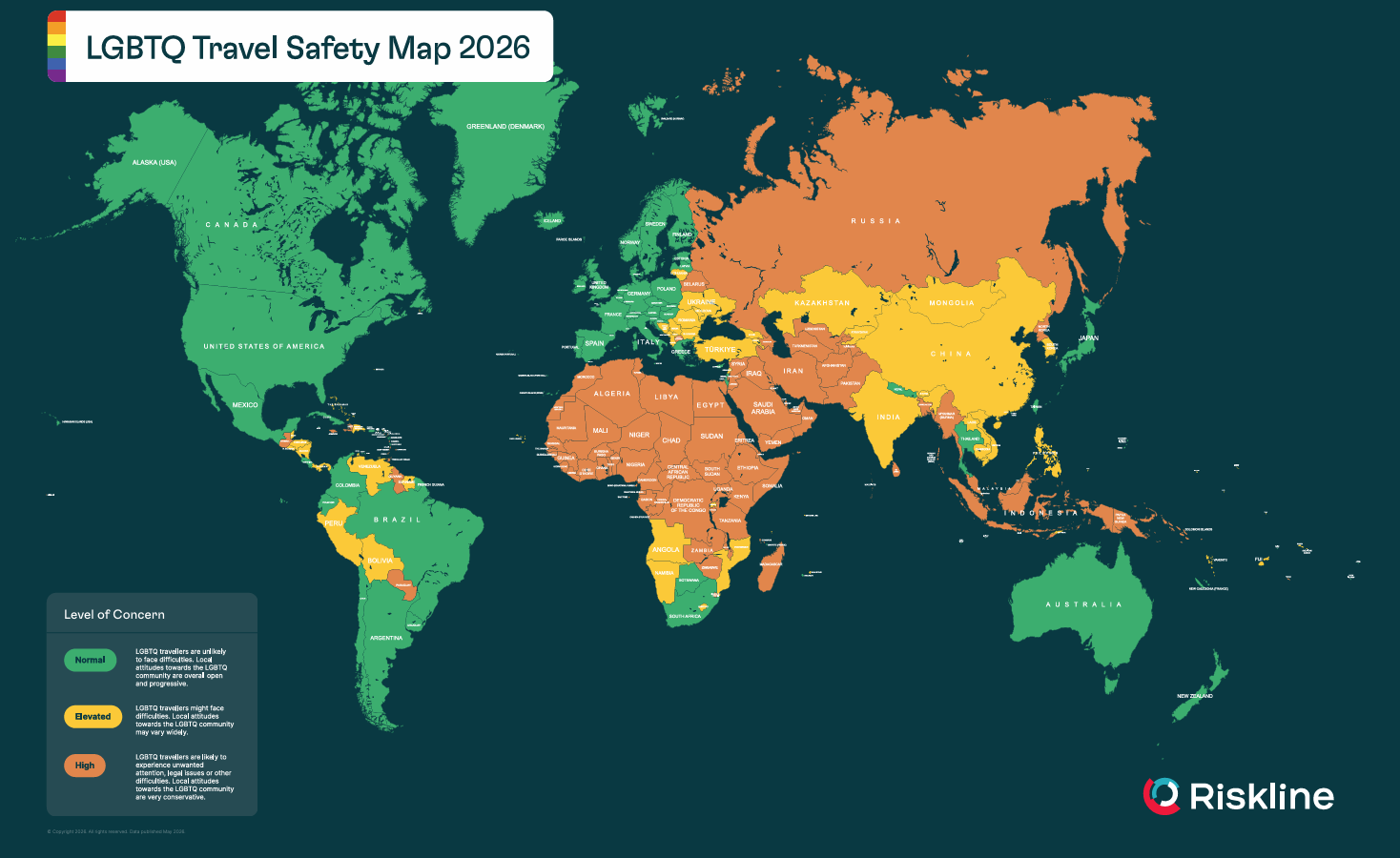
The map highlights a growing wave of rights roll-backs in destinations including the US, Japan and several countries in Eastern Europe, Central Asia and North Africa. According to the report, these range from new criminalisation laws to stricter documentation requirements, creating concerns for travellers, travel managers and duty-of-care professionals.
However, the report also found that Southern Africa had seen positive legal shifts. In Botswana, authorities removed Penal Code provisions that had long criminalised same-sex relations, eliminating the possibility of prison sentences of up to seven years.
Riskline's assessments combine legal frameworks, social attitudes, destination intelligence and NGO data to provide regularly updated risk profiles, supported by Riskline Alerts and practical guidance for organisations managing traveller safety.
The duty-of-care gap
Riskline identified gaps in corporate duty-of-care policies in terms of offering full protection for LGBTQ corporate travellers.
“With 67 countries still criminalising same-sex relations, travel policies should reflect this reality. For LGBTQ travellers, these figures translate into real legal, cultural and, in some cases, physical risk,” explains Lorena Peña, Riskline Travel Intelligence Team Leader.
That exposure is not experienced the same way globally. Legal enforcement, cultural attitudes and documentation requirements create layered risks that standard travel policies often fail to capture.
Just as importantly, these conditions are shifting quickly. Countries that posed no legal threat a few years ago may now criminalise LGBTQ identity outright.
“Effective duty of care now requires dynamic, intelligence-led risk management. It must consider who is travelling as well as where they are going,” said the report. “This includes timely updates when laws change, destination-specific guidance based on real conditions, and policies that can adapt when risks shift. Organisations that take this approach can reduce exposure before travel begins. They can also support employees with relevant, personalised guidance and demonstrate clear, defensible duty-of-care standards.”