DURING his budget
speech, Finance
Minister, Pravin
Gordhan, said a possible
merger between SAA and
SA Express would create a
bigger and more operationally
efficient airline.
June Craword, Barsa ceo,
says a merger between the
state-owned carriers makes
good sense. “SAA, Mango
and SAX routes should be
rationalised. They should
not be competing but rather
complementing each other.
This way all stand to win.”
Although a good move on
the part of the airlines, a
merger would have limited
impact on the South African
aviation landscape, says
Chris Zweigenthal, Aasa ceo.
He explains that, as SAA and
SAX currently operate on very
different routes, a merger
would be unlikely to disrupt
the industry.
A merger would extend
SAA’s reach and dominance
through direct control of
smaller routes in South
Africa, currently operated by
SAX, says aviation analyst,
Joachim Vermooten. “It
would inhibit entry and
expansion on smaller routes
by smaller private-sector
airlines. SAA and SAX could
internally co-ordinate prices
and supply of capacity,
exclude or foreclose other
private-sector airlines from
interlining, resulting in a
reduction of choice.”
“Unless the change
resulting from the merger can
be implemented quickly, such
that the resultant business
is agile and competent, there
will be an opportunity for
other operators to gain more
traction in the local markets,”
says Rodger Foster, ceo of
Airlink.
Rodger adds that merging
SAX and SAA will bring
about a single state-owned
enterprise airline, which
will lead to much-needed
stability. However, he warns
that bringing two financially
unstable businesses together
will also naturally result in
bigger losses. “It is probable
that the combined entity
will need to shrink into
sustainable viability before
it can afford to stretch its
wings and grow into new
horizons.”
Who will invest?
Who would want to invest
in cash-strapped SAA as a
‘minority partner’?
The challenge is that
as long as SAA continues
making losses it will remain
unattractive and the order
of magnitude of its debt is
a deterrent to a prospective
minority strategic investor,
says Rodger. “SAA’s business
can be fixed, but in order to
do so it needs stability and a
clear strategic direction.”
A minority shareholder
doesn’t necessarily need
to be silent and sit back,
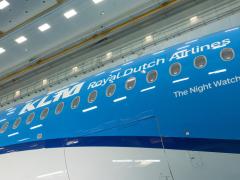
says Chris. KLM, for
example, became a minority
shareholder in Kenya Airways
and managed to completely
turn the airline around to
make it a huge success.
The same is true for the
partnership between TAAG
and Emirates. Any possible
partner for SAA would
likely bring the necessary
knowledge and expertise
to bring the airline back to
profitability, he says.
Rodger agrees that
there are models where
minority investors play a
more significant role in
the management of the
business. As such, the
Middle Eastern carriers could
be potential equity holders
for SAA. However, Rodger
points out that these carriers
have already permeated the
Southern African markets by
having access to multiple
cities directly from their hubs.
“So why would they wish
to invest in the local airline
network system comprising
financially challenged
entities?”
SAA, SAX merger – what does it all mean?
Comments | 0
© Now Media. This content is protected by copyright and may not be adapted or republished. If you would like to discuss cooperation opportunities, please contact: editor@travelnews.co.za.