THE average profit on an
airline seat is $2,60c, the
same as the profit on a cup of
coffee, said aviation professor
emeritus Nawal Taneja who
spoke Aasa Congress last
month.
He said airlines should now
move away from cutting their
costs as revenues have fallen
at the same rate due to fierce
competition.
Nawal said it was time for a
change in focus, particularly
on ancillary revenues that
have contributed to many
airlines’ profits. He said the
focus should no longer be
on revenue per seat, but
on revenue per customer.
“We need to determine the
willingness of the customer
to pay and price around that.
There is a distinct relationship:
the higher the percentage of
revenue from ancillaries, the
higher the operating margin.”
Airlines in Aasa’s region
ought to be aware there are
new driving forces, threats
and shifts in the markets,
he said. One of the bigger
threats to sub Saharan
carriers is the increasing
power of new carriers, not
just those from the Persian
Gulf and Turkey, but also a
rising tide of new entrant
low-cost carriers who should
not be underestimated and
who are starting to explore
intercontinental destinations,
putting pressure on network
carriers across the globe.
Some network carriers, like
Qantas, Singapore Airlines, Air
Canada, Lufthansa and Turkish
Airlines, are responding to
this by developing low-cost
subsidiaries of their own,
Nawal added.
Aasa’s members should
also be aware that other
African carriers (such as Kenya
Airways and Ethiopian Airlines)
have made big gains in the
spread of their networks, and
a handful of factors will see
these gains increasing. These
include urbanisation, the rise
of the African middle class
(21 of 54 African countries
have a growing middle class),
growth of intra-Africa trade and
growing foreign investment in
the continent.
He added that Kenya Airways
and Ethiopian Airlines were
both growing at a good rate
with very little government
interference in their running,
and they have both built
good networks and are
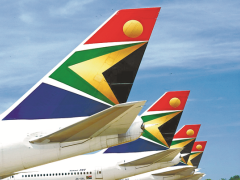
showing growth, but SAA has
had lesser growth with its
international routes outside
Africa not making profits. He
believes SAA’s Africa routes
could be threatened by the
mid-Africa network airlines.
“Aviation is a very large
economic lever and a driver
of rapid growth. “That is why
governments in the region
must adapt to make sure
that the lever moves in the
right direction. Leadership
and management skills
at both government and
industry management level
are vital. Government policy
makers must re-calibrate for
adaptation to the new realities,
and do so with vision and
determination,” said Nawal.
The $2,60c airline seat
Comments | 0
© Now Media. This content is protected by copyright and may not be adapted or republished. If you would like to discuss cooperation opportunities, please contact: editor@travelnews.co.za.