
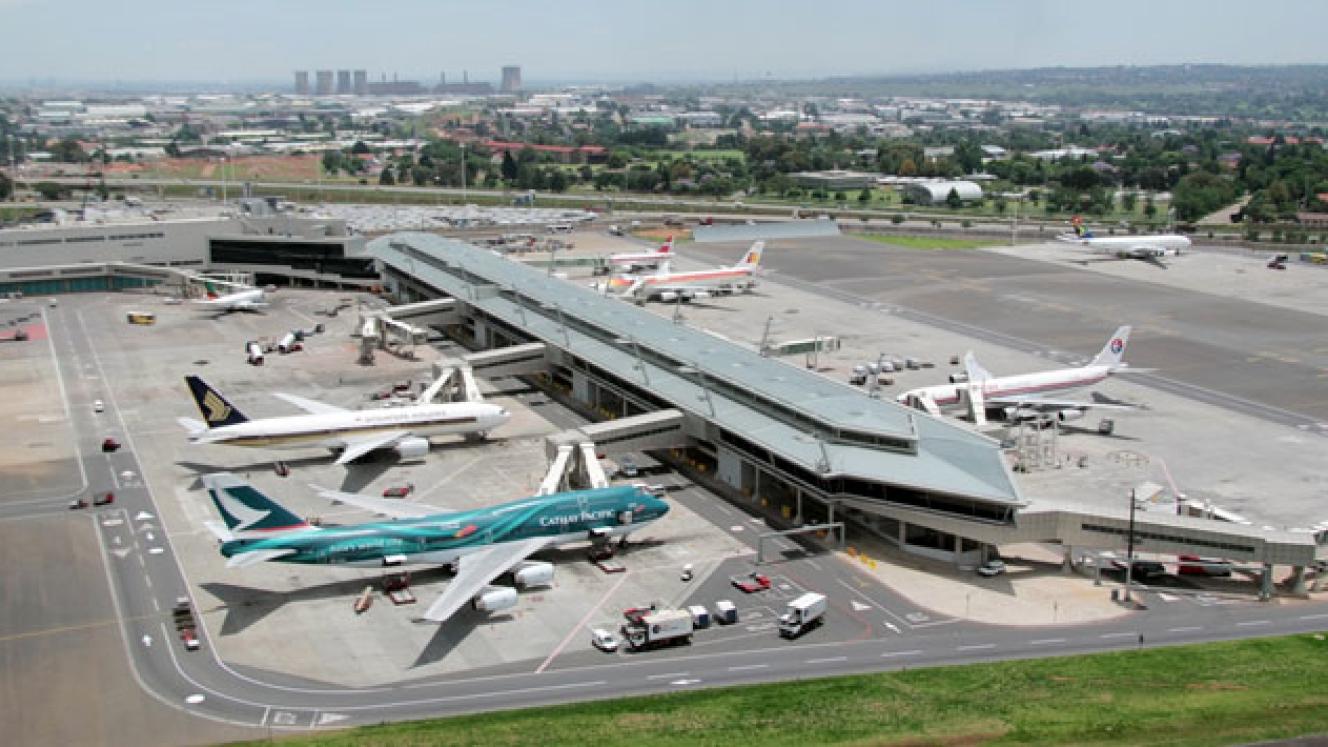
South Africa's aviation sector endured an unprecedented operational crisis in 2025, as systemic infrastructure failures and administrative lapses at Acsa and Air Traffic and Navigation Services (ATNS) undermined reliability across the network.
While Acsa battled high-profile infrastructure breakdowns – from jet fuel supply disruptions to recurring power outages and security bottlenecks – ATNS fell behind on renewing essential Instrument Flight Procedures (IFPs), triggering widespread suspensions and delays.
Together, these failures cost airlines millions, disrupted schedules and eroded confidence in the safety and stability of the aviation ecosystem.
Acsa
The year began with persistent fuel problems at OR Tambo International Airport (JNB). A mechanical failure of a critical valve at a bulk fuel storage combined with an earlier fire at the National Petroleum Refiners of South Africa (NATREF), pushed JNB into significant shortages through January and February. Acsa CEO, Mpumi Mpofu, admitted that the problems with jet fuel supply in January had been exacerbated by Acsa’s own infrastructure challenges.
Throughout the year, both Cape Town International (CPT) and JNB faced multiple power outages, resulting in delays, disruptions and airport congestion as back-up power failed to restore power for baggage carousels, check-in points and security. Acsa maintains that its back-up systems meet international standards, however they only cover essential loads, resulting in repeated operational disruptions.
Acsa has also been engaged in legal disputes with multiple service providers regarding the provision of security services, including the upgrade of baggage screening equipment and security screening personnel. Pending an investigation into tender irregularities for the procurement of security screening equipment, Acsa placed its Group Executive of Enterprise Security and Compliance, Mzwandile Petros, on precautionary suspension in July.
“Airlines have experienced a number of infrastructure-related operational challenges at Acsa airports during the course of the year, most notably in relation to jet fuel infrastructure reliability, back-up power resilience and security screening capacity. These challenges have, at times, resulted in operational delays, inefficiencies for airlines, and inconvenience for passengers,” George Mothema, Board of Airlines Representatives of Southern Africa (Barsa) CEO, told Travel News.
While Barsa acknowledged Acsa’s commitment to a R40 million multi-year maintenance and infrastructure programme, including an investment to stabilise core airport systems, the association hopes to see the strategic implementation and tangible realisation of the programme in the coming years.
“From an airline perspective, the priority is not only the scale of investment, but the sequencing, execution and operational impact of the maintenance programme. Airlines will be looking for tangible improvements in reliability, system redundancy and operational consistency, particularly during peak periods,” said Mothema.
“Going forward, airlines would welcome continued transparent engagement, clear implementation timelines and regular progress reporting, to ensure that planned infrastructure interventions translate into measurable improvements in airport performance and support the efficient operation of airline services.”
ATNS
Since July 2024, ATNS has struggled to maintain current IFPs, resulting in some 326 suspensions at multiple airports and chronic flight delays and disruptions during poor weather.
Over the past 18 months, affected airports include JNB, CPT, Chief Dawid Stuurman International Airport (Gqeberha), Kind Phalo Airport (East London), George Airport, Pietermaritzburg Airport, Richards Bay Airport, Kimberley International Airport, Polokwane International Airport, Mthatha Airport, Bram Fischer International Airport (Bloemfontein), Upington Airport and, most recently, Kruger Mpumalanga International Airport.
Following government intervention and an investigation into the company’s neglect of essential duties, the Ministry of Transport placed the ATNS CEO, Nosipho Mdawe under precautionary suspension in March.
Earlier this year, Aaron Munetsi, CEO of Airlines Association of Southern Africa, noted how the administrative oversight had led to disrupted operations and cost airlines millions of dollars in additional fuel, engine wear and maintenance, crew flight duty, flight operations support, customer compensation and reputational damage.
Aviation expert, Sean Mendis added: “When these kinds of things happen, they happen because of very poor management controls. Everyone in the aviation industry knows that there are expiry dates on procedures, there are check dates, there are maintenance dates. This is standard in the aviation sector. The fact that ATNS allowed these procedures to lapse in the first place is absolutely unconscionable and unforgivable.”
Mendis reiterated concerns expressed by other aviation stakeholders throughout the year, saying ATNS lacked urgency in its response to the crisis and questioned whether its eventual intervention was in response to the root cause of the suspensions, or just to the public outrage at having delayed and cancelled flights.
Mothema said ATNS’s acknowledgement of the procedure design backlog and its commitment to strengthening internal capacity, as well as the Minister of Transport’s Ministerial Intervention Team to support and guide ATNS, assisted in stabilising and improving the approach to addressing these challenges.
“These are important steps; however, from an airline perspective, sustainable improvement will depend on longer-term capacity building, predictable renewal cycles, and close coordination between ATNS, the regulator and industry users,” said Mothema.
“Airlines would support a move toward a more proactive, rolling procedure maintenance and renewal approach, aimed at reducing the risk of future suspensions and enhancing operational certainty across the network.”