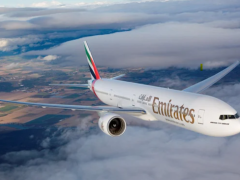
South African travel agents are facing a capacity crunch as travellers look to European carriers for flights that bypass Middle Eastern airspace. Despite a sharp spike in demand, international airlines remain hesitant to deploy more aircraft on South African routes.
New data from Flight Centre shows bookings have increased by 30% on British Airways, 60% on Air France-KLM and 80% on Lufthansa since the escalation of conflict in the Middle East.
Yet industry players say deploying additional aircraft to South Africa is not a straightforward decision. Airlines must weigh Africa’s high operating costs, weaker currency environment and stronger competing demand from other regions when allocating limited spare capacity.
Reroute strategy
Sue Garrett, GM of Supply, Pricing and Marketing at Flight Centre South Africa, said the majority of South African travellers were choosing to reroute or rebook their travel plans, initially booked via the Middle East, rather than shelve their trips altogether.
“What we are seeing is a distinct shift in travel strategy. Middle Eastern airspace can be avoided, and most travellers are doing exactly that, rerouting through European hubs or exploring alternative gateways rather than scrapping their plans altogether.”
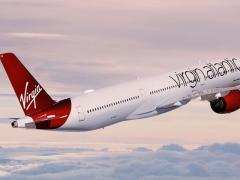
She notes that, in the weeks since the conflict escalated, there has been a spike in demand for direct routes from South Africa to European hubs such London, on carriers including Virgin Atlantic, British Airways, Air France-KLM and Lufthansa.
Limited capacity
The rapid increase in demand has resulted in hiked fares, exacerbated by rising fuel prices, and limited seat availability.
“This is naturally driving up pricing and agents are working hard to book alternative routes. But the biggest issue is capacity. When thousands of flights are cancelled or rerouted, a massive amount of inventory is removed from the system. With demand outstripping supply, pricing is under real pressure,” explained Garrett.
While agents have called for additional European capacity into South Africa, industry leaders say this is unlikely in the short term.
“While there are a lot of popular European airlines that could act as alternatives for the Middle Eastern carrier, they don't have capacity. We haven’t seen any increase in flights to South Africa since the conflict started and these European airlines were already close to full, especially during busy times,” said Stefan van der Merwe, CEO of Sure Travel.
“The fact is, it is not just South Africa that is affected. This is a worldwide challenge. So even if these airlines decide they are going to deploy their extra aircraft, it will not necessarily be on South African routes. There are many other destinations that have been impacted where they may rather deploy their extra capacity.”
Strategic deployment
In March, Lufthansa was the only international airline to announce that it was considering additional flights to South Africa to service the demand in the absence of the Middle East carriers.
On the sidelines of an Air France-KLM event, Wilson Tauro, Country Manager for Southern Africa at Air France-KLM, told Travel News that, while the airline was seeing unprecedented load factors on its outbound flights, it did not currently plan to introduce additional capacity to its South Africa routes.
“Flights are completely sold out departing South Africa from Johannesburg and Cape Town. At this time, we have not increased our frequency to or from South Africa and there are no current plans to do so,” said Tauro.
“Given the rising fuel costs, Air France-KLM needs to be very strategic about where it deploys additional capacity. We are monitoring the situation closely and will adjust our operations as needed.”
Tauro explained that the airline was deploying its additional capacity on routes to and from Asia, based on high demand.
Beyond operational costs, economic environment plays a role. Van der Merwe added that currency dynamics also influenced deployment decisions, with the weaker rand reducing South Africa’s competitiveness compared with higher-yield markets.