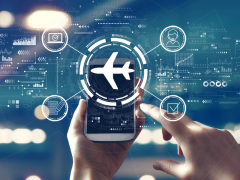
Airlines globally spent US$24,5bn (R407,3bn) processing US$1,05 trillion (R17,4 trillion) in sales in 2025, with payment costs rising faster than travel sales, according to data from IATA.
Total payment costs increased by 10,4% compared with 2023, outpacing the 7,7% growth in airline sales over the same period. The average cost of processing a transaction was US$5 (R85) per passenger, while IATA forecasts that airlines will make a nett profit of $4,50 (R74) per passenger in 2026.
“The fact that payment transaction costs are increasing faster than industry revenues is unsustainable and, despite significant technological advances, highlights the critical need for greater cost efficiency,” said Sandrine Le Borgne, IATA Interim Director General and CFO.
Of the US$24,5bn (R407,3bn) spent on payments, US$20,7bn (R344,1bn) went towards direct transaction fees, accounting for 84,5% of the total. Operating costs, including payment systems, staff, compliance and delayed cash flow, amounted to US$2,9bn (R48,2bn), while US$900m (R14,9bn) was lost through fraud or uncollected sales.
Cards accounted for the highest cost per transaction with average payment fees at 2,5%, higher than the estimated overall average of 1,9%.
IATA says it is exploring ways to reduce the burden, including encouraging alternative payment methods such as digital wallets and local instant payment solutions. The association is also working on improving transparency around agency card payments and developing more efficient payment arrangements for corporate travel.
“Providing passengers with alternative payment methods could also have a revenue-generating impact. About one in five ancillary purchase attempts are not completed because the initial payment attempt was refused and no other method was offered. Enabling more payment options has the potential to help airlines realise some of this lost revenue,” said Le Borgne.