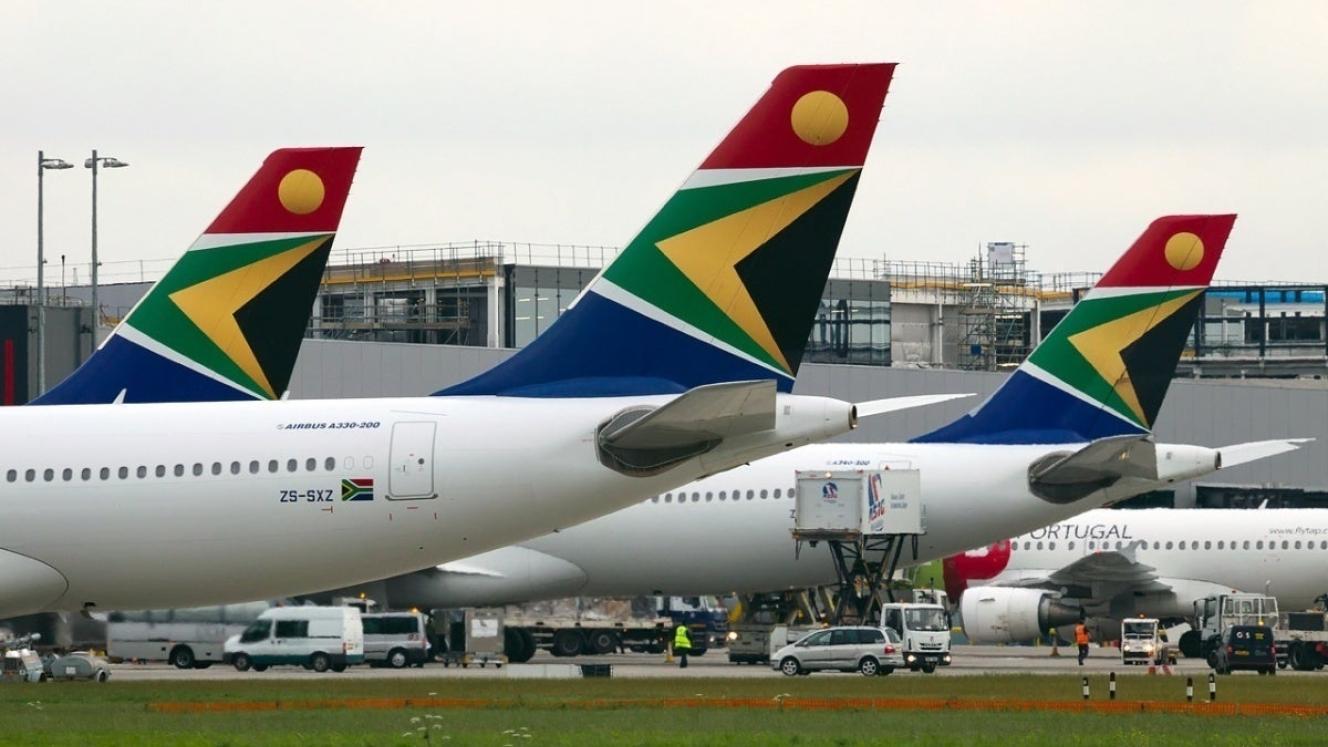
Aviation experts have warned that unresolved governance and financial problems are threatening SAA’s ability to attract an investor and deliver on its long-term expansion plans.
SAA’s post-business rescue strategy hinged on securing a strategic equity partner (SEP), expanding its fleet and rebuilding its international network. However, several route expansions have failed to materialise and, despite renewed efforts to attract an investor following the collapse of the Takatso deal, no new partner has been secured.
The airline has also faced scrutiny over aircraft leases, frequent leadership changes and financial reporting irregularities. More recently, staggered salary payments and a R1billion government guarantee have raised further questions about its financial position.
“While SAA survived the business rescue legal process, it has not completed an essential ‘governance rescue’,” Founder of the Air Insights Group, Addison Schonland, told Travel News.
“Leadership instability and financial opacity are eating away at its execution capacity; route expansion delays are passing costs on to consumers; and the airline’s SEP prospects depend on whether SAA can first make itself ‘worth investing in’, rather than hoping an investor will come in and fix everything.”
Leadership instability
SAA has had 17 CEOs over the past 22 years. In August, the airline appointed its third Acting CEO of the year, Koekie Mbeki.
Aviation experts warn that frequent leadership changes undermine the continuity needed to implement long-term fleet and network strategies.
Johan Borstlap, Operation Director at JetFreighter, said airlines required experienced leadership capable of making long-term decisions in a highly competitive industry, adding that repeated executive changes disrupted strategic planning and created uncertainty for operational teams.
“Airlines are complex businesses that require long-term strategic thinking, with short-term agility in a highly competitive environment,” agreed Wayne Duvenage, CEO of the Organisation Undoing Tax Abuse.
“Against this backdrop, our government’s continuous leadership interference, cadre deployment and lack of oversight and accountability, will ensure this once proud and successful entity remains doomed and reliant on the public to prop it up.”
Schonland echoed this, noting that the biggest problem SAA faced was not a lack of strategy, but an absence of leadership stability and the financial resources to execute it.
Financial pressures
While delayed salaries and the new government guarantee are the most immediate signs of constrained cash flow at the airline, questions about SAA's financial sustainability have intensified following the Auditor-General of South Africa’s (AGSA) disclaimer of opinion on its 2024/25 financial statements.
Earlier this year, the AGSA issued a disclaimer of opinion on the carrier’s 2024/25 financial statements, revealing material misstatements that disguised once-off gains as operational profits.
On August 21, Finance Minister Enoch Godongwana disclosed that government had extended a R1 billion working-capital guarantee to SAA.
Although the guarantee does not constitute an immediate cash injection, it provides security for commercial borrowing and exposes the state to potential liabilities should the airline default.
SAA has attributed the need for the guarantee to rising jet fuel prices and broader operating cost pressures. However, experts argue that the airline's continued reliance on government support raises questions about the sustainability of its post-business-rescue model.
“SAA’s current position is nothing short of a gross abuse of taxpayers' funds. The recent government-backed guarantee signals that SAA cannot stand on its own feet, despite having exited financial rescue and its past creditors losing billions of rands,” said Duvenage.
“Furthermore, the fact that SAA’s leadership and board tried to disguise the airline’s recent financial results as being profitable, despite the obvious sale of assets (Heathrow slots) and its poor operational performance, is indicative of how out of touch with reality its leadership team is.”
Can SAA attract an investor?
The airline's ability to secure a new SEP remains central to its recovery strategy, particularly given the capital required for fleet expansion and international route development.
In August, Cabinet authorised a renewed search for an equity partner. However, details including the proposed shareholding, valuation and extent of government control have yet to be disclosed.
“The government's logic has been 'find an investor first, then fix the company',” Schonland observed. “Market logic dictates the exact opposite: the company must become investable first, then the investors will follow.”
Borstlap said potential investors would want sufficient control over management and financial decisions to protect their investment.
“There were some good proposals submitted to take SAA off of the government's hands, but the politicians still wanted to keep control. Now, nobody will buy a sinking ship and still leave the same captain at the controls.
“Any new SEP will want to appoint their own leadership team to protect their investment and have majority shareholding to enable them to make difficult financial calls.”
Duvenage was similarly sceptical about the prospects of securing an investor without significant changes to the airline's governance and financial position.
The real impact
While governance failures and balance sheet instability is dominating the deadline, the impact for travellers is a stagnant route network, reduced connectivity and rising airfares.
“The delay in introducing new capacity will push up South African consumers' travel costs on related routes in the short term and weaken competition,” explained Schonland.
“Fleet expansion and re-entry into long-haul markets require years of aircraft introduction planning, slot negotiations, and interline/codeshare deployments. These decisions require a CEO with a stable mandate and a complete financial team to sign off on, which SAA currently does not have.”
Schonland added that SAA's financial reporting problems could also make it more difficult to secure favourable terms from aircraft lessors and commercial lenders, potentially increasing its dependence on government-backed financing.
For Borstlap, the airline's future growth depends on securing a financially strong investor and addressing its leadership and financial weaknesses.
“SAA will need a strong financial owner if they want to become a major player again. It cannot raise funding coming to the table with such a weak balance sheet, poor financial performance history and weak leadership.”
SAA was approached for comment but had not responded by the time of publication.