THIS year we are
celebrating the 100th
anniversary of the first
scheduled commercial flight,
which took place between
St. Petersburg and Tampa,
Florida on 1 January 1914.
From a single airplane, a
single pilot and a single
passenger, commercial
aviation has evolved into
the global air transport
system that this year will
safely connect some 3,3bn
travellers with nearly
100 000 flights per day,
while supporting some
58,1m jobs.
Travel re-unites friends and
families and helps to build
bridges between different
cultures. But sometimes
there are challenges. In
some places, the answer is
to build more infrastructure
to accommodate all the
people who want fly. And
improving the process – from
how you book your flight to
collecting your bags at the
end of the journey – will also
help make the trip smoother
and more enjoyable.
Working with airports
and other partners in the
air travel chain, we see
opportunities in a number of
areas to do just that.
It all begins with improving
the travel shopping
experience. There are lots
of choices in products out
there – many airlines and
plenty of options to tailor
your travel experience. But
it is not always easy to
access these options. For
example, you may be able to
book extra leg-room on an
airline website but it is much
more difficult if you make
the request through a travel
agent – even an online one.
Why? Because travel
agents rely on tried-andtested
systems that were
largely developed before the
Internet became available.
They literally speak a
different language. And that
language does not have
the capability to describe
easily additional products
and services that might be
available, such as a seat
with more leg-room, a special
meal or priority boarding.
That probably helps to
explain why two-thirds of
people usually choose to
customise their travel via
airline websites rather
than from a travel agent,
according to Iata’s 2013
Global Passenger Survey.
This could soon change.
Working with other partners
in the industry, Iata is
building standards for a new
language for buying travel
products. It’s called New
Distribution Capability (NDC).
And when it is fully deployed,
travellers who wish to use
a travel agent or travel
website will have access
to a much richer shopping
experience with the ability to
compare options based on
full descriptions, including
photos and videos.
We also want to make
things more convenient at
the airport. Our customers
don’t like to stand in
long lines to check in or
check bags and many are
comfortable with doing
more things themselves to
reduce the waiting. According
to Iata’s 2013 Global
Passenger Survey, fully twothirds
of passengers would
prefer to check-in online or
automatically by receiving a
text message or email from
their airline. Only 11% prefer
to receive their boarding
passes from staff at an
airport check-in counter.
Our Fast Travel project will
create more opportunities
for air travellers to do things
for themselves through six
time-saving, self-service
options covering many of the
processes, from checking in
to boarding the aircraft.
Simultaneously, we are
looking at ways to do an
even better job of reuniting
passengers with their bags.
Currently just 1% of bags
are mishandled but we
want to reduce that to 0,5%
– fewer than one in every
100 – by 2020, through
the Innovation in Baggage
(InBag) programme.
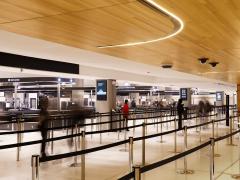
And we are targeting
long lines and hassles
at security checkpoints
though Smart Security, a
joint initiative with Airports
Council International. Smart
Security aims to improve
security by using information
governments already collect
to allocate security resources
where they are most
needed. Simultaneously, by
encouraging governments
to invest in state-of-the-art
screening machines and
being smarter about some
of the processes, we can
remove much of the hassle
associated with queuing and
disrobing. This year we will
conduct airport trials with
Smart Security components
at airports in Europe and the
Middle East.
We are very excited by all
these efforts but the industry
needs regulators to do their
part by keeping pace. An
example is home-printed bag
tags. Passengers like the
option to bring their bags to
the airport already tagged
and airlines have shown they
work. Now, governments
need to do their part by
making sure regulations do
not prevent this.
Commercial aviation has
come a long way since that
very first flight 100 years
ago. As commercial aviation
moves into its second
century we look forward
to giving passengers a
smoother and more valuable
travel experience, with fewer
hassles.
Creating a better air travel experience
Comments | 0
© Now Media. This content is protected by copyright and may not be adapted or republished. If you would like to discuss cooperation opportunities, please contact: editor@travelnews.co.za.