
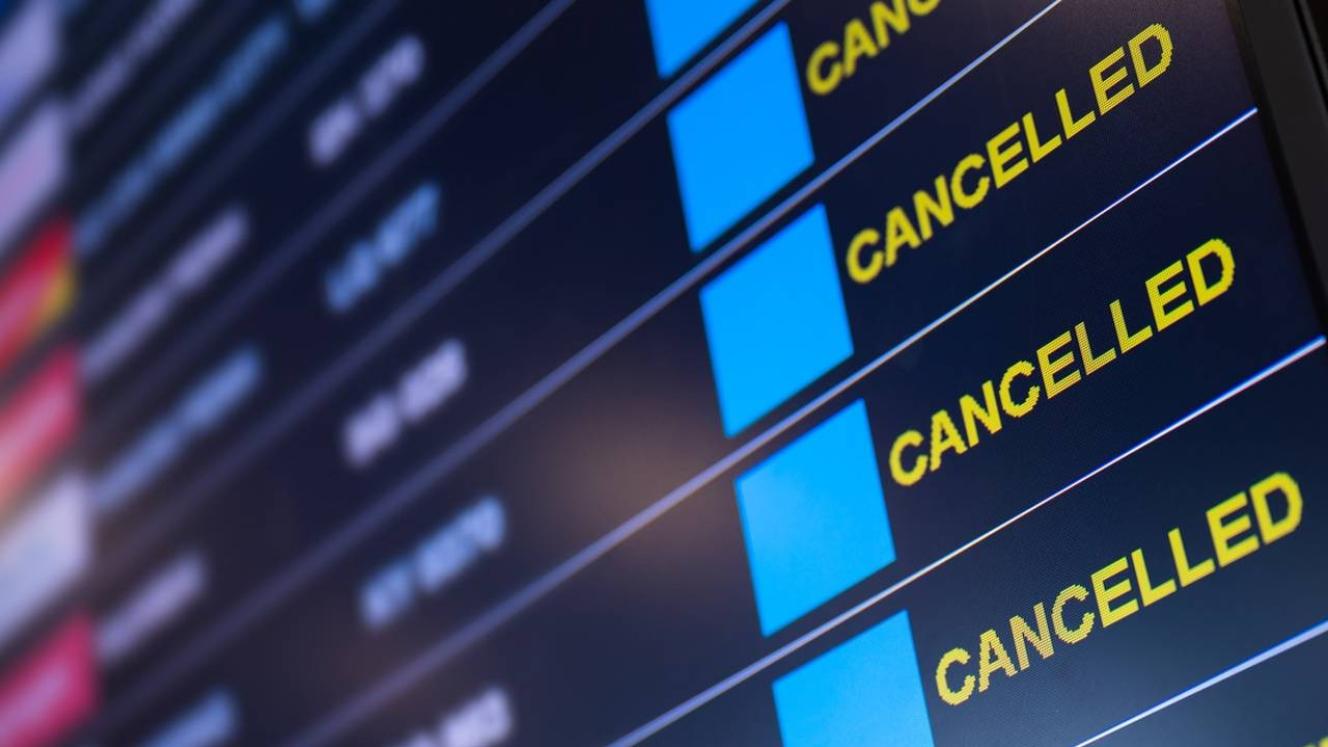
As mass flight disruptions linked to severe weather become more common, travel agents are finding it increasingly difficult to keep on top of GDS queues, as systems are increasingly unable to keep pace with real-time changes during large-scale disruptions.
Agents often receive a direct airline SMS or app notification before the GDS reflects the change, according to Paula Martini, author of Travel with Purpose and Owner of CoTravel. “During major disruptions, I find that I receive direct updates first in about 70% of cases. The GDS is no longer the first responder of travel data.”
Martini argues that because GDS queues operate on a linear basis, they often face bottlenecks. “During a mass event, thousands of PNR (Passenger Name Record) updates hit the system simultaneously, creating a bottleneck. This means an agent might be working through a queue of ‘Flight Delayed’ messages while the airline has already moved on to ‘Flight Cancelled’."
What causes the delay
Old technology and fragmented systems remain the biggest barriers for real-time GDS updates.
“Most GDSs still rely on EDIFACT, a legacy communication protocol from the 1980s. It is text-heavy and requires a complex handshake between the airline’s internal system and the GDS database. The GDS often has to fetch or wait for a batch update from the airline, which is fundamentally slower than the instant push used by consumer apps,” said Martini.
However, GDS providers state that real-time updates are achievable where airlines use compatible systems and technology.
According to Caroline Smallwood, GM of Amadeus Southern Africa, the main cause for delays is that airlines do not use the same technology or level of connectivity.
“Real-time updates are fully achievable but some airlines use systems or processes that do not instantly update data, and rely on direct messages to communicate disruptions. Our platform uses several layers of connectivity to keep information consistent between airlines and travel sellers.”
She says that updates from most airlines bookings done in Amadeus reach the system instantly because the airline and the travel seller share the same PNR, or there is real-time synchronisation between Amadeus and the airline systems.
“Amadeus processes disruption updates as soon as they are sent by airlines. Updates flow directly into the reservation in real time, ensuring travel agents see the latest changes. For other airlines, systems are updated as soon as the airlines trigger the communication with Amadeus,” said Smallwood.
What agents can do
Martini says these delays have a major impact on travel agents. “It is a blow to our professional authority when a client calls us with news we haven't seen yet.”
She advises agents to ensure that both the client’s and the agent’s direct contact details are correctly formatted within the reservation. “If an airline cannot reach the agent via the system, the communication chain breaks. Ensuring I put my clients’ details in correctly allows the airline to send direct communication that I am also aware of.”
Martini also recommends using advanced itinerary-building software that pulls live flight data and pushes it directly to the client. “This technology keeps my clients aware of gate changes and minor timing shifts long before they appear in the GDS. By the time the GDS queue updates with a major change, I can pre-empt any possible disruptions coming.
“Even if the system is slow, our value lies in knowing what to do with that information once it arrives.” It is more important than ever to stay up to date with travel technology and the latest and best tools that are available to better assist your client, said Martini.