New developments drive growing interest
EAST Africa is
strengthening its drive to
attract travellers through
greater collaboration between
countries in the region.
One such initiative is the
East African Tourist Platform,
which has been developed to
create a single East African
tourist bloc for the region.
Countries currently involved
in the initiative are Rwanda,
Uganda, Kenya, Burundi, and
Tanzania.
“The plan is to bring East
African states together to
attract more tourists into the
region,” says Steven Asimwe,
executive director for the
Uganda Tourism Board.
“It’s much easier to join
efforts,” agrees Belise Kariza,
chief tourism officer on the
Rwanda Development Board.
“We are not competing
with our counterparts, we
are complementing each
other. It’s much easier to sell
these countries – and other
countries that are going to join
soon, hopefully – as a single
destination,” Belise adds.
Developments within the
region are also making it
more marketable for agents.
Tanzania, for example, has
been nominated for 24
different entries at the 23rd
Annual World Travel Awards,
set to take place on April 9
in Zanzibar, and Uganda has
recently appointed a new
tourism board in an attempt
to regain investor confidence
and trust in the sector.
These initiatives are
further boosted by growing
business investment. There
has been increased interest
in travel to East Africa
because its economies are
opening up to international
tourism and trade, says SAA
spokesperson, Tlali Tlali.
“Africa offers great
investment opportunities for
many foreign investors and,
because of the vast amount
of natural resources – mining,
oil and gas – in the region,
expansion by corporates into
East Africa has been steadily
increasing,” agrees Kibrom
Mekonnen, Ethiopian Airlines
traffic and sales manager
Cape Town.
“Ethiopia had GDP growth of
11% last year. This is the type
of trend we expect to see in
East Africa and the rest of the
continent,” he adds.
Tlali says there is a positive
outlook for the region in
general because expats
are bringing much-needed
investment and expertise into
East Africa, which promotes
the economic development of
these countries.
Many East African
governments are also
making it easier for growth
to take place by investing in
infrastructure, according to
Tlali.
“East Africa has been known
for the limited number of
intra-regional flight operations,
which limit the movement of
people and goods.
“However, governments are
addressing this through the
construction of ultra-modern
airports such as Jomo
Kenyatta International Airport
in Nairobi, Julius Nyerere
International Airport in Dar
es Salaam as well as Kigali
International Airport,” he says.
Greater air access on the cards
THERE has been a
constant increase in
demand for travel within
East Africa. As such,
airlines are looking to
expand their operations
within the region.
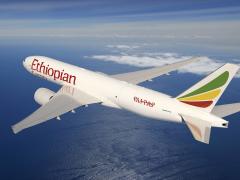
Ethiopian Airlines has
confirmed it is considering
new destinations in the
region. “We already have
an extensive network of 54
African destinations and, as
part of Ethiopian Airlines’
2025 strategy, there are
definite plans for further
expansion into East Africa,”
says Kibrom Mekonnen.
He says the airline
already has existing Star
Alliance partners such as
Malawian Airlines (Southern
Africa) and Asky (West
Africa) to offer convenient
network connections, and
is now focusing on further
enhancing its current East
African connections.
SAA is also committed
to growing its footprint
in the region. “This
will be achieved by
increasing frequencies,
increasing capacity, as
well as operating to new
destinations. We have been
able to grow our presence
in markets such as
Kenya, Tanzania, Rwanda
and Uganda and we will
continue to explore further
opportunities,” says Tlali
Tlali.
Low-cost carrier, Mango,
presently operates one
route to East Africa
(Johannesburg to Zanzibar),
and the airline says it
continues to grow in
popularity with consistently
strong demand. “The
East African seaboard
continues to be of interest
as a leisure destination for
Mango, and continues to
attract good volumes from
both South Africa and other
markets,” Mango head
of communication, Hein
Kaiser told TNW.
“Zanzibar remains an
affordable destination
with a wide choice of
accommodation options
and near year-round good
weather. Its proximity to the
South African market adds
to its growing popularity,”
he says.
Untapped MICE potential
WHILE East Africa is
strengthening its status
as a meetings, incentives,
conferences and events
(MICE) destination, South
African corporates are yet
to take advantage of the full
potential the region offers.
Robin McLeod, manager
of sales and marketing at
Dragonfly Africa, says the
company has seen a growing
interest in East Africa from
source markets other than
South Africa, predominantly on
the meetings and conferences
side. He suggests that
the growth is a result of
increasing business interests
in Africa. “More business
equates to more meetings,”
he says. “We are definitely
finding that more conferences
are being held in East Africa
now to meet the growing
need.”
Many companies have set
up hubs in East Africa, agrees
John Gakinya, md of Trails
of Africa Tours and Safaris.
He says the growth is also
supported by an increase in
better conference facilities.
He adds that countries
in East Africa are also
positioning themselves as
MICE destinations. “Rwanda
has set up its own National
Convention Bureau.”
Robin says countries such
as Tanzania and Rwanda have
proved that they are extremely
stable and safe to travel to.
According to the World Bank,
Tanzania has maintained
a high level of economic
stability over the past decade
making it the fastest growing
economy in the East African
Community, while Rwanda
has achieved impressive
development gains since the
1994 genocide and civil war.
“Internationally, corporates
are becoming more exposed
to and aware of these
countries as potential
destinations,” says Robin.
However, Monique Bester,
manager of incentive travel
at Event Dynamics, a division
of Tourvest Destination
Management, says this
increase in interest does
not yet relate to the South
African MICE market. While
the company has seen a
dramatic increase in South
African business travellers to
East Africa it has not seen
an increase in MICE travel
to the region. “Our core
South African clientele still
don’t see Africa as an exotic
destination,” she says.
Robin says the countries
seeing the most MICE growth
are Tanzania, Rwanda, Uganda
and Ethiopia. “Nairobi and
Dar es Salaam are still on
the list of destinations for
our business travellers, with
the Masai Mara, Serengeti,
Ngorongoro Crater and
Zanzibar at the top of the list
for any MICE requests we do
receive.
Tips for selling
East Africa
EAST Africa has always been a
popular destination for South
African travellers due to its
proximity and cultural affinity.
“There are cross-cultural links
between the East African
region and Southern Africa, so
much so that ties are getting
stronger both economically
and socially. South African
businesses have been well
received in East Africa, while
East African produce remains
sought after in South Africa,”
says SAA’s Tlali Tlali.
The fluctuating and
weakening rand has further
encouraged South African
travellers to travel regionally
as this is a more affordable
option, according to Ethiopian
Airlines.
For travellers seeking an
authentic African experience,
Ethiopian’s Kibrom Mekonnen
says East Africa has a lot to
offer in the form of protected
wildlife at various national
parks, great safaris, a vast
amount of hiking routes,
mountain climbing, and water
activities and attractions such
as Mount Kilimanjaro and
gorilla trekking.
“Home to historic and wellknown
attractions, East Africa
is placing special focus on
tourism,” says Kibrom. Agents
can offer clients a once-ina-lifetime
experience when
visiting this region.”
However, according to
Tlali, travel agents need to
learn more about the African
continent as a whole if they
are to effectively promote
these destinations.
“There are opportunities
for the travel agents to learn
more by partnering with SAA
on programmes such as
deal-driven or activity-driven
campaigns,” he says. He
adds that travel agents must
experience these countries
and explore partnerships with
local operators who are willing
to co-operate in promoting
their destinations to South
African travellers.
Kenya Airways ups
capacity to Amsterdam
KENYA Airways will add
additional weekend flights
between Amsterdam and
Nairobi on August 5, 6, 12,
13, 19 and 20, as part of
its summer schedule.
The additional flight,
KQ118, will depart Nairobi
at 21h15 and arrive in
Amsterdam at 05h00
next day. The return
flight, KQ119, will depart
Amsterdam at 08h55 and
arrive in Nairobi at 18h20.
The airline is also
changing the schedule on
its Nairobi-London route,
effective March 27.
Flight KQ100 will depart
Jomo Kenyatta International
Airport daily at 09h10 and
arrive in London at 16h15.
The return flight, KQ101,
will depart from London at
18h25 and arrive in Nairobi
at 05h00 the next morning.
Previously, KQ102, departed
Nairobi daily at 23h25 and
arrived in London at 05h30
and return flight, KQ101,
departed London at 19h00
to arrive in Nairobi at 06h35
next day.
The change was expected
to provide better connectivity
for passengers, with a
wider choice of connection
options between Europe and
Africa, the airline said in a
statement.
Book it!
Kilimanjaro Tours is offering a six-day Machame route package to
travellers wishing to reach the summit of the highest peak in Africa
(5 895m), regarded by many as a life-changing adventure but still
achievable by the average hiker. “We have successfully guided more
than 15 000 clients safely and successfully to the summit of Mount
Kilimanjaro – a track record unsurpassed by any other tour operator in
South Africa,” says Climbing Kilimanjaro manager, Nikki van Veelen.
The package includes return airport, hotel and mountain transfers;
two nights’ accommodation at a B&B, six days and five nights on
the mountain, inclusive of all meals, tents and park fees; a qualified
guide, porter and cook; emergency oxygen, a pulse oximeter and a
first-aid kit. The climbing price for an eight-day standard package
(two or more people) on the six-day Machame route is R24 305pps.
Prices are only valid for travel until June 30 and are subject to an
exchange rate not exceeding US$1-R15,60