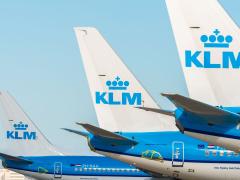
Single aviation market gais momentum
T
HERE is optimism that
future travel on the
African continent will be
freed up by initiatives such
as a reaffirmation of the
Yamoussoukro Decision and
the launch of an electronic
passport by the African Union.
But just how fast the wheels
will turn is a valid question
as good intentions encounter
bureaucracy, autocracy and
protectionism.
The recommitment by a
number of African countries
to the Yamoussoukro
Decision, has brought
new momentum to the
decades-old Yamoussoukro
Declaration, first signed in
1988. The aim of the original
agreement was to liberalise
the continent’s airways and
open skies by 2002, bringing
about more competition
among carriers, wider
networks, increased choices
for travellers and more
competitive airfares.
After the initial excitement,
and the adoption of the
Yamoussoukro Decision 10
years later, the initiative
seemed to lose its way and
2002 came and went with
no change. African airlines
continued to operate in
an environment strictly
controlled by bilateral
agreements, state-owned
airlines dominated the
landscape and private-sector
entities battled for entry as
governments raised obstacles
to competition to protect their
own.
In early 2015, at an African
Union Summit in Addis
Ababa, 11 countries (Benin,
Cape Verde, Congo Republic,
Côte d’Ivoire, Egypt, Ethiopia,
Kenya, Nigeria, Rwanda,
South Africa and Zimbabwe)
reaffirmed commitment to
a single aviation market by
2017, signing the Declaration
of Solemn Commitment to
the Yamoussoukro Decision.
According to Iata’s vice
president for Africa,
Raphael Kuuchi, the number
of signatories had grown to
23 countries by mid-August.
The implementation of
continent-wide liberalisation
now falls to the continental
authority, the African Civil
Aviation Commission.
Chris Zweigenthal, ce of
the Airlines Association of
Southern Africa, believes
achieving the 2017 deadline
could be too optimistic. He
says many aspects of aviation
need to be put in place, such
as competition regulation,
dispute resolution processes
and implementation and
management mechanisms.
Ownership and control
issues must be sorted out,
especially in the case of
multinational carriers, and
safety oversight established.
But, he says, there is
movement on a regional level
as those countries willing
to participate in a single
market are liberalising their
binational agreements and
sorting out reciprocity and
fifth freedom right issues.
In August, TNW’s sister
publication, Tourism Update
Online, reported that Nigeria
had implemented an openskies
policy and, a month
later, that Kenya, Uganda,
Rwanda and South Sudan
were working on a multilateral
air service agreement
in anticipation of open
skies by 2017. Once that
agreement is reached,
the four will remove travel
restrictions to create one
airspace. If fully implemented,
an open-skies policy could
have far-reaching effects on
the stability of the continent’s
flag carriers, many of which
are in an uncertain state.
Doing business is getting easier
SUB-SAHARAN Africa is said
to have the fastest-growing
middle class in the world.
According to the Forbes
Business ranking, Africa
claims six of the world’s top
10 fastest-growing countries.
Business-wise, Africa
has developed beyond its
importance as an exporter
of oil and gas, minerals
and metals to become a
location where services are
increasingly important to
meet a growing population.
Regulatory improvements
have further enhanced
the continent’s business
climate. The World Bank’s
latest ‘Doing Business’
survey, an annual ranking
measuring ease of
conducting business in 189
countries, reveals that 35 of
47 sub-Saharan economies
implemented at least one
reform in the past year,
resulting in a less-restrictive
business climate.
Reforms include making it
easier to start a business,
to deal with construction
permits, to get electricity, to
register property, to trade
across borders, get credit, to
enforce contracts and more.
Airlink ups services in Africa
AIRLINK has increased
frequencies in Africa, and
recently introduced an extra
flight on the JohannesburgBulawayo
route.
The new morning
flight, which targets
business travellers from
Johannesburg, departs
Monday to Friday, from
OR Tambo International
at 06h25 and arrives in
Bulawayo at 07h45. The
return flight departs from
Bulawayo at 08h05, arriving
in OR Tambo at 09h30.
The airline will also add
a second weekly service
to Nosy Be, Madagascar,
on Wednesdays between
December 14 and January
4, in response to demand
during the festive season.
It is offering a special
published discounted fare
from R9 550 return, all
inclusive, on its Sunday
flight from January 1 for
travel up to and including
March 15.
Airlink currently connects
36 destinations in South
Africa, Madagascar,
Zimbabwe, Zambia,
Botswana, Swaziland,
Lesotho, Mozambique and
Namibia.
“Flight schedules have
been conveniently timed
to connect customers
domestically, regionally
and internationally
onward to and from
these destinations,” says
Karin Murray, sales and
marketing manager.
“Business travellers also
have the option of travelling
same day return from
Johannesburg to Harare,
Lusaka, Ndola, Sikhupe
(Swaziland) and Maseru,
and between Cape Town
and Windhoek.”
Visa free travel some way off
THE African Union’s launch
of an electronic, Common
African passport at the AU
Summit in Rwanda in July,
has further spurred talk
of unrestricted movement
across African national
borders.
Initial roll-out of the
e-passport is to AU heads of
state, ministers, diplomats
and AU officials.
The introduction of the
document is in line with the
AU’s Agenda 2063, which
calls for an African passport
for use by all member states
by 2063, along with the
abolition of visa requirements
for African travellers across
the continent.
Those in the know believe
there is still a vast amount
of work to be done until the
passports are ready for use
by ordinary travellers. “How
soon the passports will be
implemented will depend
on each country and its
preparation to distribute
widely,” AU chairperson,
Nkosazana Dlamini Zuma,
was recently quoted as
saying. Member states will
be able to produce passports
in their own country-specific
designs in English, French,
Arabic, Portuguese and
Swahili.
Still plenty of challenges for agents
UP-AND-COMING business
destinations, however, also
present agents with unique
challenges.
According to Travelport’s
spokesperson Douglas
Jewson, emerging business
destinations in Africa include
Kenya, Nigeria, Angola, Uganda
and Mozambique.
He pinpoints a series
of challenges associated
with emerging business
destinations that travel
industry stakeholders are
likely to encounter. These
include payment solutions, the
management of hotel content,
accessibility and bandwidth
when it comes to mobile
travel technology, as well as
crime rate issues and political
instability in some markets.
Risk of fraud, says Douglas,
is a big payment concern
among travel agents, although
the introduction of virtual
account numbers (VANs)
by providers of B2B travel
payment solutions providers, is
reducing risk.
Managing hotel content, he
says, is a delicate interplay
of direct selling by hotel
providers, and their use of
multi-channel marketing
opportunities offered through
GDS platforms and OTAs,
amongst others. Travelport’s
Travel Commerce Platform has
the advantage of combining
search results from multiple
sources, enabling hotels to
display their full range of rates
and packages to a global
travel agency audience, either
via the desktop solution,
Travelport Smartpoint, or
Travelport’s universal API.
For travel agents, this
mirrors the experience of
consumers booking hotel and
car rental online.
“When it comes to political
instability, as well as the
threat of terrorism or health
endemics in the region,
it’s vital that governments
develop strategies to maintain
the interest of international
business people, working
alongside the stakeholders
of travel and tourism
landscapes to ensure these
strategies are implemented,”
says Douglas.