
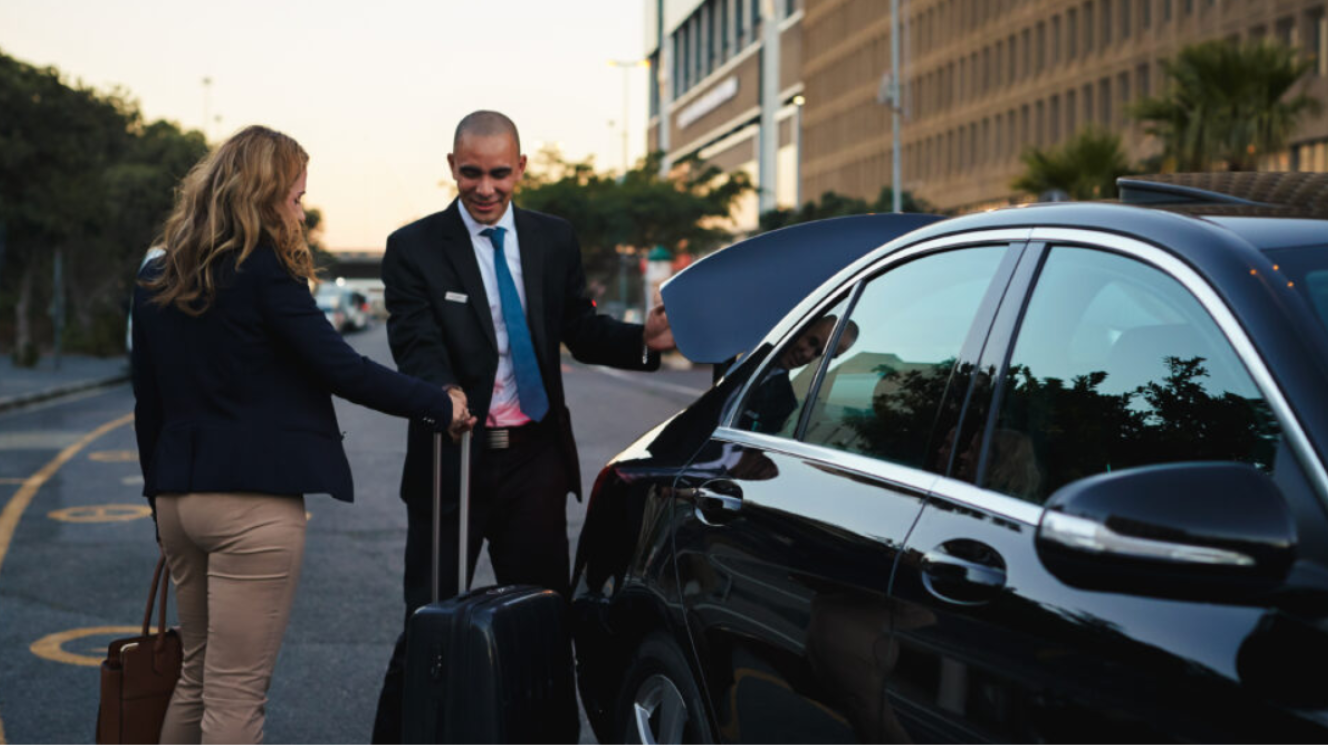
Concerns over driver verification and the ability to track traveller safety have resulted in some corporates favouring pre-booking transfer companies over e-hailing services despite the convenience and widespread use of platforms such as Uber.
Debbie Joubert, MD of Sure Travel 24-7, said uncertainty over whether the person behind the wheel was the registered driver was influencing corporate transport decisions.
“With so many e-hailing drivers not always being who they are, corporates are preferring to pay more and know that their transfer is being provided by a registered and professional transfer company,” said Joubert.
However, e-hailing has not disappeared from corporate travel programmes. Instead travel managers and TMCs are increasingly taking a risk-based approach, allowing app-based transport in some circumstances, while using vetted, pre-booking transfers for higher risk journeys.
“Taxis and transfer services now sit alongside flights and hotels as a managed category, with clear expectations on safety, compliance and data visibility,” said Bradley Pearsall, Corporate Business Development Manager at Travel Counsellors.
Joubert said corporates used a range of ground transport options, depending on the destination and circumstances.
“We are finding that some pre-book transfers, while others tell their staff to use local transport, especially in English-speaking countries, or take an Uber,” she said.
Pearsall said pre-booked, vetted car services remained the preferred option for higher-risk destinations, late-night arrivals and senior travellers, where drivers, vehicles and insurance could be checked in advance.
Ride-hailing, meanwhile, was rarely prohibited outright. Instead, companies tended to restrict its use to approved platforms, routes or risk categories. Business accounts could also give companies greater visibility over journeys.
For domestic travel, Joubert said travellers might use options such as the Gautrain or Uber, while international transfers were more likely to be arranged in advance, with travellers receiving vouchers and driver details before arrival.
Naomi Jansen from Destini Travel said her company similarly relied on established ground transport suppliers with which it had a track record.
“The suppliers themselves take great care in ensuring that their drivers are safe and will advise us if they do not service a particular route. This is an indication of how trustworthy they are and how safe our clients will be,” she said.
Driver remains the weak point
South Africa introduced a new regulatory framework for e-hailing services in 2025, including operating-licence requirements and minimum safety standards for drivers and vehicles.
However, Joubert said corporate duty-of-care concerns went beyond whether the platform or operator itself was compliant.
“The licensed service provider may meet the requirements but how do you know that their staff do. The weakest point of any business is the staff and with a licensed transfer company or e-hailing company its always going to be the driver.”
Pearsall said Travel Counsellors and corporates looked for hard evidence of correct licensing in each operating area, commercial passenger insurance, robust driver vetting and vehicle maintenance standards, clear incident reporting and data access.
“Travellers are encouraged to check vehicle and driver details in the app, use in-app communication, and to refuse a ride that feels unsafe.”
Duty of care
Pearsall said regulation was only one part of managing ground-transport risk.
Corporate travel programmes increasingly needed to consider the risk associated with the destination, time of day and traveller profile, while ensuring that journey information was available for tracking and incident response.
Contracted service levels, 24-hour escalation procedures and clear processes for handling complaints could provide further protection.
“Even with a regulated e-hailing provider, residual risks remain around individual driver behaviour, journey context and policy compliance,” said Pearsall.
He expects corporate travel policies to continue evolving as e-hailing becomes more entrenched in business travel.
“The next phase of corporate duty of care is likely to focus less on banning or endorsing specific brands, and more on building resilient, adaptable frameworks that evolve with technology, regulation and traveller behaviour.”