South Africa’s car-rental companies are gradually introducing greener vehicles to their fleets, but for now the vehicles in demand are hybrids rather than fully electric cars.
Avis, SIXT and Europcar told Travel News that hybrids were entering rental fleets and finding customers, while battery-electric vehicles (EVs) remained a longer-term proposition for the rental market.
Nodumo Novuka, Marketing Manager at Avis Car Rental, said, as of September, the company had 226 electric vehicles in its leasing business and 637 hybrids across its leasing and car-rental operations.
Looking ahead, Novuka said Avis planned to expand its EV and hybrid numbers, noting that it had seen an increase in interest each year since 2024.
Following the global trend
SIXT has also added hybrids and was seeing good demand for them, said Bjorn Pereira do Coito, Head of Operations at SANI Sixt Car Rentals.
However, demand for fully electric rental vehicles remains limited.
“What we do see is growing interest in fuel efficiency, and that’s where hybrids are proving popular,” he said.
The economics also didn’t yet favour renters, he said. “Compact and economy cars like the Polo, Swift and Vitz are already very efficient, and charging an EV at a public charger of around R7 per kWh doesn’t save the renter much compared with a modern economy petrol car.” Charging time adds another consideration for travellers on tight schedules.
Europcar did not currently have EVs in its fleet, said National Sales Manager, Nelius Vermaak, adding that the company had a few hybrids but they were “not really a large part of our offering”. Clients want these vehicles, he said, but “the cost associated is not accepted currently”.
Charging network still a gap
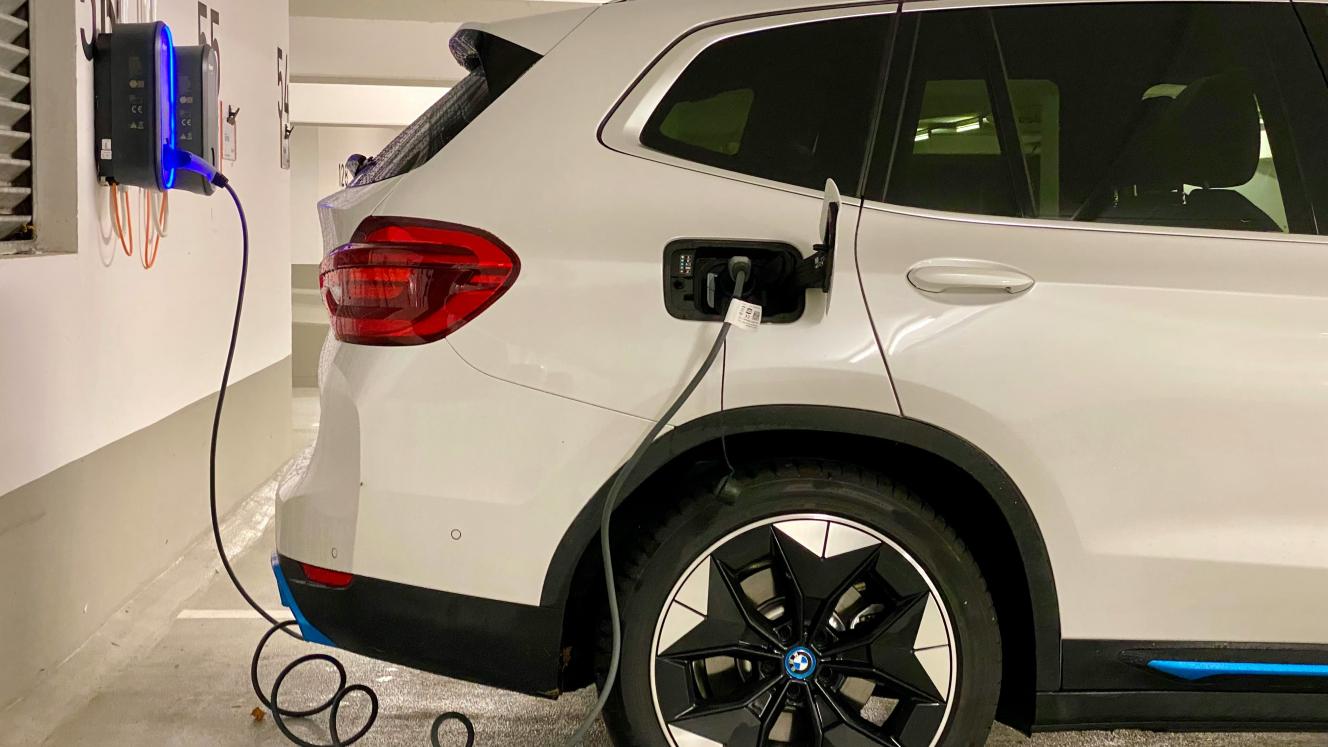
Charging infrastructure is a recurring concern. ACSA and BMW South Africa launched BMW ChargeNow charging stations at OR Tambo, Cape Town International and King Shaka International airports in November 2019.
George Airport, which serves the popular Garden Route, currently has no public EV charging stations, although there are chargers nearby at the Garden Route Mall (GridCars) and at BMW George.
Pereira do Coito said the rental operators needed more. “A visitor driving the Garden Route needs to plan the trip with confidence, without worrying about where the next charger is, whether it’s working, or how long the queue will be. As the national network grows, the case for EVs in rental grows with it.”
Fleet operations add a further challenge. “We turn large volumes of vehicles around every day, and returns often arrive together, for example on a Sunday evening,” he said. “Charging at that scale needs depot infrastructure and grid capacity that South Africa is still building.”
Resale values are the missing piece
The biggest barrier may be financial. Rental companies typically sell vehicles after 12 to 18 months, which makes resale value central to the business model.
“Rental companies around the world have learned that EV resale values can be volatile,” said Pereira do Coito. “A responsible operator has to make sure every vehicle in the fleet stays sustainable for the business as well as for the environment.”
He listed the conditions SIXT needs before scaling up: wider public and depot charging, a stable electricity supply, more models at accessible prices, and “above all, an established used-EV market”. Rental companies, he stressed, aim “to respond to the market, not to create it”.
Plug-in hybrids as a bridge
In the meantime, SIXT sees plug-in hybrids as a bridge. “They give customers lower fuel use and a taste of electric driving with a petrol engine as back-up, so there’s no range anxiety,” said Pereira do Coito.
“We share the ambition for cleaner mobility in South Africa. With government, manufacturers, and the private sector each playing their part on infrastructure, vehicle supply and a healthy used-vehicle market, we look forward to growing our electric offering in step with the market. Until then, hybrids give our customers better efficiency today, and we’ll keep evolving the fleet as the opportunity matures.”