Technology eases travel into Africa
THE advance of technology
and online information
has helped travel agents
gain a better understanding
of African destinations that
are often not included in
the traditional travel agent
courses.
“Sometimes known as the
“Dark Continent”, Africa has
definitely become more visible
due to online resources,” says
Rachael Penaluna, business
manager of Sure Maritime
Travel. “We tap into these
resources to learn more about
destinations that are not
common in the travel agency
educational environment.”
Rachael says a lot of
valuable information about
infrastructure, safety, local
etiquette, do’s and don’ts,
traffic, public transport,
safety of airlines, state of
accommodation and health
notices is gleaned from social
media, online blogs and
traveller websites.
Monique Swart, founder of
the African Business Travel
Association, adds that more
sophisticated self-booking
tools also help
travel agents
and TMCs load
preferred and
trusted African
suppliers into
the system.
She adds that
technological
feedback
systems allow
TMCs and
travellers to
view ratings
for suppliers,
helping them make sure they
select the right provider.
Robyn Christie, country
manager, South Africa at
Travelport, says the feedback
system is likely to be
improved considerably as
artificial intelligence (AI) is
slowly being introduced into
the tourism industry. The
creation of feedback loops
allows travellers to comment
and rate every stage of their
trip, helping to improve future
experiences. “Chatbots help
travellers through their journey
by giving them the ability to
ask a question at any point
throughout their
trip.”
“When
travelling into
Africa, it’s
important
that an online
booking tool
is flexible
and enables
requirements for
new markets,
such as foreign
language
translation,
currencies and taxes,” says
Jannine Adams, senior
manager marketing of
Amadeus Southern Africa. She
says Amadeus has recently
launched a new corporate
travel tool, Amadeus Corporate
Travel, which was designed for
the African market. “The latest
innovations in technologies
have made it easier for travel
agents to seamlessly adapt to
local travel policies.”
For example, Jannine says,
a company’s travel policy
within East Africa might not
necessarily be the same as
the policy for South Africa.
“In South Africa, the standard
car hire might be to book a
B class. However, perhaps in
East Africa, companies might
encourage their travellers to
do a transfer instead of hiring
a car. From a travel policy
perspective, TMCs need to be
able to adapt easily to each
country’s unique requirements
so the bookings are not
deemed out of policy.”
A major obstacle when
travelling into Africa, is visas,
which tend to be expensive
and difficult to obtain. Also
in this domain, however,
technology has started
making a difference. In June
this year, for example, the
Ethiopian Immigration and
Nationality Affairs Department,
in collaboration with Ethiopian
Airlines, launched an e-visa
service for international
visitors to Ethiopia.
“The full commencement of
the online visa application and
issuance system will promote
tourism, trade and investment
to the country. It will save time,
energy and cost for travellers
to Ethiopia,” says group ceo,
Ethiopian Airlines, Tewolde
GebreMariam.
However, most challenges
when travelling into Africa tend
to come back to the availability
or quality of connectivity
in the region, says Wings
Travel Management head of
technology, Nemanja Krstié.
“We have become so reliant
on connectivity that having
access to online portals and
communication-based mobile
applications necessitates
the need for improved
infrastructure.”
Suppliers are heavily
investing in offering that
infrastructure throughout
Africa. Hara Jackson, group
sales manager of Legacy
Hotels and Resorts, says
the increased availability
of WiFi has made travelling
into Africa a lot easier and
less stressful. “All Legacy
Hotels across Africa have WiFi
available, included in the hotel
rates. This makes it easier for
travellers to connect with both
the office and family at home,
reducing stress and traveller
friction.
Africa Corporate
Legacy adds that WiFi has
also become more readily
available at airports across
Africa. Especially in Ghana,
WiFi is now also available at
the airport, allowing clients to
connect with transfer vehicles
online from the airport.
Nemanja says in many
regions in Africa users often
don’t have access to mobile
data. “With the increasing
availability of free WiFi
solutions in public areas,
users are now able to utilise
their mobile devices. The
benefit is real-time security
data transmission as well as
being able to react promptly
in vulnerable situations. Realtime
transmission of security
data is critical for travellers in
remote areas.”
Duty of care is an
increasingly important focus
for travellers into Africa, and
the improved availability of
WiFi coupled with innovations
in self-booking tools has
helped travel agents offer a
more solid duty of care to
their clients. Says Rachael:
“The ability to be in touch with
clients all the time assists
with traveller whereabouts and
traveller safety.”
Robyn says research from
Travelport Digital found that
77% of business travellers
mainly relied on their phone to
alert them to flight disruptions,
feeling that having instant
access to this information
alleviated stress and helped
streamline their journey.
She says: “By designing a
platform that provides realtime
information on flights and
other travel arrangements,
companies can help business
travellers ensure no time is
wasted.”
The XL Travel Group did
this through the deployment
of XLGO, which creates a
personalised digital travel
concierge service featuring
smart itinerary management,
day of travel assistance and
real-time alterations, all within
a single app. Powered by
Travelport’s new Trip Assist
technology, the sophisticated
itinerary app for the XL Travel
Group, XLGO, was a first in
the South African market
when launched in May this
year. Concierge services such
as this will allow business
travellers to make the most of
the trip and maintain a worklife
balance, using some free
time to explore the area they
are visiting”
Tsogo Sun is rising in Mozambique
WHEN Tsogo Sun completes
its new R220m StayEasy
Maputo hotel, it will have
the largest footprint in
Mozambique of any hotel
group, says Bruce Chapman,
gm of the well-known fourstar
Southern Sun Maputo.
StayEasy Maputo is sure
to have appeal for South
African agents and their
clients, who know and trust
Tsogo Sun’s products.
With belt-tightening the
corporate watchword, the
property will suit businesses
looking for an economical
but comfortable haven for
their travellers. It will also
be welcomed by leisure
travellers and groups
seeking an easy weekend
leisure getaway or a base in
Maputo for beach holidays
and diving trips. The 125-
room property will be
situated at the new Bahia
Shopping Mall, 2km from the
iconic Southern Sun Maputo.
The StayEasy brand is
Tsogo Sun’s limited-services
brand designed for the
budget market, offering
free breakfast and that
all-important free WiFi.
Economical rates combine
with convenience, and
visitors can expect rooms
equipped with essentials
such as electronic safes,
hairdryers and in-room tea
and coffee facilities.
The hotel will open in the
second quarter of 2018.
It joins the Southern Sun
Maputo and the Tete Ferry
Sun in the SA hotel group’s
Mozambique portfolio.
Southern Sun Maputo’s
recent US$30m (R393m)
renovation saw the
addition of the Fig Tree, a
quiet residents-only bar.
A charming outdoor area
lies under an enormous,
ancient fig tree hung with
chandeliers. The property
also added four conference
rooms catering for 10-160
people, and is equipped
with state-of-the-art facilities.
The hotel offers a weekend
meetings special rate
for groups of 10 people
or more, with rates from
US$260 (R3 400) per single
room per night, including a
full-day conference package,
breakfast, lunch and dinner.
The newly opened Tete
Ferry Sun, on the Zambezi
in northern Mozambique,
has 108 one-bedroom, 28
two-bedroom and seven
three-bedroom villas, all
with lounges, kitchenettes,
dining areas and en-suite
bathrooms. It also has
conference facilities for
up to 120 people. While it
principally serves corporate
visitors to the coal-rich
region, it has leisure
attractions too. A nine-hole
mashie golf course winds
through the grounds of the
hotel, and includes a 300m
driving range. Local leisure
attractions include a boat
cruise or a canoe trip on the
Zambezi. Fishing fanatics
can try to land a tiger fish on
a fishing charter boat. The
gym and spa are available
to guests seven days
a week.
Don’t forget about insurance!
WHILE travelling into certain
parts of Africa may expose
corporates to greater security
risk, according to Simmy
Micheli, sales and marketing
manager of TIC, a traveller
visiting the UK is likely to use
the same corporate travel
insurance solution as someone
going to Ghana, as business
cover is standard and doesn’t
vary by destination. She
explains that all insurance
products would include
business-related risks across
the board.
That said, there are a number
of insurance solutions tailored
to different types of business
travel. Simmy says in some
cases, a company may prefer
to buy a policy every time a
corporate travels, while others
prefer an annual blanket policy
for all business travellers.
“There are also some options
available to expatriates or
extended contract workers to
choose from,” she adds.
According to Anriëth Symon,
head of travel of Bryte
Insurance, tailored solutions
are more often required for
companies whose corporates
travel extensively. “As more
and more companies realise
that they have a duty of care to
protect their corporates against
unforeseen circumstances
when travelling, the demand is
ever growing.”
Anriëth adds that, although
credit card travel insurance
generally provides cover for
emergency medical expenses
and personal accidents as
well as inconvenience benefits,
she always recommends that
corporates purchase optional
top-up that provides cover for
airline schedule changes, ticket
fee changes and visa denial
and delay.
Simmy says TIC continually
keeps track of traveller
destinations and risks
prevalent at destinations and
builds benefits into cover
to protect travellers against
associated risks. “Africa
presents unique risks such as
tropical diseases – malaria in
particular – so comprehensive
cover for this is essential.
Further, while some hospitals
are equipped to deal with
tropical diseases or medical
emergencies, not all hospitals
in third-world countries offer the
same standards, particularly in
rural areas.
Book it
RwandAir is offering special return business-class fares for passengers flying ex-JNB. Entebbe flights
start from R9 323, Nairobi from R14 056, Douala from R14 944 and Lagos from R16 273 (incl.
taxes). Valid until November 30 subject to class availability.
Case study: Injured in the DRC
TIC says with business
expansion into Africa
booming, a number of SA
companies are sending
employees to work
throughout the continent
– but providing them with
adequate travel insurance
is vital, as Johann Fourie,
who worked on a farming
project in the DRC found
out. Johann would have
incurred R461 714 in
expenses if he hadn’t had
insurance.
He says: “I was climbing
on to a tractor when the
heavy-duty door closed on
the right side of my torso. It
hit my ribs and resulted on
blunt trauma on my lung.
The pain was excruciating.
I went back to my living
quarters and lay there for
about three days before my
project manager decided to
take me to the local private
hospital in Kinshasa.
“I was in the hospital
for three days before
the doctors decided
that they could not help
me sufficiently. TIC then
transported me to South
Africa where I was treated
with antibiotics and
physiotherapy. After I was
discharged from hospital, I
rested for two weeks before
being declared fit to return
to work in the DRC.
“Unfortunately, what was
not clear on the X-rays
was that the trauma had
created a sort of dripping
wound that was slowly
building up over time.
Eventually I was coughing
as though I had serious
bronchitis. I was sent to
the hospital in Kinshasa
again and, after X-rays, the
doctor told me I would have
to return to South Africa
as he was not able to treat
me properly in the DRC. TIC
arranged a flight for me to
South Africa where it was
discovered I needed an
operation on my lung.”
Johann says the medical
care personnel from TIC
made his journey as
comfortable as possible.
“I would never work in a
foreign country without
travel insurance cover.
Even though the hospital
in Kinshasa was not able
to treat me, I still incurred
costs in US dollars by just
being admitted,” he adds.
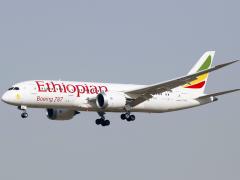
Ethiopian retrofits B767-300 fleet
ETHIOPIAN Airlines has
refurbished its Boeing
767-300 ER fleet, which is
deployed on the airline’s
India, Middle East and
Africa destinations.
The newly refurbished
aircraft is fitted with
flat-bed seats in Cloud
Nine, modern in-flight
entertainment with
high-resolution 43cm
screens and in-seat power
outlets, lighting and other
modern cabin products.
Customers in the main
cabin will also enjoy new
seats, multiple channels
of inflight audio and video
entertainment accessible
with their own mobile
devices/tablets.
Kenya positions itself for bleisure travel
KENYA is marketing its leisure
offering to business travellers,
encouraging business
travellers and conference
goers to add leisure tours to
their stays.
“Kenya offers an unrivalled
destination for conferences,
exhibitions, product launches
and business incentives,” says
Kimutai Ngeno, assistant pr
and corporate communications
manager for the Kenya Tourism
Board (KTB). “Our strategy
at KTB is to promote the
combination of business and
leisure travel, particularly to
those travellers who come
to our country on a short
business break and who can
spare some time to tour the
country once their business is
complete,” she says.
Nairobi and Mombasa both
provide a range of venues and
accommodation options for
business needs. The Kenyatta
International Convention Centre
in Nairobi’s central business
district is surrounded by worldclass
hotels. Mombasa has a
choice of Indian Ocean venues
that provide the ideal location
for beach conferencing. Beyond
the two cities, Kenya offers a
choice of tented conference
venues for those companies
wanting to do business in the
wild.
Kimutai says: “MICE is a
key segment of the market in
Kenya. As the regional hub,
Nairobi attracts business
travellers, and we are working
with this market to encourage
them to do tours within the
city.” The Nairobi National Park
is the only national park in the
world to be located in a city
and, according to Kimutai, is
an ideal spot for conference
or expo delegates to take a
break. Visitors with an hour
or more to spare can visit the
African Fund for Endangered
Wildlife Giraffe Centre or the
David Sheldrick Wildlife Trust.
The KTB is working to
promote Kenya to the travel
trade and recently partnered
with a range of international
airlines to host over 150
travel agents from 15 African
countries in Kenya. Agents
explored the richness of
Nairobi’s bleisure offering, says
Kimutai.
Kenya has proved its
ability to host high-profile
global events, with the Tokyo
International Conference
on African Development in
2016 and the World Trade
Organisation Ministerial
Conference in 2015.
On the cultural front, visitors
can take in ethnic shows in
the cities and visit a traditional
craft market or modern
shopping mall. Nairobi boasts
the National Museum, Railway
Museum and Karen Blixen
Museum. Nature lovers can
explore forests and nature
trails, including a walk up the
famous Ngong Hills. Visitors
can also travel back in time
at the prehistoric site of
Olorgasaille, Nairobi’s own
‘Birthplace of Mankind’ and of
course the annual wildebeest
migration is a sight not to be
missed.
Photocap: Facelift for Legacy resort
Legacy’s Windhoek Country Club Resort has recently
undergone a massive refurbishment. The public areas
have all been revamped and the hotel features a new
whisky bar as well as a brand-new restaurant. The
bedrooms and bathrooms also now have a totally new
look and feel. Developed as a resort within the city,
the Windhoek Country Club Resort offers businessmen,
conference delegates and families the best of both
worlds.
Cresta Churchill Hotel undergoes refurbishment
CRESTA Churchill Hotel in
Bulawayo, Zimbabwe, has
recently undergone a major
refurbishment programme.
The work included the
complete refitting of
bathrooms, introduction of
electronic keys, installation
of flat-screen televisions,
new bedroom floors,
international plug points,
USB chargers and other
fittings. The propertry was
also repainted.
The hotel opened in 1974
and is in the city’s southern
suburbs on the main route
to the famed Matobo Hills
National Park and World
Heritage Site. It is close to
suburbs, industrial areas
and the central business
district, and is a favoured
venue for small to mediumsized
conferences and
banqueting events.
Serena refurbishes Dar es Salaam hotel
SERENA Hotels has
completed phase one
of the improvement
and refurbishment plan
of the Dar es Salaam
Serena Hotel, which is
conveniently located in the
city’s business district.
The new look includes
improvements to the hotel
lobby, a new coffee shop
and shopping arcade.
Following soon will be
the new pool bar and
the Maisha Health Club.
Phase two, which will
cover improvements to
the Serengeti Restaurant,
the Kibo Bar and ballroom
will commence soon, with
completion set for midDecember.
Hotel operations are
continuing normally with
minimal disruption to
services.