Non-direct transatlantic flights – easy to book?
MANY agents are wary of
booking non-direct
transatlantic flights,
assuming that it is a
complicated process, despite
these flights growing in
popularity due to affordability.
However, agents who book
such flights regularly say it’s far
simpler than many are led to
believe.
Open skies and less red
tape to obtain permission to
fly between Europe and the US
have resulted in an increasing
amount of airline activity on
non-direct transatlantic routes.
Marco Tomasicchio, gm of
XL International Travels, says
booking SA travellers on nondirect
transatlantic flights is as
easy as booking direct flights
between SA and the US. “All it
takes is an experienced travel
agent and a powerful GDS. It
is not difficult at all.”
Taryn Agliotti, consulting
director of Sure Travel 24-7,
adds that the trickiest part is
keeping up to date with everchanging
information and rules
for these types of flights.
Fare comparisons
To compare fares on non-direct
transatlantic flights, says
Vicky Steinhardt, product
manager of Pentravel, is no
more complicated than on
other routes around the
world using a GDS.
Marco suggests that when
comparing fares, agents
should not only look at the
prices but also connecting
times as some can be
unreasonable, especially on
the return journeys. “Agents
can only learn this through
practice and experience,” he
says. “They have to move their
thinking away from being onedimensional,
order-taking travel
agents to multi-dimensional,
innovative travel consultants.”
Visa processes
Many agents assume
incorrectly that obtaining a
US visa is another part of
planning a nondirect
transatlantic
trip that can be a
headache. Marco
says applying for
a US visa is no
more complex
than for any other
country, but there
are some steps
agents can take
to streamline the
process.
He suggests
compiling
all trip information prior
to applying. “Make sure
you have confirmation of
accommodation and medical
insurance as well as proof of
foreign exchange. You need
to make sure you give the
US embassy enough reason
to assume the traveller is
coming back to SA,” he says.
Vicky adds that visa service
partners are always there to
help agents.
Sometimes travellers also
need transit visas if they are
flying to the US via another
hub.
However, Taryn
says in some
cases transit
visas aren’t
necessary. “If
a traveller is
transiting airside
on to the US or
Canada, they will
not need a transit
visa – it is only if
they want to stop
over and leave the
airport that they
will need to get
one. If an agent is confused
about whether or not a
traveller needs a visa, it is as
easy as contacting the airline,
which will be able to say yes or
no,” says Taryn.
Marco concludes that the
biggest task that comes
with booking non-direct
transatlantic flights is staying
up to date with all the airlines
that serve these routes.
However, he believes this is
one of a travel agent’s primary
roles. “One thing about this
industry is that you never stop
learning!”
KLM and Air Mauritius partner on route
KLM Royal Dutch Airlines
will introduce a direct
flight on October 30 from
Amsterdam to Mauritius
in co-operation with Air
Mauritius, providing a
year-round service to
passengers.
The service will be
operated with KLM’s newest
aircraft, the Boeing 787-9,
with 30 World Business
Class seats, 45 Economy
Comfort seats, and 219
economy-class seats.
Flight KL501 will depart
from Amsterdam at 17h20
on Mondays, Thursdays
and Saturdays, arriving in
Mauritius the following day
at 07h35. The return flight
departs Mauritius at 09h45
and arrives in Amsterdam
at 18h35.
From March 26, 2018, the
route will be operated by
Air Mauritius on Mondays
and Fridays. A third weekly
flight will be added on
Wednesdays in August and
October next year.
The route will be operated
with an Airbus A340 with
28 seats in business class
and 264 seats in economy
class.
Business as usual post electronics ban
IT’S business as usual in
Middle Eastern aviation
hubs, according to travel
agents. This follows the US
Department of Homeland
Security’s decision to ban all
electronic devices larger than a
smartphone – such as tablets,
cameras, gaming devices and
laptops – in carry-on luggage
on US-bound flights travelling
through certain hubs in the
Middle East.
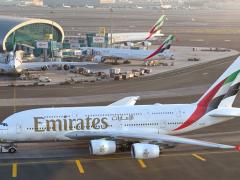
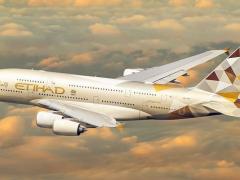
A possible reason is that the
affected airlines – Emirates,
Etihad, Turkish Airlines,
EgyptAir and Saudia – have
implemented measures to
accommodate passengers,
says Priti Ramikssoon, travel
consultant at Thompsons
Travel.
Some of these airlines now
allow passengers to use
their large electronics, such
as tablets and laptops until
boarding. The devices are then
packed into boxes, loaded
into the hold and returned
to the customer at their US
destination. The airlines do not
charge for this service.
Mohammed Mirza, travel
consultant of A2Z Travel
Services, says a large number
of business and leisure
travellers are members of
the affected airlines’ loyalty
programmes, like Emirates’
Skywards and Etihad’s Etihad
Guest, and therefore have not
stopped flying with them.
Terrorism concerns
That said, Istanbul as a hub
has seen a major decline in
travellers for another reason.
Mohammed says since the
attack in June last year at
Atatürk Airport, with shootings
and suicide bombings, nearly
all his clients have stopped
flying Turkish Airlines, not only
to the US, but all destinations.
Travel Counsellor, Siobhan
Nel, agrees that Turkish
Airlines is the only Middle
Eastern carrier to have seen a
decline in business, and adds
that it has nothing to do with
the electronics ban, but rather
the perceived terrorism threat.
Increased business
Marco Tomasicchio of XL
International Travels, does not
expect SA travellers to stop
flying via the Middle East to
the US, as airlines that fly
direct, such as SAA, are often
more expensive than the Gulf
carriers.
Vicky Steinhardt of
Pentravel, says the agency has
actually seen a 35% increase
sofar this year in passengers
flying to the US, with the
biggest growth coming from
Middle Eastern carriers.
There are, however, a small
number of travellers who
have opted to fly to the US
from SA on carriers that are
unaffected by the ban. Darrin
Thomas, marketing manager
of Virgin Atlantic Airways, says
the airline saw an influx of
bookings between April and
June, which may be attributed
to the ban.
Chanelle Moses, team
leader at Flight Centre
Randpark Ridge, has also
had some clients, whose first
choice used to be Emirates,
choosing to fly direct on SAA
instead. As she explains,
travellers who can afford to
travel to the US can generally
afford to pay a bit more and fly
direct if they wish.
News flash
Air Canada has
announced 11 new
international non-stop
routes for its summer
season.
“Through our ongoing
international expansion,
we are adding 11 new
routes touching three
continents beginning this
summer,” said Benjamin
Smith, president:
Passenger Airlines for Air
Canada. “This includes
exciting destinations in
Asia such as Mumbai,
Taipei and Nagoya; new
cities in Europe, including
Berlin, Marseille and
Reykjavik; and our second
city in Africa, Algiers.” The
new services will operate
from Vancouver, Toronto
or Montreal, either by
Air Canada using Boeing
787-8/9 or Airbus A330-
300 aircraft, or by Air
Canada Rouge’s Boeing
767-300ER or A318-100
aircraft.
Agents hesitant to book international LCCs
AGENTS say they
are hesitant to book
international LCCs as most
of them do not have a GSA
in SA, which makes it very
difficult for them to help
travellers who are on the
other side of the world when
there are flight delays or
cancellations.
Michael van Blerk,
senior travel consultant of
Thompsons Travel, confirms
that booking international
LCCs that do not have a GSA
in SA, is a headache when it
comes to assisting travellers,
which is why he sticks to
only booking ones that do
have a GSA in SA, such
as KLM’s Martinair. Annie
Ormerod, BSP manager of
Thompsons Travel, adds that
even getting refunds can be
“a devil of a problem” when
there is no GSA in SA.
Mohammed Mirza of A2Z
Travel Services, feels that
LCCs could be doing more
to educate and assist the
SA travel trade. He says if
they step up their game,
agents may book flights –
even if they have to do so on
the LCCs’ consumer-facing
websites. After all, he adds,
these LCCs do offer the
most cost-effective fares
between cities in the US.
Schiphol trials facial recognition technology
AGENTS say they
are hesitant to book
international LCCs as most
of them do not have a GSA
in SA, which makes it very
difficult for them to help
travellers who are on the
other side of the world when
there are flight delays or
cancellations.
Michael van Blerk,
senior travel consultant of
Thompsons Travel, confirms
that booking international
LCCs that do not have a GSA
in SA, is a headache when it
comes to assisting travellers,
which is why he sticks to
only booking ones that do
have a GSA in SA, such
as KLM’s Martinair. Annie
Ormerod, BSP manager of
Thompsons Travel, adds that
even getting refunds can be
“a devil of a problem” when
there is no GSA in SA.
Mohammed Mirza of A2Z
Travel Services, feels that
LCCs could be doing more
to educate and assist the
SA travel trade. He says if
they step up their game,
agents may book flights –
even if they have to do so on
the LCCs’ consumer-facing
websites. After all, he adds,
these LCCs do offer the
most cost-effective fares
between cities in the US.
SQ, AF KLM strengthen networks via partnership
SINGAPORE Airlines and its
regional subsidiary, SilkAir,
have signed an MOU with Air
France KLM to codeshare on
each other’s flights.
Under the agreement,
which is subject to
regulatory approvals,
Singapore Airlines will add
its SQ designator code
to Air France-operated
flights beyond Paris to 10
destinations: Aberdeen,
Bordeaux, Edinburgh, Lisbon,
Lyon, Madrid, Marseille,
Newcastle, Nice and
Toulouse.
Air France will add its
AF designator code to
Singapore Airlines-operated
flights beyond Singapore to
Melbourne and Sydney, as
well as on SilkAir-operated
flights to Kuala Lumpur and
Penang in Malaysia, and
Phuket in Thailand.
The airlines will later
explore an opportunity to
expand the codeshare to
other airlines within their
groups, as well enabling
Singapore Airlines’ KrisFlyer
and Air France KLM’s Flying
Blue members to earn and
redeem miles when travelling
on the codeshare segments.
News flash
British Airways is embarking on a £52 million (R852m) redesign of New York’s JFK Terminal 7. Due for
completion at the end of 2018, the redesigned terminal will include a new check-in concourse with a separate
Club World and First area. Business-class, First customers and Gold and Silver Executive Club cardholders will
have access to spacious lounges with restaurant-style pre-flight dining. Abigail Comber, BA’s head of customer,
said: “The new environment at Terminal 7 is designed for our customers to enjoy a smoother, faster and more
relaxed airport experience. This will involve significantly increasing the number of people we can seat for preflight
dining, re-styling the space and adding new lighting, bars and furniture.” Features of the redesigned space
will include:
A new premium check-in zone with fast-track security lane.
The introduction of a New York culinary experience with local food and beverage concepts.
New retail options for duty-free shopping.
New gate seating areas with additional power outlets.