How to complie a great incentive...
ORGANISING group incentive
travel can be lucrative for
travel agents. However,
organisers have to deal with
numerous challenges, ranging from
budget constraints to unrealistic
expectations and availability issues.
Industry leaders point out some
things travel agents need to keep in
mind when organising incentive travel
for large corporate groups and offer
tips on how to overcome them.
1. Understand the strategy
According to Stephanie Moss,
director of Stephanie Moss Solutions,
organisers need to start with the
client and their strategy behind the
incentive trip. “Companies develop
these programmes to achieve
particular business objectives and
the design of the incentive project
must tie in with the client’s strategy.”
2. Work with budget
constraints
Joanne Visagie, marketing manager
for Beachcomber, says budgets
still play a big role when organising
incentives and it is important to
achieve the client’s trip objective
at the budget indicated. “We are
creative within clients’ budgets. For
example, we suggest dinners that
are possible within the half-board
package but are still private, or
suggest activities at the hotel that
are not charged as a supplement,
such as a mini Olympics.”
Michelle Hunter, groups and
incentives manager at World Leisure
Holidays, has seen the same trend.
“Budgets are very tight due to the
volatility of the rand and clients
are very aware of getting value for
money. They are really counting
pennies at the moment. Clients tend
to have champagne tastes, but beer
budgets.”
Stephanie agrees that it’s often
difficult to manage expectations
within a budget. “Even very
successful companies consider
budgets carefully for incentive travel.
The way to overcome it is to plan
properly and do detailed research
and, of course, to be knowledgeable
about destinations and the facilities,
services and possibilities for add-ons
available.”
She says it’s always crucial to
select an appropriate destination
for the budget. “The world offers
fantastic business combined with
leisure options. It requires knowledge
of key destinations and a keen eye
for costs to make the correct choice
to recommend to a client,” she says.
Joanne says all-inclusive deals
can be an attractive option when
working within a restrained budget.
“Fully inclusive packages work
extremely well, especially for the
South African market. The packages
are easier for the client to budget
on as they leave very little to settle
at the hotel direct. In the past year,
budgets have generally been really
low and we’ve had to be creative to
stay within client requirements. We
don’t foresee a huge increase for the
coming year.”
3. Offer something unique
Porsche Dumagude, sales &
marketing manager for the Emerald
Collection in Zanzibar, says
clients are increasingly looking for
something truly unique and it is
important that the travel agent,
incentive organiser and the product
supplier can offer this. “We strive
to reward the group with a unique
experience that makes us stand
out from all other destinations and
resorts.”
Anton van den Heever, founder
of Delivering the Dream Incentive
Management Services, agrees: “I
believe the process of creating an
‘experience’ deserves the most
attention. Hand in hand with that we
have to take into account the budget,
logistically feasible programme
delivery and attention to detail.”
4. Consider the group size
Devising a plan for a client depends
greatly on the size of the group.
Stephanie says destination selection
can be a challenge for large groups,
as certain destinations might not
have capacity.
“The popular tourist cities all have
large hotels, and options such as
cruising work for large groups, but
the off-the-beaten-track, more exotic
destinations cannot accept large
numbers.”
According to Joanne, flight
availability can be a problem with
large groups. “We try and work with
the airlines and accommodate the
groups on dates when larger aircraft
fly. This is obviously only possible if
the client is flexible with dates.”
5. Arrange activities for
varying interests
Travel agents might have to deal
with a diverse group with varying
interests. Porsche says: “Whether
they are travelling as family, friends
or for corporate reasons, the Emerald
Collection team acknowledge that all
group requirements are different.”
Stephanie concurs: “Planning a trip
for a diverse group can be difficult.
Large companies have many levels
of employees and also employ
people of different backgrounds and
cultures. This can be challenging
but can be managed with proper
engagement with the client at the
development stage of the incentive
project.”
6. Stick to achievable logistics
Michelle says logistics should always
be kept realistic. Incentive organisers
need to make sure they keep a
suitable ratio between time to get to
the destination versus time on land
and distance, keeping a balance
between leisure time and group
activity time.
John Ridler, media & pr executive
at Cullinan Outbound Tourism, says it
can be very challenging to organise
logistics for a large group. He cites
an example where the incentive trip
departed from Johannesburg but
delegates had to join from across
the country. It was a challenge to
co-ordinate all the domestic flights
to arrive in time to connect with the
international flight.
7. Start well in advance
Incentive travel has grown faster
than traditional business travel
since 2009, according to information
published at ITB. This has put
pressure on incentive companies
to get reservations. Stephanie
explains: “The conference industry,
in particular, has grown, with the
result that popular cities (Barcelona,
London and Paris) are often booked
out for very large-scale industry
conferences.”
The solution is to start organising.
well in advance. Says
Stephanie: “Incentive travel
cannot be organised at short
notice because of the detail
it requires. The companies
that have managed
successful incentive
programmes typically launch
the project six to nine
months before the departure
date.”
8. Always communicate
clearly
Always keep the
communication lines with
the client open. Stephanie
says: “As incentive
organisers, companies
such as ourselves can
play a key role in creating
excitement to help the team
keep motivated. Companies
offering incentives know
business, we know travel.
Sharing our knowledge and
creating a sense of energy to
build their business are what
we deliver.”
Porsche agrees: “The client
always comes first. We really
rely on them to communicate
all requirements so we can
make their job as easy as
possible. If we are unable
to meet any requests, a
little compromising is also
needed.”
Michelle says clients often
don’t understand supplier
terms and conditions, such
as the fact that group
rates will go up if the
numbers are reduced. Clear
communication with clients
will help them understand
this and make them aware
of the deadlines of travel
logistics, such as visa
applications.
9. Stay open to
compromise
Stephanie explains that
last-minute changes tend
to happen when organising
large incentive trips. She
says managing clients’
expectations about making
changes close to departure
date is a knack group
organisers need to learn.
“We try our best to meet
the group’s requirements,
however a little compromising
and a Plan B are needed if
we can't meet their initial
requests,” says Porsche.
Common challenges...
No matter how well
agents plan an incentive,
they will undoubtedly be
faced with a number of
challenges:
Weather
To cite an example,
Thompsons Holidays had to
cancel a catamaran dinner,
as there was a cyclone on
the day of the event. The
hotel had to compensate
with special themed dinner
indoors.
Illness
When passengers fall ill,
the organiser will have
to arrange local medical
assistance as well as
payment for the treatment,
reconfirming the importance
of travel insurance.
ROE and advance
booking
John says incentive trips
are often booked over
a year in advance. The
current fluctuations of the
ROE mean that operators
often have to re-quote,
which could see the cost
increase from the time of
booking to the time of final
payment.
Unexpected events
Flight delays, strikes by
airport or airline staff and
natural disasters, can
have a serious knockon
effect on an entire
itinerary. Stephanie says:
“Close relationships
with key suppliers and
an experienced travel
co-ordinator are vital to
manage group emotions
when this occurs.”
Time constraints
According to Cruises
International’s groups
and incentives manager,
Dalene Oroni, an average
cruise is seven nights, and
this excludes travelling to
and from the destination
or pre- and post-cruise
accommodation. “The total
travelling time can go up
to 10 days and sometimes
that’s too much time out of
the office for clients.
Did you know?
Cruises International is launching
a Groups and Incentives website in
January, www.cruisesgroupsandincentives.co.za, where all information,
including any special offers, will be uploaded for all cruise lines in
Cruises International’s portfolio.
The right tour for the right price
Probably the most prominent
trend in 2014, and one expected to
continue through 2015, is an acute
budget consciousness. Stephanie
Moss comments: “No matter what
the business cycle, companies remain
budget conscious. The spend per
person has not necessarily gone down
but companies may take fewer people
on a trip.”
Here are some options:
Small budget
All-inclusive or local is the answer and
is the ideal option for small-budget
incentives. Cruising also tends to
work very well for smaller budgets as
it offers all-inclusive costing while on
board. Cruises International’s Dalene
Oroni says the option for low-budget
groups is generally Europe or Asia
and starts at R15 000. “After flight
costs, we have very little budget left
to work with. In a case like this, we
look at offering the client a very short
cruise (three nights) and out-of-season
cruises. However, this is getting harder
each year.”
Local is often lekker when organising
incentives on a very small budget. John
Ridler says Thompsons Holidays can
arrange local incentives for
R4 530pp for three nights at Bakubung
in the Pilanesberg. The price will
include one full-day conference, an
interactive gumboot dance, a game
drive daily and a bush boma dinner.
John says: “The challenge with a small
budget is that we often have to cut on
menus and beverages and we have to
negotiate some of the activities.”
Medium budget
For average budgets, Mauritius
tends to work well. For R17 000pp,
Beachcomber can offer a four-night stay
at the Le Victoria on an all-inclusive
basis. The price includes flights, taxes
and transfers, as well as a number of
activities. Delegates will be greeted
by sega dancers handing out flower
garlands on arrival, treated to a private
beach barbecue with a musical trio and
will experience an undersea walk as
well as a full-day tour.
Thompsons and Island Light also
offer attractive Mauritius incentive
packages for medium budgets. From
R17 250pps, delegates can spend five
nights all-inclusive at Zilwa Attitude.
The price also includes flights, airport
taxes and transfers. Groups who book
this special enjoy a lunch at a beach
restaurant, a Mauritian barbecue
as well as a beach dinner. They
can undertake a tea-making tour, a
catamaran cruise with dinner and a
shopping trip to Port Louis.
Large budget
Europe is hot. Stephanie put together
this incentive trip for a client with a
spend of R38 000 to R45 000pp. “We
took the group to Paris for four nights
and included a mix of fun, cultural
activities and luxury. As with most
groups, it included diverse personalities
and people from different cultures so
we mixed up the activities to offer at
least two things of special significance
to each person. We included a
garden party, dinner in an upmarket
restaurant on the River Seine, a half
day to Disneyworld Paris and visited
Versailles.”
Thompsons Holidays has also
organised high-budget incentives
costing around R35 450pp for an
11-day tour of Europe. The latest
included Amsterdam, Paris, the south
of France and Barcelona. Participants
toured the Van Gogh Museum, took
part in an hour’s cruise in Amsterdam,
visited the Eiffel Tower, Euro Disney
Paris, Versailles (with bike ride) and the
Louvre. Delegates soaked up culture
and sun in the south of France with
a visit to Arles and Aix en Provence
before heading to Barcelona.
Cruising can also be a great incentive
on a high budget.
Dalene says: “Your high-budget
group would normally have R45 000-
R60 000pp to spend, which needs
to include air travel. They normally
want six-star, small intimate ships with
unique destinations and itineraries.
A group like this will be intrigued by a
destination like Alaska and activities
like dog sledding.
Top spots for 2015
Vietnam and Bhutan
Vietnam and Bhutan have
popped up in incentive
requests, says Stephanie
Moss. These destination have
come from companies that
have ‘done’ the popular places
in Europe, America and the Far
East. She also notes demand
for experiential travel.
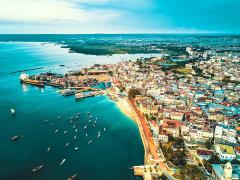
Zanzibar
Porsche Dumagude for the
Emerald Collection says
although Mauritius remains
a firm favourite, she sees
demand for ‘something
new’. “Mauritius is becoming
commercialised and is
slowly losing its authenticity.
Travellers are looking for
something different and
rich with culture, that being
Zanzibar.”
Michelle Hunter at World
Leisure Holidays agrees that
Zanzibar is a hot destination
for 2015. South Africans don’t
require visas and the short
four-hour travelling time is also
an advantage, as well as the
weather being pleasant for
most of the year.
Morocco
Joanne Visagie says Morocco
is unique. Beachcomber
has only recently opened
a property in Marrakech
but there has been a lot of
interest in the destination from
the higher end of the market
since the opening.
Caribbean
For cruising fanatics, the
Caribbean is expected to be
a hot destination for 2015.
Cruises International’s Dalene
Oroni says: “Once you’ve
explored the Med and Far
East, this is the next place
to go. This destination works
best in a budget when it is
booked in advance.”
Thailand
Anton van den Heever
says Thailand offers South
Africans true value-for-money,
frequent (and reliable) flight
options, exceptional hotels at
affordable rates, a wide
variety of enhancements,
quality service and reasonable
on-the-ground costs for
travellers.
Réunion
Although still unknown to many
travellers, Réunion is definitely
an up-and-coming destination
according to Porsche. “It’s
only a 45-minute flight to and
from Mauritius and not far
from the Seychelles. An active
volcano and an opportunity for
adventure are only a few of
Réunion’s attractions.
Although the French know
of the destination, only the
very well-travelled have ever
set foot on its varied and
enticing terrain.
Cheaper group fares for off-peak travel
AIR Mauritius takes a
flexible approach when
it comes to group and
MICE bookings. According
to regional manager for
Southern Africa and Latin
America, Carla da Silva,
all requests are embraced,
especially in the case of
repeat business, when the
airline goes the extra mile.
Group organisers and
their corporate clients can
expect a large helping
hand from Air Mauritius,
which includes display
of corporate banners
at check-in, branded
head-rest covers and
personalised check-in.
Carla’s tips for securing
the best rates are to give
the airline good advance
notice of the dates and
travel in off-peak times.
She also cautions, to
avoid costly passenger
name changes, ensure
that the correct details
are forwarded ahead of
ticketing.
Air Mauritius’s group
fares are competitive and
apply to 10 passengers
and more. Excess baggage
is offered should the group
be attending a strategic
meeting or event in
Mauritius. Smaller groups
can take advantage of
business-class check-in
counters and discounted
lounge access vouchers.
Last-minute upgrades, at
R1 500 per person, can be
done at check-in, subject
to availability.
“All requests are
attended to by a dedicated
team and a 24- to 48-hour
turnaround response is
what we strive to achieve
with our groups and MICE
division,” says Carla.