
South Africa’s air travel market is carrying almost as many passengers through ACSA airports as it did before the pandemic – but with fewer aircraft movements.
ACSA’s full-year 2025/26 figures show that passenger traffic has recovered to 98% of pre-COVID levels, while aircraft movements were at 93%.
Aviation experts say the gap is not simply a measure of recovery, but reflects changes in airline market share, aircraft capacity, and the way passengers travel through South Africa’s major gateways.
Domestic market
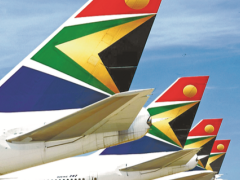
The domestic market had undergone particularly significant consolidation since 2019. Comair and its kulula.com brand and Mango have disappeared, while SAA operates on a substantially smaller scale. FlySafair and Airlink, meanwhile, have expanded.
Domestic passenger traffic through ACSA airports stood at 97% of 2019 levels at the end of FY2025/26.
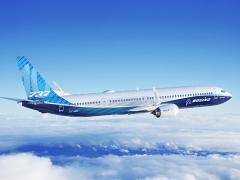
Aviation consultant, Sean Mendis, said the difference between passenger recovery and aircraft movements partly reflected the changing composition of the market. FlySafair now accounts for the majority of South Africa’s domestic seat capacity. He said FlySafair's growth and its use of high-density Boeing 737 aircraft was one factor contributing to the disparity.
But Linden Birns, MD of Plane Talking, said South Africa’s overall aviation recovery also needed to be viewed against stronger growth elsewhere on the continent.
According to IATA’s analysis of the African aviation market in June 2025, the continent’s aviation market is projected to grow at 4,1% over the next 20 years, doubling by 2044.
“Since 2021, when we got back to flying, South Africa’s market hasn't actually recovered at the same pace at all. We might have had pockets of improvement, with the growth of certain airlines like FlySafair and Airlink, new entrants to the market and expansion on specific routes,” said Birns.
“But, if you look across the rest of the continent where that growth has been felt and realised, their traffic numbers are far greater than what they were before COVID.”
Capacity limits growth
The number of aircraft movements is not solely a function of demand.
According to Mendis, Airlink CEO de Villiers Engelbrecht said last month that he saw OR Tambo to be constrained at peak times to the point that commercially viable expansion was difficult other than by upgrading capacity on existing routes.
“This is definitely something we have seen Airlink doing, but other South African carriers don't have as much flexibility in fleet variety to be able to similarly implement this strategy,” said Mendis.
Airport and air-traffic capacity constraints have become an increasingly visible issue for airlines. FlySafair has also said this year that runway and air-traffic management capacity, particularly at OR Tambo, is affecting its network planning.
Gateway shift
At the same time, the geography of South Africa’s international market has changed.
While total international and regional passenger traffic through ACSA airports has moved beyond pre-pandemic levels, more international capacity is operating directly into Cape Town, reducing the need for some passengers to connect through Johannesburg.
“The growth of Cape Town as an international gateway has reduced the dependency of international passengers on domestic connecting flights, which also contributes slightly to the slowing of domestic growth,” said Mendis.
South Africa has seen growth in US carrier capacity to both Johannesburg and Cape Town, an increase in services from European carriers and African giants like Ethiopian have more than tripled their capacity.
Birns attributed this growth to two factors: new aircraft and Cape Town’s destination marketing.
“This growth is largely due to the introduction of latest generation long-haul widebodies (A350s and B787s) and their favourable operating economics. No doubt Cape Town will soon also be served by long-haul single-aisle aircraft (A321XLR),” he said.
“We also have more airlines adding frequencies to Cape Town instead of just flying in seasonally. Some of them are extending their seasonal operations. Cape Town has done a remarkable job in repositioning itself from being a summer destination to being a year-round destination.”
Additionally, Birns highlighted new regional routes between Cape Town and Southern African destinations.
“The growth in regional traffic reflects primarily Airlink's independence from the SAA franchise and their growth into regional markets, as well as FlySafair's entry into these markets,” said Mendis.
“For the most part, South Africa is better connected in 2026 than it was in 2019. Certainly, some airlines have pulled out of the market since then and the national airline is a shell of its former self, but the market is more efficient. There isn't a significant loss of choice as much as a realignment of the choices available.”