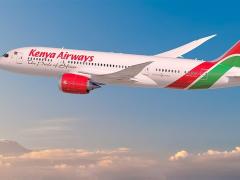
Can East Africa become a vital aviation hub?
WITH East African carriers offering
flights from their bases to
destinations not served directly
from South Africa, there is potential for
the region to become an important hub
connecting passengers to other parts of
Africa as well as Europe and Asia.
Chantal Phillips of Ethiopian Airlines,
says East Africa is emerging as an
aviation hub because of excellent
connections and its geographical
location. Ethiopian Airlines’ network
is designed to have “immediate
connections from South Africa to the
Middle East, Asia, Europe, North and
South America,” she says.
Richard Bodin, fastjet’s chief
commercial officer, says East Africa
has yet to become such a hub for
South African travellers but that the
connectivity regionally is definitely
growing in routes and frequency. “That
can only be a positive for East Africa’s
future potential growth as an aviation
hub for travellers further afield.”
Richard says: “Key to this potential
growth is government support. We
make no secret of the fact that the
Tanzanian government’s support
allowed us to establish our first African
base in Dar es Salaam, kick-starting
our vision of democratising air travel
across the continent by making it more
affordable to more people to fly to more
destinations, more often.”
Kenya Airways declined to comment
on the effect of the new visa
regulations on its operations. The
regulations will affect not only its direct
flights between South Africa and Kenya
but onward connections too, as the
new visa fees and process also apply
to transit passengers.
Chantal says it is difficult to
determine whether more travellers will
currently choose Ethiopia over Kenya
as a transit point as a result of Kenya’s
visa action, and that this will become
apparent in time.
Juan Nel, marketing manager for
Africa Stay, believes high fares are a
hindrance for the region. “Because of
the limited number of airlines flying
to the region, competition is low
and therefore flight costs tend to be
expensive, especially when comparing
[them] to flights to other destinations
such as Europe and the Far East. Most
of the time it’s because of high taxes,”
he says.
Kenya visa may boost neighbouring destinations
ALTHOUGH East Africa, notably
Kenya, has received some negative
publicity lately as a result of acts of
terror, the local travel trade believes
the country as well as the rest of the
region still has much to offer, even
for the corporate and MICE traveller.
As of September 1, South African
passport holders will be required to
apply for a visa costing R750 at the
Kenya High Commission.
Sarah Whiteside, sales and
marketing manager at Travel Vision,
says corporate travel will not be
significantly affected by the new
visa regulations as this market is
less price sensitive. “We do find
that people are nervous about the
incidences of violence that have
occurred in Kenya recently and that
this is more of a deterrent than the
visa regulations.” Overall, Sarah says
Kenya is an expensive destination
but offers some unique experiences
and instances of value for money at
the coast.
Carolyn Riddick, marketing
co-ordinator at Aviareps, which
represents the Kenya Tourism
Board, says Kenya boasts worldclass
meeting places. A number of
initiatives are run to promote the
country as a MICE destination.
Juan Nel says: “Even without the
safety concerns, the effect of the
visa will have a significant impact on
tourism from South Africa. Kenya is a
country with beautiful attractions and
I personally love it and all its people,
but the attractions they have aren’t
unique enough [for people to] pay
more and go through more effort to
see them. I honestly think people will
rather look at other beach and safari
destinations because of the new visa
requirements.”
Juan agrees that Kenya is
expensive compared with other
African destinations but is not the
most expensive. “There is not really
anything that can directly compare
with the Masai Mara or the beautiful
beaches of the Kenyan coast, but
other destinations such as Tanzania,
Seychelles, Mauritius and Réunion
are alternatives clients will look at,”
he says.
Richard Bodin says: “The
burdensome bureaucracy and
onerous costs associated with
travelling to countries that expect
leisure travellers to obtain visas is
sure to discourage travel to those
countries.”
As a result, fastjet expects that
Tanzania will see more tourist activity
for as long as it has a more liberal
visa policy than other countries in
the region.
While Richard says the biggest
percentage of fastjet’s passengers
on its Johannesburg-Dar es Salaam
route are Tanzanians living and
working in South Africa on home
leave, there has been a steady
increase in the amount of business
traffic from South Africa to Tanzania.
“Companies see the value in using
fastjet to transport workers heading
to Tanzania’s mining sites, whether
they are blue collar contractors or
white collar corporate executives,”
he says.
Richard also believes that Tanzania
will grow as a MICE destination.
“The easier and more cost effective
it is to reach a destination, the
more appealing that destination will
become to MICE organisers.”
As for leisure travellers, Richard
says most proceed to Kilimanjaro,
the safari parks or Zanzibar.
“We have noticed an increase in
passengers flying to Dar es Salaam
wanting to catch onward flights to our
domestic destinations, being Mbeya,
Mwanza and Kilimanjaro [and] we’re
seeing an increasing number of
people spending a few days in Dar
es Salaam too as part of an overall
Tanzanian holiday.”
But Richard cautions that, should
the Tanzanian Government decide
to remove VAT exemption at some
stage, the cost of travelling to
Tanzania for a holiday will increase
and this could affect tourism growth
figures.