Guiding your clients through hotel choice
CORPORATE travellers
want agents to play a
far more active role
in guiding them through
the process of hotel
selection, and expect to be
treated as individuals with
recommendations that reflect
their own preferences.
This is according to
Melissa Gay, Sabre’s
business development
manager for EMEA, who says
customers are faced with
an overwhelming amount
of hotel options compared
with booking a flight. “Their
decisions are also much
more emotional and driven by
personal preference.”
Melissa says TMCs need
to be able to provide clients
with rich content such as
360-degree video, strong
imagery and customer
reviews. This is even more
important with the rising
popularity of ‘bleisure’
trips, and the expectations
millennials bring to their
workplace.
“Bleisure bookings are
gaining ground as timepressed
business travellers
look to extend work trips
and explore surrounding
leisure options. TMCs know
the importance of large
hotel chains in delivering a
consistent, convenient and
quality experience, but some
business travellers want to
stretch out and try boutique,
tailored accommodation as
well,” says Melissa.
One of the biggest factors
influencing business travel,
says Niklas Andreen,
Travelport’s svp of Hospitality,
is the evolution of leisure
travel and most corporates
expect the same speed and
efficiencies when it comes to
their business trips.
“They want fast, seamless
booking and payment
process, including the ability
to not only book chain hotels
but independents too. They
want to review and choose
between prepaid and pay-ondeparture
rates, and rates
including ancillary options,
and they want to see on a
map where their choice of
hotel is,” he says. “And they
want all this comparability
offered simply through a
traditional offline agent, a
corporate booking tool, or
based on their approved
booking process.”
A wider choice of hotel
content is one of the main
demands of corporate
travellers, says Niklas,
followed closely by seamless
booking processes. “In such
an increasingly competitive
industry, it’s more important
than ever for corporate
agencies to streamline
their booking process
and provide a seamless
experience at point of sale
and beyond. This includes
items like TripAdvisor ratings,
comparable rates and maps
in the booking process so
that the traveller doesn’t have
to ‘go surfing’ or wait while
their agent does the same to
find the information.
Remember domestic duty of care
TRAVEL can involve risk. It
can require people to enter
the unknown and deal with
the unfamiliar.
“Already, one understands
why duty of care gets
more attention from
an international travel
perspective than locally,”
says Howard Stephens, of
GBTA Southern Africa.
“We assume people
understand and know their
own country. We also assume
that travellers have a general
awareness of the local risk
and are therefore less likely
to be hurt or endangered.”
Monique Swart, founder of
the African Business Travel
Association, says, in general,
people feel far safer locally
than internationally when
they travel, as they are in
their comfort zones. “I also
think that we have some
preconceived ideas that can
get us into trouble.
“Statements such as ‘Cape
Town is safer than Joburg’;
‘Nothing bad will happen
as I’m travelling by day’;
‘Travelling in groups keeps
me safe’; ‘Men are safer
than women when travelling’
or ‘Travelling to my home
town is safe as I know my
way around’ might generally
be true, but companies tend
to rest on their duty-of-care
laurels from a domestic
perspective because of these
kinds of assumptions and
false sense of security.”
Monique, like Howard, is
adamant that duty of care in
domestic travel needs to be
a higher priority. “Anything
bad can happen to anyone –
at any time, anywhere in the
world and it is more likely
to happen to those who are
unprepared,” says Monique.
Being prepared locally is
therefore just as important
as being prepared when
abroad. Duty of care,
however, is not only about
ensuring business travellers
arrive safe and sound.
At heart, it is about
ensuring your corporate
clients are managing safety
risks throughout their trips,
says Frank Palapies, ceo of
Wings Travel Management.
“Duty of care, however,
has different interpretations
in different companies
and there is no standard
definition that is applied. In
some companies, it simply
means knowing where
travellers are, while in others,
it comprises all aspects of
risk management.”
Often, however, discussions
around a corporate’s duty
of care focus on issues like
natural disasters, terror
incidents and kidnapping.
But, it is in the less
dramatic that the far more
frequent incidents occur,
says Howard.
“General risks for travellers
are not necessarily all that
different locally. Car accidents
and medical incidents are
far more likely to happen in
domestic travel,” he says.
Add to that the loss of
productivity due to travel
delays, or lost luggage,
and duty of care becomes
just as important from a
domestic perspective as an
international one.
“Duty of care should not
just be about what happens
to your traveller in the case
of an unforeseeable event,”
says Howard, “but ensuring
that you are managing
their safety and ensuring
their wellbeing throughout
their trips.
Junk status – will corporates travel more?
DESPITE economic
concerns over Standard
& Poor and Fitch’s
downgrading of South
Africa’s sovereign credit
rating to junk status, one
expert says corporates
should respond by travelling
more, not less.
Howard Stephens,
chairman of the Global
Business Travel Association
(GBTA) for Southern Africa,
says corporates should
start travelling more now
that the country has been
downgraded. “The junk
status downgrade will
obviously mean fewer
investors for SA, therefore
corporates should go out
and travel more in order
to bring more money in,”
he says.
But, history tells us this
may not be the case, says
Howard. “When times are
tough, corporates should
go out and look for more
business and investors,
but if the rand continues
to weaken, corporates see
travel as one of the things
corporates can cut back
on rather than retrenching
staff.
Is home-sharing for corporates coming to SA?
SOUTH African companies are less
likely than their overseas counterparts
to adapt their travel policies to
accommodate home-sharing properties,
says one business travel expert.
According to a GBTA Foundation study
on travel professionals from the US
and Canada, home-sharing properties
are allowed in 17% of the participants’
travel policies.
Furthermore, many of the companies
participating in the survey indicated
that they were making an effort to
review home-sharing options before
deciding to include or exclude these
offerings.
But duty of care and a lack of
available houses limit this trend’s
expansion in SA, says Abta’s Monique
Swart. “A big portion of South African
business travel takes place within the
country and Africa. In the rest of Africa,
home-sharing facilities are not on offer
and, even so, travel managers would
be less likely to allow travellers to
use the offering if it cannot be vetted
beforehand.”
On the other hand, she says if
corporates were to consider using the
home-sharing facilities, they would do
so in big cities like Johannesburg and
Cape Town but would be less likely to
do so in cities like Lagos, Accra and
Luanda.
Monique suggests that, over time, the
use of home-sharing properties will be
considered.
“Within SA, it is less likely for
international business travellers to
opt to stay in such facilities. But
from a local perspective, some
travel managers are finding ways
to supply travellers with alternative
accommodation offerings.”
As an alternative to expensive
hotels, Monique points out that some
companies utilise the services of B&Bs.
“B&B stays are expanding because it is
increasingly expensive to stay in hotels.
From a duty-of-care perspective, B&Bs
are preferred, because companies
can pre-vet the offering, whereas with
Airbnb, that is very difficult to do.
First Signature Lux Hotel to open in Sandton
SIGNATURE Lux Hotels will open its
first hotel on June 1 in Sandton.
The 218-room hotel will target
business travellers and tech-savvy
millennials, offering exclusive
services, some of which include
a fully integrated app. The app
will allow travellers to book, use
their cellphone as a room key and
check in remotely.
Signature Lux Hotel will offer a
24-hour hassle-free, self-service
check-in kiosk and automated
housekeeping; access to uncapped
WiFi and a 10-seater boardroom.
The hotel in Sandton will be
the first of its kind in Africa, and
will be followed by four additional
hotels opening within the next
18 months in Cape Town V&A;
Woodmead and Melrose Arch in
Johannesburg; and Umhlanga in
KwaZulu Natal.
The hotel group has also formed
a partnership with the Endangered
Wildlife Trust to give R5 for
each room night sold to protect
endangered wildlife.
Don’t be afraid to charge for services rendered
YOU wouldn’t visit a bank
or doctor continuously
without incurring fees
for their consultation or
service rendered. The
same should apply in
travel.
This is the view of
Yolande Bouwer of
Agentivity, who says
TMCs find themselves
caught in a vicious
circle when it comes to
charging for services
delivered as – if there is
a human dependency on
the service being logged
(i.e. a consultant raising
an invoice) – it’s near
impossible to provide
an accurate audit travel
account of services. “So,
most TMCs don’t, and
suffer as a result.
“In our experience,
when a corporate client is
shown detailed logs of all
changes to bookings, with
accurate analysis of specific traveller
buying behaviour, it’s not difficult to
persuade the client to pay a fair price
for your services. It
also paves the way for
traveller education and
highlighting the buyers
who take advantage of a
situation where they don’t
get charged.
“TMCs tend to be
scared to charge, but
by starting to have an
accurate audit trail of
all changes to bookings,
all revalidations, etc.,
sharing that with your
customers on a regular
basis goes a long way
to help the customer
understand travel
behaviour and, as a
result, you will encounter
very little resistance to a
fair price per change as
it’s entirely visible to the
customer,” she adds.
“Lastly, the result of not
providing customers with
an accurate audit trail of
all changes incurred by
the TMC, tends to be customers simply
moving on to the next TMC in search of
a lower service fee.
Photocap: Fly RwandAir JNB-LGW
RwandAir will launch its new Johannesburg-Gatwick route on May 26.
The route will be operated with a Boeing 737 from Johannesburg to
Kigali, and its new Airbus A330-200 from Kigali to Gatwick with 20
seats in business class, 21 in premium economy and 203 in economy
class. Flights from Kigali to Gatwick depart on Tuesdays, Thursdays
and Fridays at 12h30, arriving in Gatwick at 20h10. Return flights
depart Gatwick on the same days at 21h30 and arrive in Kigali at
07h15 the next day. Fares start from R7 500 return, including taxes..
Did you know?
In light of the popularity of the Silverbirch @ Birchwood, which targets business
travellers, the decision has been taken to overhaul and upgrade the Phomolong Lapa
and transform it to offer a new expansive menu. Diners will be able to enjoy various
serving stations and see chefs at work preparing their meals. Once it is complete,
Silverbirch guests will be able to experience a different dining experience every night.
The restaurant launches this month.
Visa restrictions hamper business travel
WHILE business travellers
tend to be considered more
resilient to burdensome
visa requirements due to
less flexibility on destination
choice, visas do still impact
corporate travel. This is
according to a report released
by Travelport and the World
Travel and Tourism Council,
which says visa restrictions
have a big impact on events
and conferences in particular.
The report says organisers
setting up events generally
aim to host them in
destinations that are easily
accessible to participants
and an onerous visa process
would count strongly against
a destination in the selection
process.
The UNWTO Openness
Index of 2015 listed those
countries that had made it
easier for visitors from a
large number of countries to
obtain visas. Comparing this
with the list of countries that
had the strongest business
travel growth in the five years
to 2016, many
countries featured
on both lists – at
least 41 in total.
The balance of
security versus
being open
for business
is essential,
says the report.
“Ensuring a
smooth process
for entering
and conducting
business in a
country will help
to drive trade and
support growth of a country’s
overall economy.”
Beside improvements to visa
processes, the report says the
use of technology supporting
travellers and travel
companies will assist in the
growth of corporate travel, and
also indicates a need to serve
digitally connected millennials.
The industry needs to deploy
data-driven insights to engage
customers more effectively.
Business travellers want
mobile phone
alerts and
information about
disruptions, flight
updates and
upgrades sent to
them.
“Every day we
see business
travel growing at
a significant rate
in many emerging
markets with
technology playing
an increasingly
important role
in easing the
way for those on trips for
their work. As an industry, we
need to continue to invest
in the best technologies and
infrastructure,” says Gordon
Wilson, ceo of Travelport.
The report notes that
the fastest growth for the
business travel is expected in
emerging markets. In Africa,
the strongest forecast for
annual business growth is
from Rwanda and Gabon at
8,5% and Tanzania at 7,9%.
Sabre adds features on GetThere software
SABRE’S GetThere
travel management
solutions are
launching a fast,
design-led mobile
platform to provide
business travellers
with a simple
way to book and
manage in-policy
travel on the go.
The redesigned GetThere
empowers travellers to
make smarter in-policy
booking decisions, gives
more self-service options
and delivers an optimal
search, shop and book
experience on mobile and
desktop.
Other features include a
simplified and responsive
design, an intuitive booking
workflow that is accessible
and consistent on any
device and Sabre’s air
merchandising capabilities
to support airlines’ branded
fares with existing travel
policy.
“Travel managers and
travellers will also have
access to more content and
the ability to differentiate
various fare offerings from
airlines, including branded
fares – helping business
travellers get the exact
services and features that
they need to be productive,
says Wade Jones, interim
president of Sabre Travel
Network.
For the record
TNW reported last week (May 10) that Minor Hotels was looking to
build an additional 50 hotels in Africa over the next five years. The
report was based on outdated information. While Minor has plans to
expand its presence, the group is not ready to reveal those plans yet.
TNW apologises for the error.
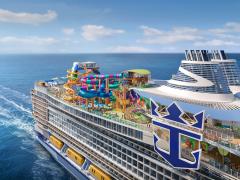
Insider tips for a cruise incentive
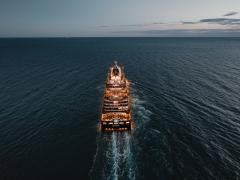
CRUISE ships are ideally
suited to MICE business.
Synonymous with luxury and
glamorous travel, they have
become an exciting option
for corporates wanting a
change from the ordinary and
mundane.
Ross Volk, md of MSC
Cruises SA, says the cruise
option has become very
popular. “It is fast becoming
a trend for corporates for
incentives, teambuilding,
meetings and conferences.
The major benefit is that
a cruise is all inclusive
– meaning everything is
included in the cruise
fare: the accommodation,
meals, entertainment and
conferencing facility.”
Lizaan Schnettler, who
heads the Groups and
Incentives portfolio at Cruises
International, says cruises are
growing in popularity in the
MICE sector, not only locally
but also around the world.
“Cruises offer an incredible
range of destinations.
Delegates wake up in a
different port every day,
and there is a choice of where
you would like to go,” she
says.
Another reason why cruising
has become so popular is the
convenience it offers. Says
Lizaan: “A cruise ship is a
one-stop shop for incentives.
Everything from conferencing,
arranging cocktail parties,
award events, group photos,
exclusive use of a restaurant
for a gala dinner, and so much
more is available.”
Most cruise vessels also
have a dedicated group
co-ordinator on board
to assist. “The groups
department assists in planning
and logistics, and ensures all
activities happen on board as
per the client’s requirements,”
says Ross.
He says MSC Cruises has
seen an increase in MICE
events on board the MSC
Sinfonia year-on-year as
corporates realise the benefits
and value of cruising.
Cruising represents very real
value for money to corporates,
especially when it involves
larger groups. Not only is
there a range of activities on
board to meet the preferences
of just about anyone, but
it also allows for very good
networking as the shop is a
self-contained environment
that allows for a captive
audience – meaning delegates
cannot leave.
Seven things to consider
CRUISE ships are ideally
suited to MICE business.
Synonymous with luxury and
glamorous travel, they have
become an exciting option
for corporates wanting a
change from the ordinary and
mundane.
Ross Volk, md of MSC
Cruises SA, says the cruise
option has become very
popular. “It is fast becoming
a trend for corporates for
incentives, teambuilding,
meetings and conferences.
The major benefit is that
a cruise is all inclusive
– meaning everything is
included in the cruise
fare: the accommodation,
meals, entertainment and
conferencing facility.”
Lizaan Schnettler, who
heads the Groups and
Incentives portfolio at Cruises
International, says cruises are
growing in popularity in the
MICE sector, not only locally
but also around the world.
“Cruises offer an incredible
range of destinations.
Delegates wake up in a
different port every day,
and there is a choice of where
you would like to go,” she
says.
Another reason why cruising
has become so popular is the
convenience it offers. Says
Lizaan: “A cruise ship is a
one-stop shop for incentives.
Everything from conferencing,
arranging cocktail parties,
award events, group photos,
exclusive use of a restaurant
for a gala dinner, and so much
more is available.”
Most cruise vessels also
have a dedicated group
co-ordinator on board
to assist. “The groups
department assists in planning
and logistics, and ensures all
activities happen on board as
per the client’s requirements,”
says Ross.
He says MSC Cruises has
seen an increase in MICE
events on board the MSC
Sinfonia year-on-year as
corporates realise the benefits
and value of cruising.
Cruising represents very real
value for money to corporates,
especially when it involves
larger groups. Not only is
there a range of activities on
board to meet the preferences
of just about anyone, but
it also allows for very good
networking as the shop is a
self-contained environment
that allows for a captive
audience – meaning delegates
cannot leave.
Seven things to consider
Agents organising a MICE
event must book and pay
relevant deposits to secure
cabins long in advance.
Group sizes are probably
the biggest consideration,
says Lizaan. “There is
a minimum requirement
that has to be adhered
to,” she says. “At Cruises
International, we can
cater for any group of
eight cabins and up.”
MSC Cruises requires a
minimum of 12 cabins
for MICE bookings, says
Ross. “We work closely
with organisers of an event
to ensure that all their
requirements are taken
care of, while a dedicated
conference co-ordinator is
also available throughout
the event.”
According to Ross, many
elements can be tailored
to suit client needs. From
cabin drops to private
cocktail parties, to allowing
corporates to brand their
venues for functions in a
variety of ways, very little is
not possible.
All delegates must be
in possession of a valid
passport if the cruise
vessel is leaving South
African waters.
“Transfers, arranging of
shore excursions and the
variety of entertainment are
also all elements that need
to be considered,” says
Lizaan.
It is also important to
consider the length of the
cruise and the number of
days at sea, which ports
will be visited, the amount
of land excursions and
how much time is required
to simply enjoy being on
board.
Agents need to make
sure they understand and
factor in the cost and
time of getting delegates
to the cruise vessel and
back home again from the
docking port.
Six great local specials
Southern Sun Katherine Street in Johannesburg
Southern Sun Katherine Street
in Johannesburg is offering
long-stay specials for guests
staying for a week or longer in
its studio apartments. Rates are
from R1 150 per room per night
for a minimum of seven nights,
valid until August 31. The studio
apartments have a separate
lounge, dining room and a selfcatering
kitchenette.
Island Club Hotel and
Apartments in Cape Town is
offering a winter special from
R1 390 per room per night. The
rate includes accommodation
in a superior deluxe room,
breakfast, parking and WiFi.
Valid seven days a week until
July 31.
The Fairmont Zimbali Resort in
KZN is offering a ‘winter warmer’
special from R1 520pppn.
The rate includes one night’s
accommodation and breakfast.
Valid until September 30.
The Fairmont Zimbali Resort in KZN.
24-hour conference packages at
Ingeli Forest Resort in Kokstad
start from R1 130pps per
night, including accommodation,
dinner and breakfast, two soft
drinks, WiFi and parking. For the
conference, buffet lunch, two tea
and coffee breaks with snacks,
stationery, data projector and
screen, flip chart and marker
pens, water, sweets and venue
hire are included.
BON Hotel Bloemfontein Central
is offering special rates from
R897 for a single and R1 029
for a double room per night. The
rate is room only and not valid
for groups. Valid until June 30,
subject to availability and full
pre-payment.
Dolphin Beach Hotel in Cape
Town is offering a winter special
from R930 per single room
per night. The rate includes
accommodation in a lagoonfacing
apartment with breakfast,
parking and WiFi. A minimum
two-night stay is required. Valid
from Sunday to Thursday until
. July 31.