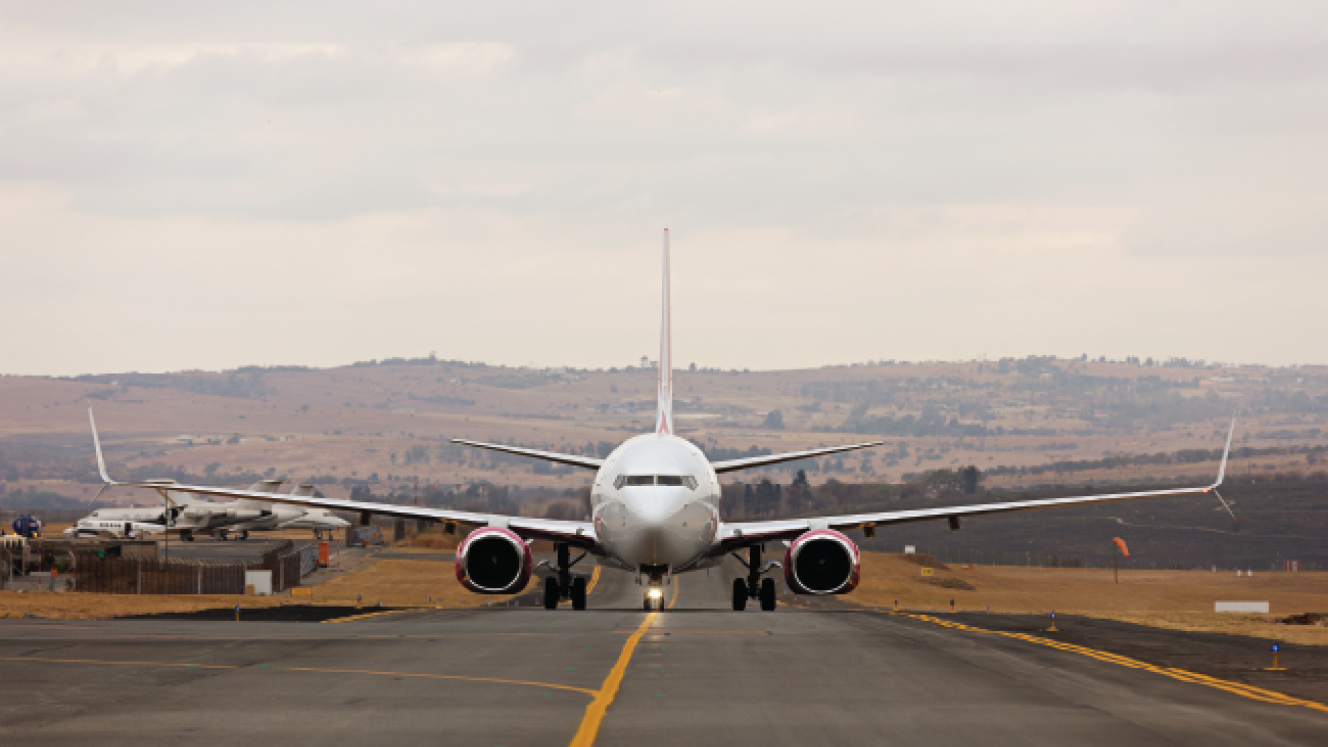
FlySafair recorded a 14% year-on-year decline in ticket sales during March and April, saying higher fuel costs drove up airfares and reduced affordability for domestic travellers.
Speaking at a media roundtable, FlySafair Chief Marketing Officer Kirby Gordon said demand had not disappeared but affordability had become the biggest obstacle. “I think demand is there. It just pushes it out of the realms of affordability.”
Fuel costs
Fuel accounts for between 50% and 55% of FlySafair's operating costs. "The reality is that we used to have multiple refineries in South Africa," said Gordon. South Africa now has just two operational fuel refineries, NATREF and Astron Energy's Cape Town refinery, after several others closed in recent years, resulting in around 75% of the country's jet fuel being imported. "That's up from about 20% to 30% pre-pandemic."
In addition, around 70% of those imports pass through the Strait of Hormuz, leaving South African airlines increasingly exposed to geopolitical disruptions.
Unlike petrol, jet fuel is not price regulated and is traded on an open market, leaving airlines further exposed to global market fluctuations and currency movements.
The impact is particularly pronounced at regional airports, where transporting fuel inland drives prices significantly higher than at the country's main hubs.
FlySafair says it reviews its fuel surcharge weekly based on supplier pricing and adjusts it by route. The surcharge is listed as a separate line item on every ticket and updated on the airline's website. The airline said the surcharge was intended to offset some of the increase in fuel costs. “We are not actually fully recovering the price of fuel through our surcharge, but it definitely does help.”
He added that the airline chose to itemise the charge separately to provide greater transparency for its passengers.
Fuel surcharges have started easing on some routes and Gordon pointed to the Johannesburg-Mauritius service as an example, where the surcharge has fallen from about R1 400 in March to R694 in July. However, the airline cautioned against expecting fares to return to previous levels.
"There will be a new normal," Gordon said, adding that it would be unrealistic to expect prices to return to pre-conflict levels. Any decision to remove the surcharge would depend on a more stable geopolitical environment, he added.
He said the airline was also closely monitoring the rand/US dollar exchange rate, as jet fuel was priced in dollars and a weaker rand would increase its costs.
Operational challenges
Beyond fuel, FlySafair said ageing aviation infrastructure continued to affect operations, citing issues such as Cape Town International Airport's baggage belt system, which has been out of service while replacement motors are installed.
Although investment was being made to improve infrastructure, he said there was still a backlog that would take time to address.
However, Gordon said the pressure on consumers remained the biggest challenge, as travel was considered a discretionary spend. "If you're feeling the pinch at the petrol pump, if you're feeling the pinch at Pick n Pay, your holiday is kind of the last thing on your mind."