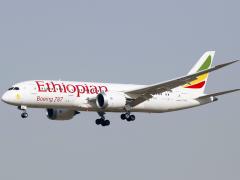
More access needed at competitive prices
ALTHOUGH air access
across Africa has
improved in recent years,
industry stakeholders agree
that more needs to be done to
cater for the growing corporate
sector.
Says Jegie Padmanathan,
coo: hotel and resorts for
Peermont: “A few airline
operators have monopolised
the market with uncompetitive
airfares into Africa, which has
also hindered the growth of
the corporate market into
Africa. Africa is considered to
be the last remaining continent
for major growth, therefore the
improvement of air access at
competitive prices is critical for
the future growth.”
Bronwyn Philipps, md of
HRG Rennies Travel, says air
traffic to and from Africa has
expanded dramatically over
the last decade as a result
of economic growth and air
travel being the best transport
option. Infrastructure remains
limited, she points out, with
roads often in disrepair and
rail travel scarce.
However, she says, there are
some challenges the aviation
sector needs to overcome
on the continent. A lack of
direct flights is one, while
airfare costs are high due to
fuel prices and airport taxes.
Further, many African airlines
have poor safety reputations,
with almost 50% of those on
the EU blacklist coming from
Africa.
On the positive side, Bronwyn
says: “We are starting to see
an increase in the competition
on internal routes within Africa
and growth in this sector
should ultimately start to drive
prices down. An increase in
the introduction of direct flights
is also relieving challenges in
terms of transit visas, security
inspections, change of aircraft
and long transit times for
passengers.”
Tlali Tlali, spokesperson
for SAA, says many airlines
operating in Africa come from
a very low base of services.
“Not so long ago there were
hardly any services between
the geographical regions of
Africa. The increase in services
has been phenomenal,
to the extent that almost
every country is now served
by more than two African
airlines. However, even with
all that growth, the continent
is still underserved in terms
of frequencies and capacity
serving all market segments,
not just the business
community. There is room
for much more growth and
development and this will be
part of the implementation of
an African open skies policy,”
he says.
According to Richard Bodin,
fastjet’s chief commercial
officer, the low-cost carrier’s
entry into the regional market
has seen a change in the
market. “Our research shows
that 38% of our passengers
are first-time flyers. This
means that fastjet’s affordable
fares have made it possible
for more people to use
air travel to get to their
destination for the first time.”
But, he says, the continent
remains in desperate need
of aviation connectivity. Very
few countries in Africa are
sufficiently serviced by local
airlines, including South Africa,
where some carriers benefit
from government protection
and overcharge. “This means
that there is great potential
for the low-cost carrier model
on the continent, and fastjet
is working hard to expand
our network to stimulate the
African aviation sector to the
benefit of passengers and
local economies.”
Jegie believes the entrance
of low-cost carriers in the
regional market will grow
the market. “It creates a
more competitive airfare
environment and allows
for increased frequency of
corporate travel as more
people will have the financial
means to afford this kind
of travel. The entry of lowcost
airlines will also allow
for a greater selection of
destinations that previously
may not have been viable with
the bigger airlines.”
Tlali views the operations of
low-cost carriers as a welcome
addition to the already existing
legacy carriers, noting that
they are answering a need in
new market segments.