2015 conferences – keep them short and punchy
DESPITE technological
advancements that
allow for almost
seamless online conferences
and meetings, the faceto-face
MICE industry
is thriving. At the World
Meetings Forum in Mexico at
the end of last year, Martha
Sheridan, board member
of Destination Marketing
Association International,
said the attendance for
exhibitions had returned to
2007 figures. On a global
scale, there are now twice
as many participants in
MICE events than in the
mid-90s.
The format of meetings
and conferences has
changed and industry players
in South Africa report a
move towards smaller, more
focused meetings of brief
duration, which maximise
networking benefits. John
Ridler, spokesperson for
Island Light Holidays, has
witnessed this trend. “In the
current economic climate,
companies are cutting costs
and wish to keep staff
members out of the office
for a shorter time.”
“Time is money,” agrees
Stephanie Moss, director,
Stephanie Moss Solutions.
She says conference and
incentive travel is no longer
about freebies for corporates
and their partners. “The
purpose and objectives
seem to be more serious
than in the past and revolve
around an attitude of
‘let’s do business’.”
Stephanie notes, however,
that although time out of
the office seldom exceeds
four nights, this doesn’t
mean that corporates
are necessarily staying
closer to home. Long-haul
travel is still popular, with
destinations such as Phuket,
Paris, Prague and Malta
topping the list.
Dalene Oroni, groups
and incentives manager
for Cruises International,
says although corporates
don’t want to travel for
hours on end to get to their
destination, the Far East
is still a popular choice for
South African corporates.
When it comes to cruising,
the region features a
number of short itineraries
that have worked well for the
South African market.
However, Alida Canevari,
regional sales manager
of African Hotels and
Adventures for Gauteng,
sees a trend towards
locally held conferences.
“Corporate clients, prerecession
period, would
consider local as well as
international destinations.
Today, there is a greater use
of local venues. In certain
instances, corporates
choose a venue based on
distance and time of travel.
Many companies opt for
venues within a certain
driving period. Locations
that one would have to fly
to are dwindling as the cost
implication is too high.”
According to Gill Dewar,
md of GCD Consulting,
cost cutting has been an
important factor for a couple
of years and corporates have
had to be creative with their
budgets for some time. She
says South Africa is always
the first choice, followed
closely by regional travel.
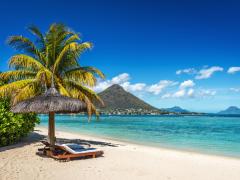
Mauritius still a
regional favourite
Only four hours from
Johannesburg, Mauritius
remains a popular
conference and incentive
destination for South African
travellers, says Enid Maullin,
groups sales executive for
Beachcomber. She says a
three-night stay has become
the norm, with business
executives missing only one
working day alongside a
weekend.
Michelle Hunter, gm
groups, weddings and
incentives for WLH, has
also noted the three-day
preference for MICE events,
while Kathy Basson, sales
manager for the Mauritius
Incentive Connection, says
four nights has become
the standard time frame
for MICE packages and
specials.
Sales and marketing
manager for Air Mauritius in
South Africa, Wouter Nel,
says the airline has seen
its group bookings grow by
over 100% in the past year.
“It’s really been phenomenal
for us,” he comments,
attributing some of the
island’s success to the fact
that an incentive trip to
Mauritius is tax deductible.
Book it!
Complimentary lunch with Beachcomber
Corporates booking their event or conference at one of the
Beachcomber properties during the low season will receive a
complimentary lunch. Marketing manager, Joanne Visagie, says:
“Some of the group hotels are offering a complimentary lunch
for groups over the low season together with our excellent lowseason
rates during the same period.
Mixing business and pleasure is a good idea
continue being successful.
As these conferences
are short, the quality and
impact is expected to be
very high.”
Gill Dewar says, from a tax
perspective it is practical
for companies to combine
a day of meetings with an
incentive or to throw in
some incentive elements
such as sightseeing or a
gala dinner to a conference.
Enid Maullin agrees that
combining the two concepts
is very effective in terms
of benefit to the corporate
company as well as
rewarding the achievers.
WLH’s Michelle Hunter
says as long as corporates
opt for a hotel that is well
versed in both conferencing
and incentives, little can
go wrong with this combo
idea and the trend is well
received by participants.
“In a lot of cases, delegates
could probably not afford to
go on international travels
by themselves. So once the
work is over, the corporate
will generally book one or
two excursions and have a
fun banquet on the beach.”
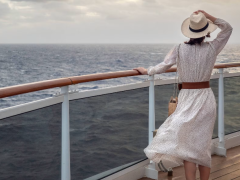
Dalene Oroni says:
“A cruise is the best
way to conference and
reward at the same time.
Conferencing on board is
complimentary, with stateof-the-art
equipment and
conference rooms. Cruising
offers a variety of venues
where groups can gather for
private cocktail parties or
award ceremonies. Venues
are once again free of
charge with a nominal fee
for beverages and canapés.”
Tamarin Transell,
sales director of Winning
Solutions, warns, however,
that there are pros
and cons to combining
conferences and incentives.
“The pro is that it makes
financial sense for the
corporate to combine
business and pleasure. The
con is that people who are
accustomed to receiving
an incentive reward without
an expectation of work
may feel disappointed and
disheartened at having to
work on their incentive.
“There are financial
rebates for companies that
combine business and
incentives and if this is
what needs to be done to
ensure all-round staff longterm
loyalty, then so be it.”
According to John Ridler,
one way to overcome any
possible disappointment
is to allow partners to join
the MICE group after the
conference is over.
Cresta Hotels takes to the road
IN AN effort to save time
and money, South African
companies are increasingly
combining conferences
with incentive trips. This
new trend brings about
numerous advantages.
Beside saving on time,
says Alida Canevari, the
members of a combined
group are highly motivated
because they have won
their trip or received it as
a reward. “They are highly
receptive to a conference
that is packed with valuable
information and tools to
CRESTA Hotels will undertake
a South African roadshow
next month to meet travel
trade partners promoting
the group’s 16 properties
in Zambia, Zimbabwe and
Botswana.
Properties boast some
excellent facilities for MICE
groups and include resorts
such as Mowana Safari
Resort & Spa at Chobe
in Botswana, and Cresta
Sprayview in Victoria Falls.
Dates and locations are as
follows:
Tuesday February 3: Cape
Grace, V&A Waterfront, Cape
Town. Cocktail event begins
at 18h00.
Wednesday February 4:
Riverside Hotel, 10 Kenneth
Kaunda Road (Northway),
Durban North. Cocktail event
begins at 18h00
Friday February 6: Da Vinci
Hotel & Suites, Sandton.
Breakfast event begins at
07h30.
During the roadshow, Cresta
Hotels will honour its top 20
suppliers for 2014.
To reserve your seat, e-mail
marketing@crestahotels.com.
Understanding the pitfalls around taxes on incentives
1. Underestimating the implications
SEVERAL things might come
to mind when you think of
incentive travel – exotic
destinations, inspiring events,
special moments, but tax? Not
so much.
“Travel rewards are by far
the most desired of all reward
components for employees
who have invested extra effort
at work,” says Johan Venter,
executive head of incentive
travel at Uwin Iwin. But the
implications around taxes on
incentives should never be far
from mind nor underestimated.
“Clients are always advised
of the tax implications relating
to incentive travel and have
to make provision for it by
deducting PAYE for participants
or, in some cases, by paying it
on their behalf depending on
the available budget,” he says.
“The tax payable does not
necessarily affect the decisionmaking
process when it comes
to the duration of the trip,
where to go or what to do.”
In the past, says Johan, a
‘conferencing’ element may
have been included in the
programme so that employers
could recover some of their
expenses relating to the trip,
but SARS picked up on the
trend a few years ago and put
a stop to this.
“Clients today are far more
mindful of the purpose of the
trip and the possible tax credit
they qualify for.”
2. Understanding the landscape
Binding Class Ruling 018
was issued by SARS in
May 2010, setting out
the taxable benefit arising
from an incentive trip that
contains both private and
business elements.
“However, no guidance
is provided on how to
determine the percentage
of business elements of
the trip, so there is still
a relatively big question
mark over BCR 018,” says
Johan, who explains that
the outcome of the ruling
determines whether the
meals, refreshments, food
vouchers, accommodation
and services supplied on an
incentive trip are all taxable
benefits.
“It does, however, seem
that the taxable benefit
must be apportioned
by calculating the
private portion of the
aforementioned benefits
and that only the private
portion will then be taxable,”
he says. “According to the
ruling, the employer must
make a determination on
time spent on business
activities, based on the
percentage of business
elements of the trip,
according to a 14-hour day.
This percentage must be
applied to calculate the
taxable benefit of each of
the class members. Flights
must be excluded from the
calculation and are a 100%
taxable benefit.”
3. There’s no avoiding it
There really is no way
around this, says Johan.
“SARS is very clear on
the taxable benefits
relating to incentive
travel so employers have
to deduct PAYE on behalf
of the participants
or they must pay it
themselves.”
He says while it is still
debatable how much can
be regarded as business
and what could be
private, unless the trip is
a conference, convention
or training exercise and
the client can prove that
it is 100% businessrelated,
most of the
elements will be viewed
as a taxable benefit that
need to be paid by the
participant.
“We work mostly with
clients who opt for
purely leisure incentives,
so the taxable benefit is
calculated based on the
entire cost of the trip
per participant.”
According to Johan, it
has become preferable
to have an all-inclusive
package these days.
“Clients want to know
that their given budget
will be respected and
that there are no nasty
surprises on completion
of the trip in the form
of extra costs that were
not budgeted for.” In
this regard, cruising
has become extremely
popular – and the trend
is growing. “Almost half
of our clients offer travel
incentives in the form
of a cruise these days,”
he says. “They know
up-front what the trip
will cost them, what is
included and there are
no surprises at the end.
Participants also have
the freedom to spend
their free time however
they wish and to explore
several new destinations
in one trip. Again the
employer is responsible
for deducting the PAYE
from the participants.
NYC launches Delegate Discount Pass
NYC & Company, the city’s
official marketing, tourism
and partnership organisation,
launched a 2015 New York
City Delegate Discount Pass
this month, offering exclusive
savings throughout the year
at more than 70 restaurants,
tours, attractions and retailers.
“New York City is known
for its unrivalled dining, arts,
culture and tours, making
it an appealing destination
for meeting delegates from
around the globe,” said Fred
Dixon, NYC & Company’s
president and ceo. “Meeting
and convention visitors are
crucial to New York City’s
record-breaking travel and
tourism industry, and we hope
they take advantage of the
plentiful savings available to
them through the 2015 New
York City Delegate Discount
Pass.”
Currently the New York City
Delegate Discount Pass is
valid until June 30 (details for
the remainder of the year will
be available at a later date).
To redeem offers, visitors
can show a printed or mobile
version of the Delegate
Discount Pass provided by
NYC & Company’s Destination
Services Team to convention,
trade show and corporate
meeting planners.
For more information,
contact destinationservices@
nycgo.com.
Book it!
Wouter Nel says Air Mauritius gives up to 15% discount on group bookings if the booking is made via the
airline’s offices.
The Premier Hotel OR Tambo is offering a 20% discount on B&B for conference bookings until January 31.
The rate, from R1 380 per night, is for a standard room with dinner, breakfast and a soft drink.
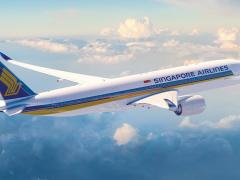
Specials from Singapore Airlines
Free tickets on group bookings
Singapore Airlines is
offering a free ticket for
every booking for 15
passengers. The offer
is valid for MICE group
bookings made on or
before March 31 for travel
on or before December
31 on either Singapore
Airlines or Silk Air.
Vouchers for Changi Airport
Singapore Airlines is
promoting the Changi
Dollar Voucher to
groups and individual
passengers. Passengers
travelling on or before
March 31 can redeem
SGD40 (R360) Changi
Dollar Vouchers while in
transit at Changi Airport.
For more information,
consult Travelinfo.
Trends for 2015
1 WiFi is a must
Stephanie Moss says millennials
(born between 1980 and 2000)
are fast becoming the key target
market. This means that providing
WiFi is no longer an option; it has
become a must-have.
“Millennials are born in a
technology era and expect to be
able to be connected whenever they
travel. Hotels see the potential of
this enormous target audience and
are very busy adding hi-tech and
techno amenities to their product
offerings, including mobile check-in
along with a myriad of online apps.”
Kathy Basson comments:
“Thankfully, airports and most
MICE-focused resorts offer WiFi
as complimentary, with a decent
bandwidth to share personal
experiences and ‘brag factors’
across various social platforms –
this is pivotal for millennials and the
selfie generation.
2 Personalisation
According to Stephanie, travellers
increasingly want personalised
and customised experiences from
hotels and restaurants. “Niche
concierges are a new trend in the
US and can advise you on the
best shopping, the detail of art
galleries for your style of art, or
the best spas and salons in the
area!”
3 Suppliers adapt to the times
Stephanie says the attitude of
suppliers and ground handlers
towards the MICE industry has
changed dramatically over the past
few years – they are a lot more
accommodating and customerfocused.
“The ground operators are
happy to oblige in this competitive
market and re-do costings and
itineraries over and over again.”
4 Cost cutting remains important
As cost cutting
remains an important
consideration, says
Tamarin Transell, more
domestic and regional
travel can be expected
in 2015, as well as
reduced stays in foreign
destinations.
“Budget constraints
for some companies
mean they are taking
fewer exclusive, high-end
incentives and targeting
more people in middle
management with more
cost-effective incentive
options.”
“We have to bat smart and be more
creative with the funds allocated
to us to exceed
expectations from the
previous years’ trips
and battle rising costs,”
says Johan Venter.
The emphasis, he
believes, will remain
on all-inclusive, valuefor-money
incentives
that offer all the bells
and whistles without
exceeding the budget.
“We have also noticed
a trend where trips from
different divisions within
organisations are being
combined into single
trips to save money and cut back
on the amount of time spent out of
the office.”
Stephanie Moss
5 Off the beaten track
Tamarin says clients in 2015 will
be more open to the idea of new
and exciting destinations versus the
‘tried and tested’.
According to Gill Dewar, we will
see interest in unusual destinations
such as Montenegro, Ecuador and
Poland.