
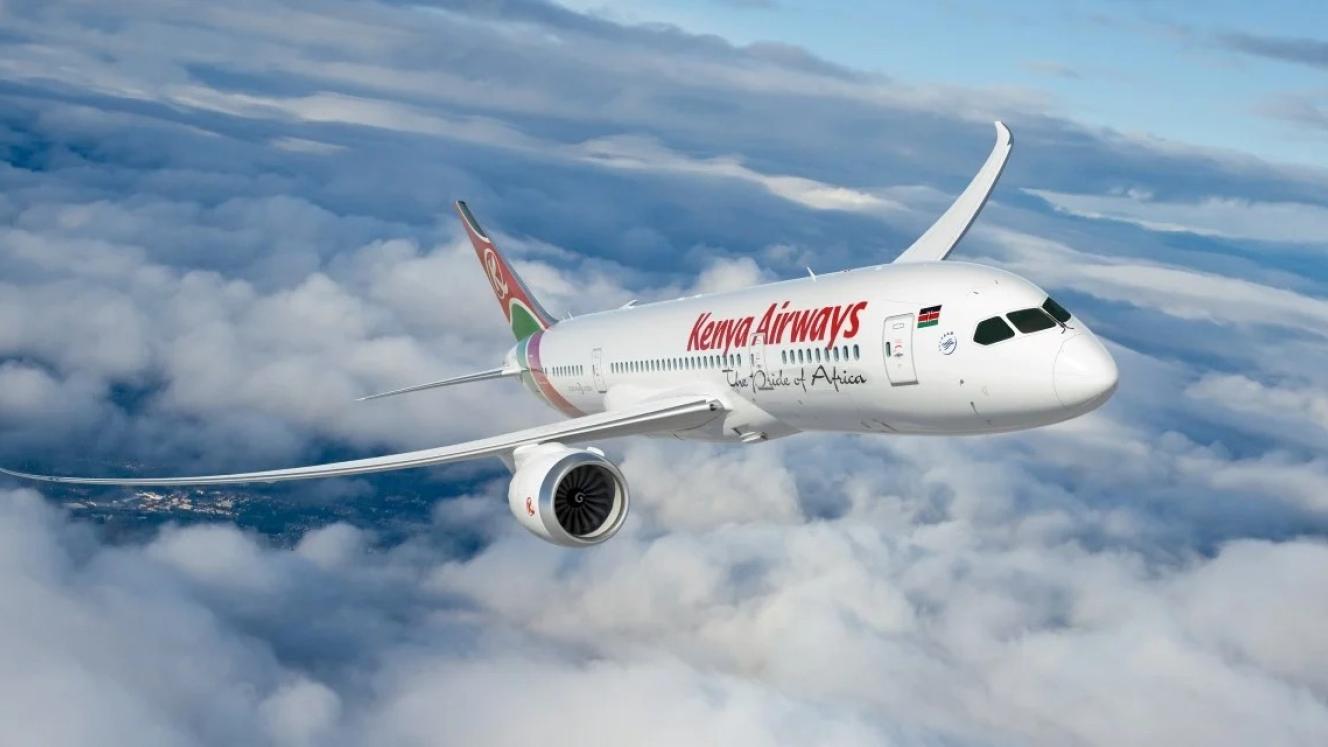
Kenya’s government has confirmed plans to divest from Kenya Airways, signalling one of the most consequential shifts in the country’s aviation policy in decades.
The government is seeking a strategic investor to take over its 48,9% shareholding in the national carrier, ending years of reliance on treasury bailouts while repositioning the airline for long-term sustainability.
Official figures indicate the government has injected more than KSh130 billion (R16 billion) through guarantees, loans and restructuring packages to keep the airline afloat.
The government hopes a strategic partner will unlock between US$1,2 billion (R19,2 billion) and US$2 billion (R31,9 billion) in fresh capital critical for addressing negative equity, restructuring legacy debt and modernising the fleet.
Momentum behind the privatisation push has been strengthened by Kenya Airways’ recent financial turnaround. In 2024, the airline posted its first net profit in more than a decade, following the implementation of its internal recovery plan, Project Kifaru. The programme focused on cost optimisation, route rationalisation and the retirement of underperforming assets.
“The airline has demonstrated that it can return to profitability,” said aviation consultant Sean Mendis. “But survival now depends on recapitalisation and the government is clearly unwilling or unable to do that alone.”
Mendis pointed to global precedents, noting that many former state-owned airlines have undergone partial or full privatisation.
“British Airways and Air France represent varying degrees of state withdrawal while India’s sale of Air India to the Tata group shows how strategic ownership changes can revive struggling national carriers,” he said.
However, analysts caution that no serious investor will step in without clarity on Kenya Airways’ historical liabilities.
“The key to success is firewalling legacy debt,” Mendis added. “Any buyer paying billions will insist that past obligations are addressed upfront even if it means the taxpayer shoulders the cost one last time.”
Addressing systemic issues
Across the aviation and tourism sectors, industry voices are converging around the idea of partial or strategic privatisation rather than a full government exit. Daniel Mbugua, Chair of the Tour Operators Society of Kenya, argues that the national carrier is “too important to fail”.
“Privatisation could work but only if it is strategic, transparent and well-structured,” Mbugua said. “Selling shares just to plug debt without fixing governance and management will not work.”
Hospitality EQ Chief Executive Barry Clemens also warned that ownership change alone will not deliver sustainable results. “Privatisation is not a magic solution,” he said.
“Airlines operate in a highly competitive, capital-intensive environment. What matters most is operational transformation – not just shifting shares.”
According to Clemens, private-sector participation can bring stronger governance, faster decision-making and improved access to capital if aligned with clear national objectives.
“A structured public-private partnership allows government to retain strategic oversight while benefiting from private-sector discipline and speed,” he noted.
Clemens also highlighted the broader pressures facing Kenya Airways: from fluctuating fuel costs and currency volatility to fierce regional competition.
“Across Africa, we’ve seen different responses. Some airlines pursue partnerships, others restructure with government support while a few focus on niche positioning. The common thread in successful cases is disciplined execution – not ownership structure alone,” he said.
Potential buyers
Speculation about potential partners has centred on major global carriers. President William Ruto has been in discussions with Delta Air Lines while industry observers point to Gulf carriers as natural candidates.
Ocean Beach Resort Chairman Roberto Marini believes a Middle Eastern partnership could fundamentally reshape Kenya’s aviation landscape. “If you look at Emirates or Ethiopian Airlines, both are government-owned and profitable because of incentives and scale,” he said.
Marini pointed to Rwanda’s partnership with Qatar Airways, which includes the development of a new international airport in Kigali, as a regional template. “Strategic partnerships are key,” he said. “If they are well arranged, they benefit all parties.”